Jaén olive oil harvest: a winter in the sea of olives
Úbeda, Baeza and the Sierras of Segura, Mágina and Cazorla, Jaén//Products/10 min read
One province expects to make more olive oil this season than Italy and Greece made together last season. From October to January it does little else.
 Written with by Eduardo Peire
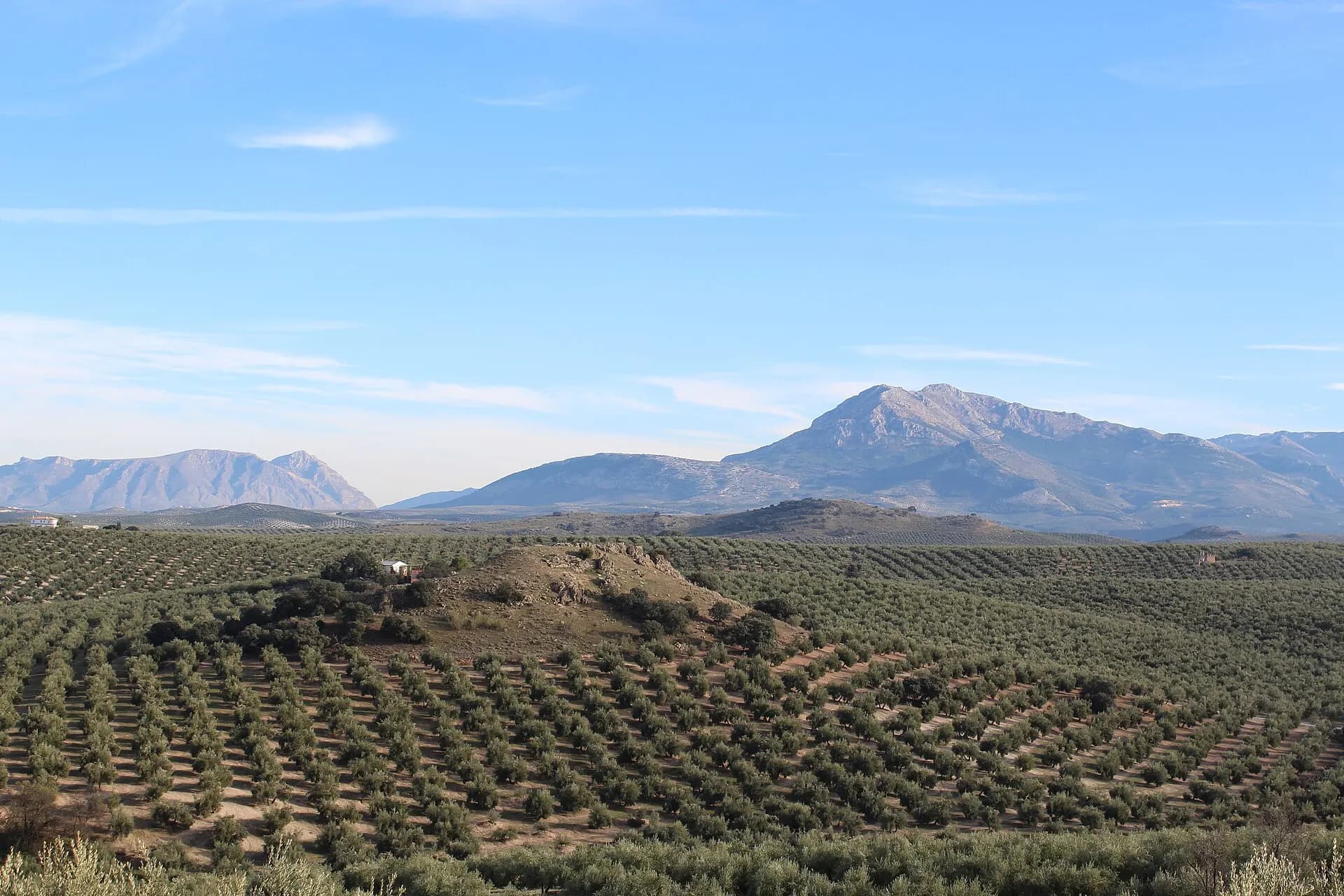
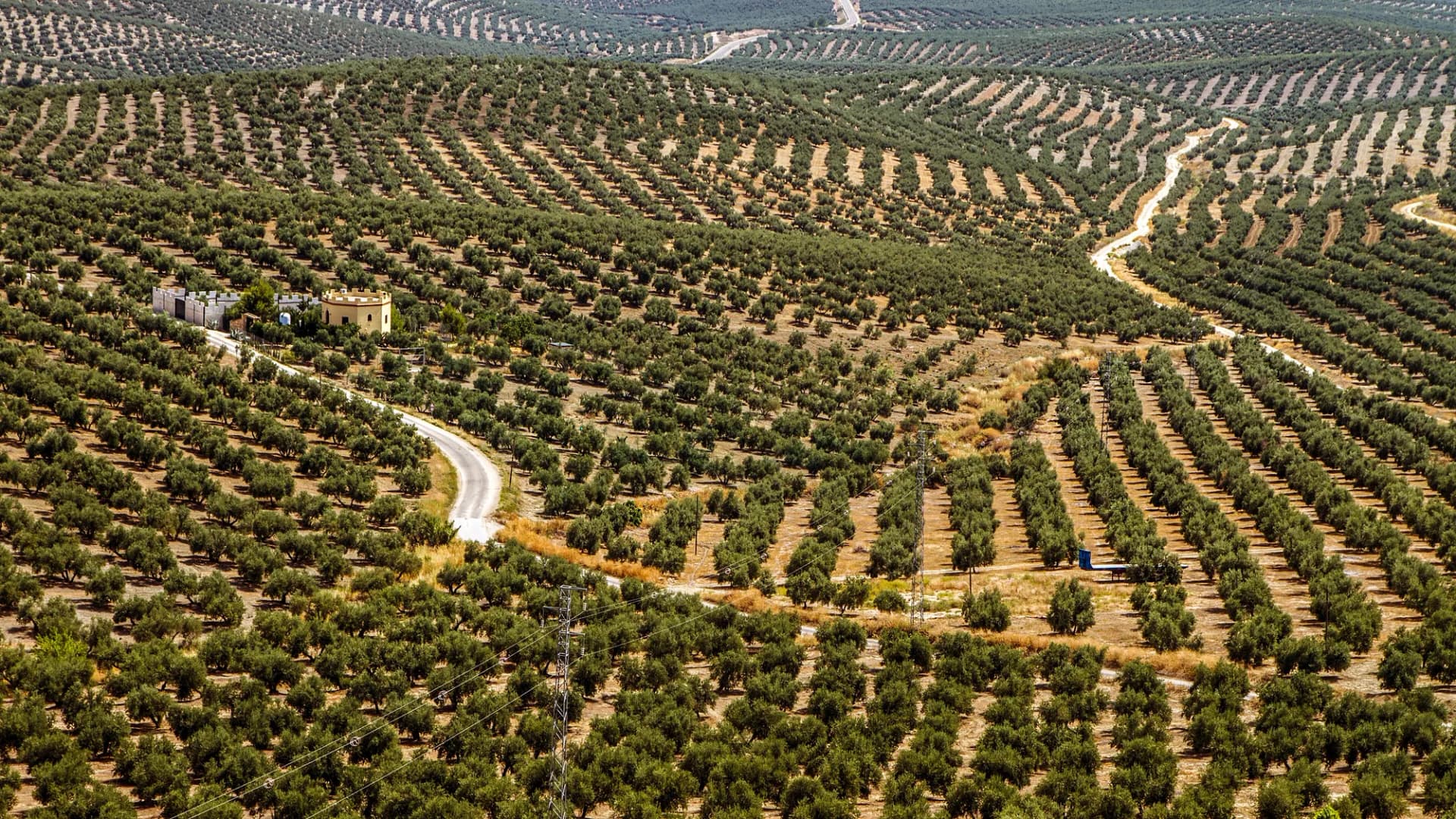
The Jaén olive oil harvest runs from late October into January, and in some mountain groves into February, across a province in the north of Andalusia where olive trees go on to every horizon. Jaén has more than 70 million of them, according to its provincial tourism board, and in the 2026/27 season it is expected to make 575,000 tonnes of olive oil. That is 36 percent of the Spanish crop, and more than Italy and Greece produced together the season before.
For three or four months the province works to one rhythm: shake the trees, gather the fruit, get it to the mill fast. It is the time to see where olive oil comes from and to taste it at its freshest. It is also when the questions that hang over the mar de olivos, the sea of olives, as Jaén calls its landscape, are easiest to see: the price of oil, the heat, and who can still afford to farm a hillside.
How much olive oil does Jaén produce?
Spain's Ministry of Agriculture publishes its first estimate of each crop, the aforo, on 1 October, the day the olive oil season officially begins. In 2026 the minister, Luis Planas, presented it in Jaén. The ministry's figures put Spain's 2026/27 harvest at 1,602,596 tonnes of oil, 23 percent more than the season before. Andalusia is expected to make 1,261,200 tonnes of that, almost 79 percent, and Jaén alone 575,000. The ministry also warned that the summer heat had hurt the rainfed groves, the ones that live on rain alone.
For comparison, the European Commission puts Italy's 2025/26 production at about 325,000 tonnes and Greece's at about 231,000. The tourism board likes to say that Jaén makes around half of Spain's olive oil and more than a fifth of the world's. The share moves with the weather. The trees stay where they are.
They cover 582,427 hectares, almost 90 percent of the farmed land in the province, according to the rules of the protected geographical indication Aceite de Jaén. The same document adds that 76 percent of the holdings are of 5 hectares or less, and all but three of the 97 municipalities have at least one working mill. Picual covers more than 90 percent of the groves. Olive varieties are reproduced from cuttings or grafts rather than seed, so every Picual tree is a genetic copy of the next, and the tourism board calls the whole sea of olives the largest botanical clone on the planet.
When is the olive harvest in Jaén, and what is early harvest oil?
The harvest starts when the fruit is ready, not on a fixed date. In the Sierra de Segura, in the north-east of the province, the protected designation of origin says picking runs from late October to the end of January or February, depending on the size of the crop, and that the best olives come in October, November and December. Its council marks the moment of envero, when most of the olives are turning from green to purple, which there usually falls in the second or third week of November. By then, it says, the fruit has formed all of its oil.
Oil pressed before that point is cosecha temprana, early harvest. Green fruit gives less oil per kilo, so every litre takes more olives. In exchange the oil tastes greener: grass, tomato plant and green apple, with more bitterness on the tongue and more of the peppery sting in the throat that tasters call pungency. The International Olive Council ties that biting sensation to oils made at the start of the season from unripe olives. The provincial indication, Aceite de Jaén, only covers extra virgin oil from olives picked before 31 December.
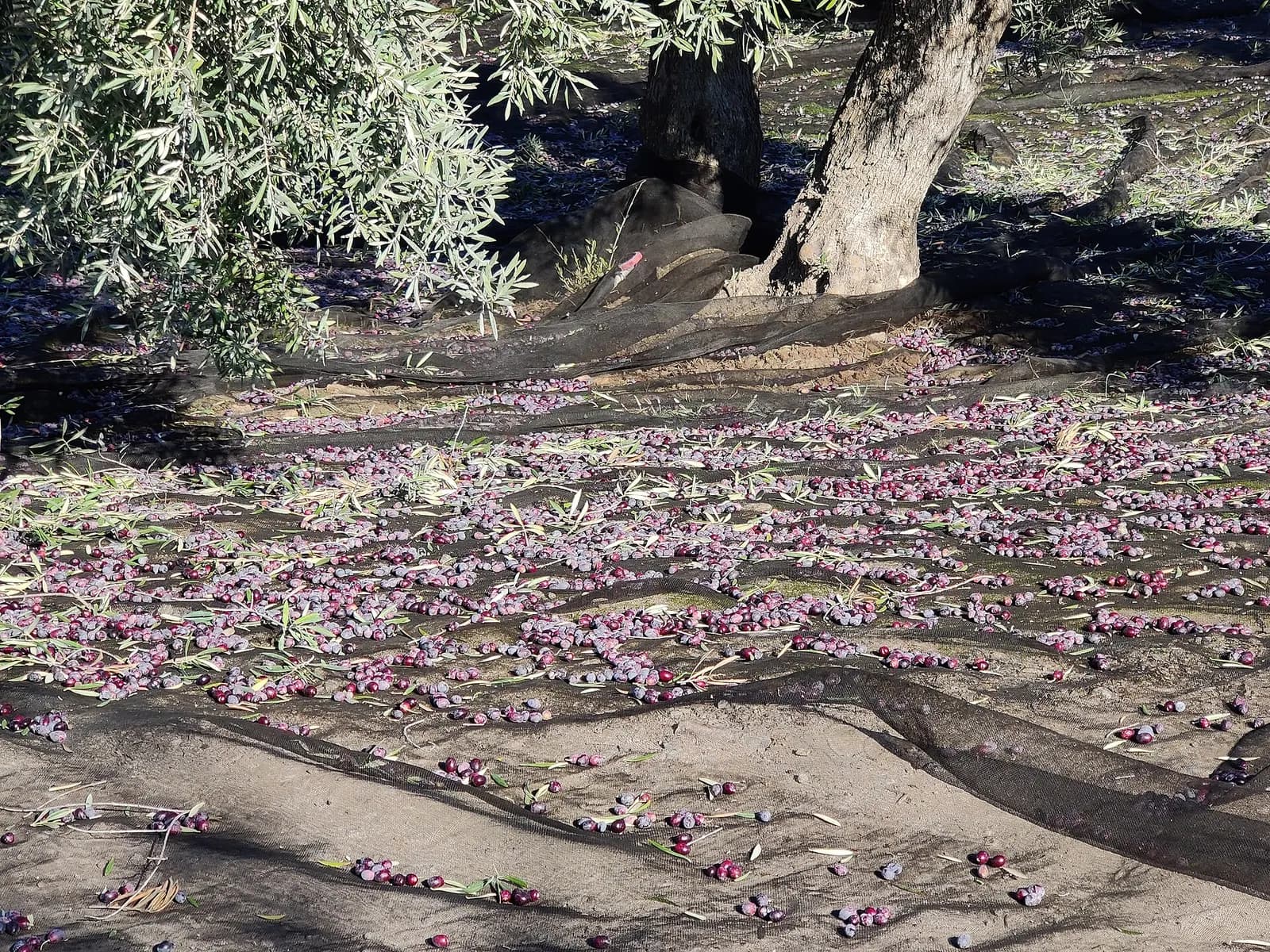
Picking has changed more than the trees. The Sierra de Segura council describes vibrators that clamp onto a branch, or tractors that shake the whole tree by the trunk, with nets called mantones spread underneath. Only olives taken from the tree go into the designated oil. Fruit that has dropped to the ground on its own is kept apart all the way to the mill. Speed matters as well, because olives begin to spoil once they are off the branch. The Sierra de Segura rules allow no more than 48 hours between picking and milling, and the council asks for the fruit to reach the mill the day it is picked.
Sierra de Segura, Sierra Mágina and Sierra de Cazorla: the mountain oils
Jaén has three protected designations of origin for olive oil, all named after mountain ranges, on top of the indication Aceite de Jaén, which covers the whole province.
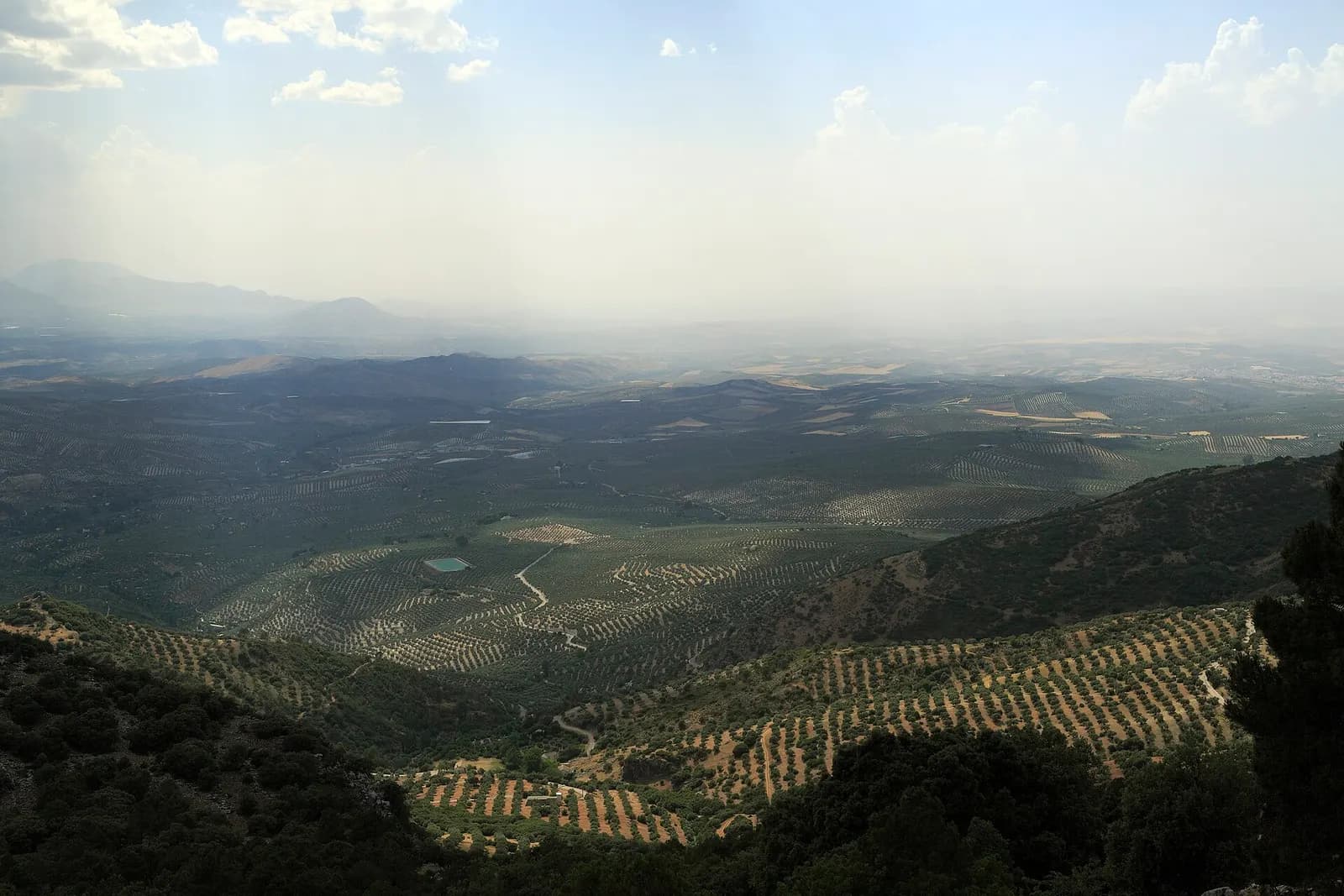
Sierra de Segura covers 14 municipalities in the north-east, about 40,000 hectares of olives and more than 8,000 growers. Its regulatory council was provisionally set up in 1979, Spain's agriculture ministry recognised it in 1993 and the European Union in 1996. The production area sits at an average altitude of 899 metres, with groves mixed into pine forest, and the council says its certified oils never go above 0.5 percent acidity, against the 0.8 percent allowed for any extra virgin oil.
Sierra Mágina, in the centre and south of the province, was recognised by the Andalusian government in 1995 and by the European Union in 1999. It has about 60,000 hectares of olives with an average slope of more than 15 percent, almost all of them traditional groves on small holdings, of Picual and a little Manzanillo de Jaén. The designation is frank about what that means: groves on a slope give less fruit, cost more to harvest and compete badly with those of the lowlands, so their future lies in better oil.
Sierra de Cazorla, in the south-east, covers nine municipalities around Cazorla and Quesada and 31,500 hectares of olives. Its rules allow Picual and a variety found nowhere else, Royal, or Royal de Cazorla, which grows on 1,843 hectares of that district and less than half a percent of the province's groves. The name, the designation suggests, comes from the reddish colour of the fruit as it ripens.
Olive oil prices in Jaén: from drought to plenty
Anyone who bought olive oil in northern Europe in 2023 or 2024 remembers the price. Behind it was the weather. According to the European Commission, Spain produced 1.49 million tonnes of olive oil in 2021/22, then 666,000 tonnes in 2022/23 and 855,000 in 2023/24, after two years of drought and heat. The crop came back to 1.42 million tonnes in 2024/25 and about 1.30 million in 2025/26.
The Commission's weekly price series follows extra virgin oil at origin in Jaén: the price a mill gets for oil in bulk, before anyone bottles, ships or sells it. It averaged €3.45 a kilo in 2021/22 and €7.84 in 2023/24, and peaked at €9.03 a kilo in the third week of January 2024. In the first week of November 2026 it was €3.01, a third of the peak.
Cheaper oil at origin is good news for shoppers and harder news on a slope in Sierra Mágina, where picking costs do not fall with the price. The groves that cost most to farm are often the old, steep ones that give the landscape its shape, and their oil sells into the same market as that of flat, irrigated plantations.
A short history of olive oil in Jaén
The Romans made the Guadalquivir valley one of the main oil suppliers of their empire. Oil travelled down the river in clay amphorae, and in Rome the empties were broken and dumped. The result is Monte Testaccio, an artificial hill made largely of oil jars from Baetica, the Roman province that roughly matches today's Andalusia. The Jaén tourism board puts it at 35 metres high and 50 million amphorae: breaking them, it says, was cheaper than sending them back. Beside the Bulevar of Jaén city, the Roman villa of Cortijo de los Robles holds one of the largest Roman oil mills found in Hispania.
Al-Andalus left irrigation, grafting and the words themselves: aceite (oil) and almazara (oil mill) both come from Arabic. According to the tourism board, the oil was valuable enough for the Almohad towers of Santa Catalina at Orcera, in the Sierra de Segura, to be built to guard the olive groves rather than to watch for armies.
The sea of olives as it looks today took shape in the 19th century. Olive groves paid eight times as much as wheat, the tourism board says, so cereal fields were replanted with trees. Industrial Europe bought the oil to light lamps and grease machines, and the mills swapped animal power for steam engines and iron hydraulic presses. The Hacienda La Laguna, a 17th-century estate near Baeza that grew into a great oil mill, is what the tourism board calls the cathedral of oil. The old oil train line through the groves is now the Vía Verde del Aceite, a greenway for walking and cycling.
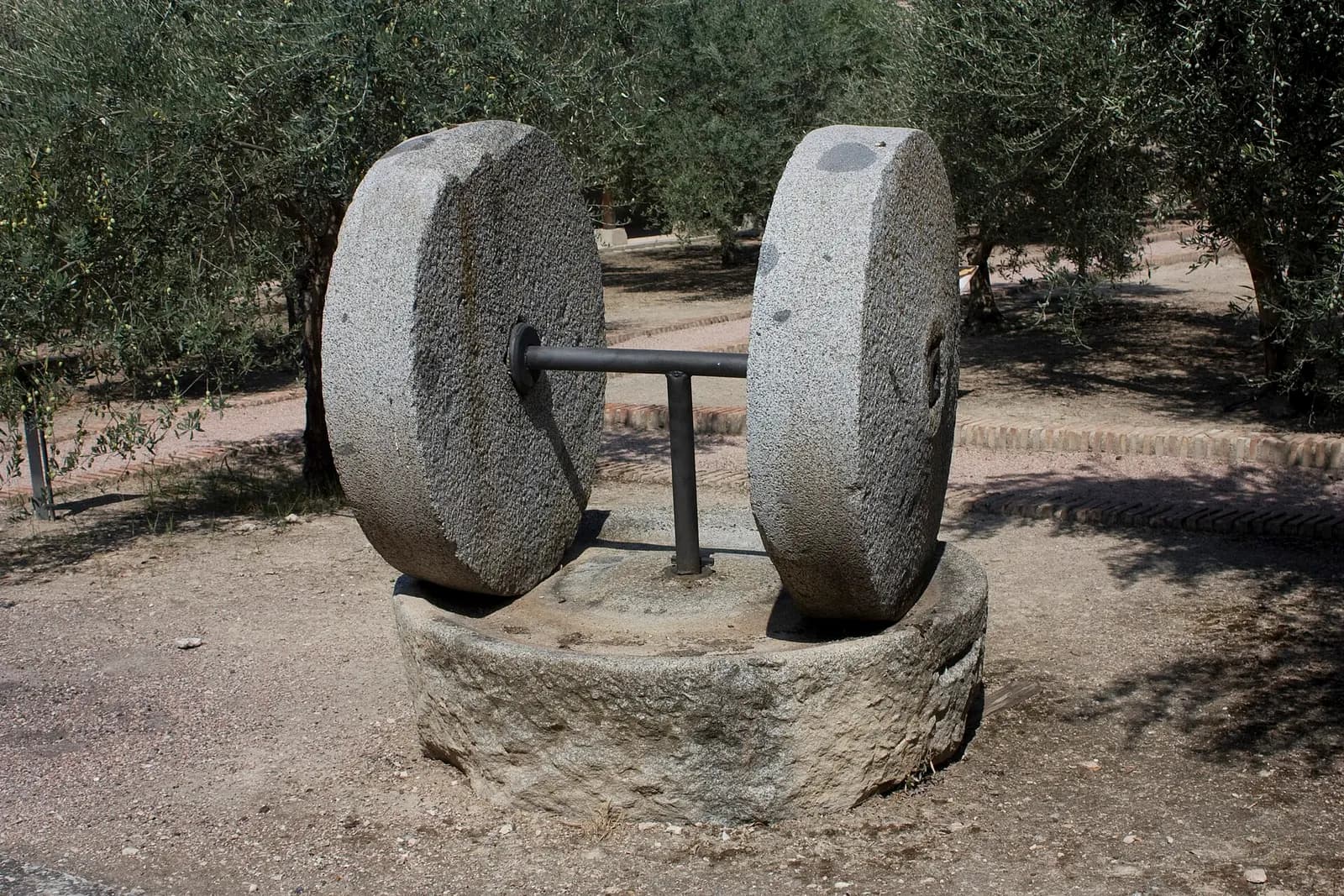
The wealth was never evenly shared. In 1937, in the middle of the Civil War, the poet Miguel Hernández published Aceituneros, a poem that asks the proud olive pickers of Jaén who raised the olive trees and whose they are. Since 2012 its verses have been the words of the official anthem of the province. The question has not gone away. In 2024 a bid to put the olive landscapes of Andalusia on UNESCO's World Heritage List was withdrawn amid opposition from farmers around Porcuna, where, they said, some 40 percent of the proposed land lay, and who feared it would give the authorities a say over their own groves.
How to taste olive oil like a professional panel
Under EU rules, set out in Delegated Regulation (EU) 2022/2104, an extra virgin olive oil has to pass two tests. One is chemical: a free acidity of no more than 0.8 percent. The other is sensory: a trained panel must find some fruitiness and no defects at all. Acidity cannot be tasted. It is a laboratory measure of how damaged the fruit was, not of sourness.
Tasting like a panel is simple:
- Use a small glass, not bread. Panels taste from dark glasses so that colour does not sway anyone. Colour says little about quality.
- Warm it in your hand and smell it. The official method tastes oil at 28 °C. Good oil smells of fruit, green or ripe: grass, tomato, apple, almond.
- Sip, then draw in air through your teeth. Bitterness and pungency are positive attributes in the official method. A fresh Picual can make you cough. That is a compliment.
- Learn the defects. Fusty is the smell of olives left piled up until they ferment, musty of mould, winey of wine or vinegar, rancid of oxidised oil. Once you know them, you find them more often than you would like.
When buying, look for the harvest season on the label, not just the best-before date, and for a dark bottle or a tin. Light, heat and air are what age oil, so keep it in a cupboard and use it within a few months of opening.
Visiting the Jaén olive oil harvest
The provincial government runs Oleotour Jaén, which lists mills that open to visitors, olive oil museums and places to stay among the groves. Úbeda and Baeza, two Renaissance towns on the ridge above the Guadalquivir valley, have been a UNESCO World Heritage Site since 2003. Úbeda has an interpretation centre for the olive and its oil, and the Hacienda La Laguna, near Baeza, a museum of olive culture.
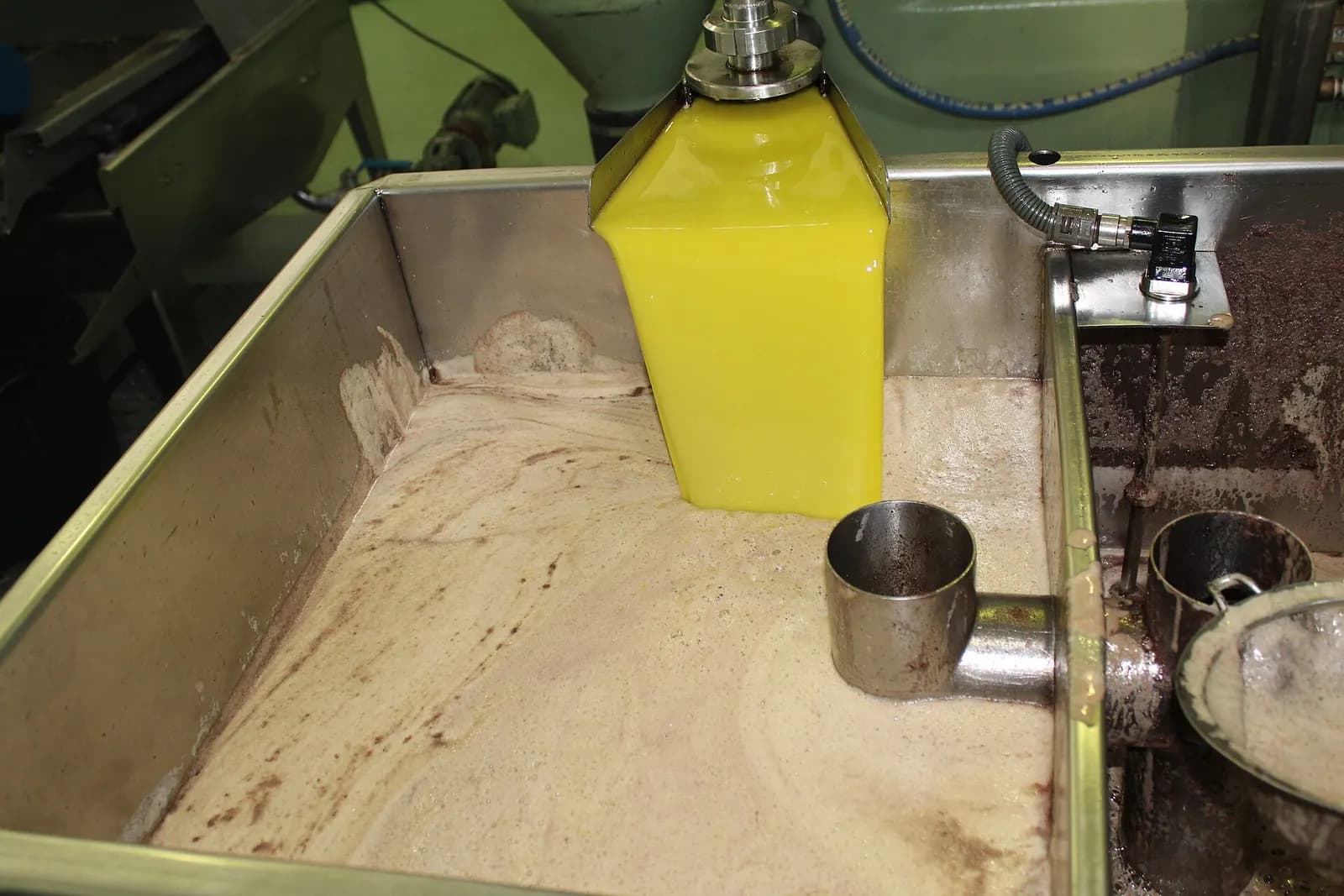
Each November the provincial government holds the Fiesta del Primer Aceite, the first oil festival, in a different town of the province, and in recent years has taken it on to other Spanish cities. Martos, south-west of the city of Jaén, holds its Fiesta de la Aceituna around 8 December, a public holiday. On that day in 2024 its programme included pressing the first oil of the year in a hand-turned screw press and a tasting of hoyo, which it calls the olive pickers' dish. Dates change every year. The best way to taste the season, though, is less organised: ask in a village which mill has started, and go when the new oil comes out, green and cloudy.
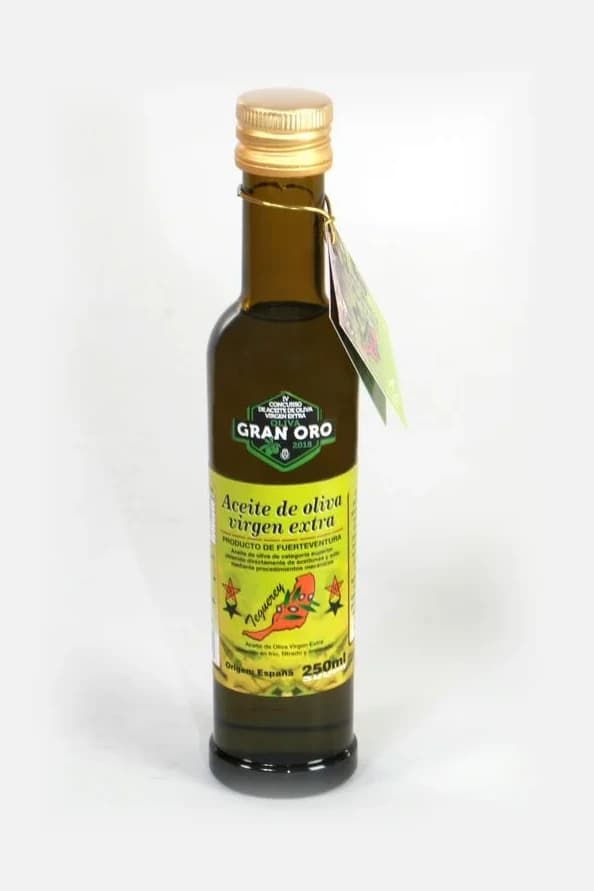
Olive oil is also made on a far smaller scale on Fuerteventura, in the Canary Islands, which is another story. More of the province is on our page about Jaén, and the rest of the south in Andalusia.
The olive country has an appointment near the end of the 2027/28 harvest. On the evening of 26 January 2028 an annular eclipse crosses Andalusia at sunset. Seen from Jaén, the Moon sits inside the Sun for nearly seven minutes, leaving a ring of light about five degrees above the horizon, and the Sun sets before the eclipse is over. The mills will probably still be pressing.
Questions
- When is the olive harvest in Jaén?
- The olive harvest in Jaén runs from late October to January, and in some mountain groves into February, depending on the size of the crop. In the Sierra de Segura the designation of origin considers October to December the best period, around the envero, when most olives turn from green to purple, usually in the second or third week of November.
- What is early harvest olive oil?
- Early harvest olive oil, cosecha temprana in Spanish, is pressed from green olives before they change colour. It gives less oil per kilo of fruit and tastes greener, more bitter and more peppery than oil from riper olives. In Jaén it is the first oil of each season, made from late October.
- How much olive oil does Jaén produce?
- Spain's Ministry of Agriculture expects Jaén to produce 575,000 tonnes of olive oil in the 2026/27 season, 36 percent of Spain's estimated 1.6 million tonnes and more than Italy and Greece made together in 2025/26. The province has more than 70 million olive trees on 582,427 hectares, and more than 90 percent of the groves are Picual.
- What are the olive oil designations of origin in Jaén?
- Jaén has three protected designations of origin named after its mountains, Sierra de Segura, Sierra Mágina and Sierra de Cazorla, and the protected geographical indication Aceite de Jaén, which covers the whole province. Their oils are mostly Picual. Sierra de Cazorla also allows Royal, a variety found only there, and Aceite de Jaén only covers oil from olives picked before 31 December.
- Why did olive oil prices fall after 2024?
- Olive oil prices rose in 2023 and 2024 because drought and heat cut Spain's production to 666,000 tonnes in 2022/23 and 855,000 in 2023/24, against 1.49 million in 2021/22. As the crop recovered, the European Commission's price for extra virgin oil at origin in Jaén fell from a peak of €9.03 a kilo in January 2024 to €3.01 in November 2026.
- Can you visit olive oil mills in Jaén during the harvest?
- Yes. The Jaén provincial government's Oleotour Jaén programme lists olive oil mills that open to visitors, museums and places to stay among the groves, and its Fiesta del Primer Aceite, the first oil festival, is held each November in a different town of the province. From November to January the mills of Jaén are pressing the new harvest.