Fuerteventura olive oil: groves on an island with 98 mm of rain
Tiscamanita, Fuerteventura//Products/8 min read
An island with less than 100 millimetres of rain a year made more extra virgin olive oil than any other Canary island in 2023. In 2024 it made none at all.
 Written with by Eduardo Peire
Fuerteventura olive oil comes from irrigated groves in the dry interior of an island where the airport weather station records about 98 millimetres of rain a year. In less than a decade olive growing in the Canary Islands went from about 100 to 600 hectares, and by 2023 Fuerteventura had the second largest area after Gran Canaria and made more extra virgin oil than any other island. Its best-known oil, Teguerey, from the village of Tiscamanita, was named the best extra virgin olive oil of the Canary Islands at the regional Agrocanarias competition in 2018, 2022, 2023 and 2024.
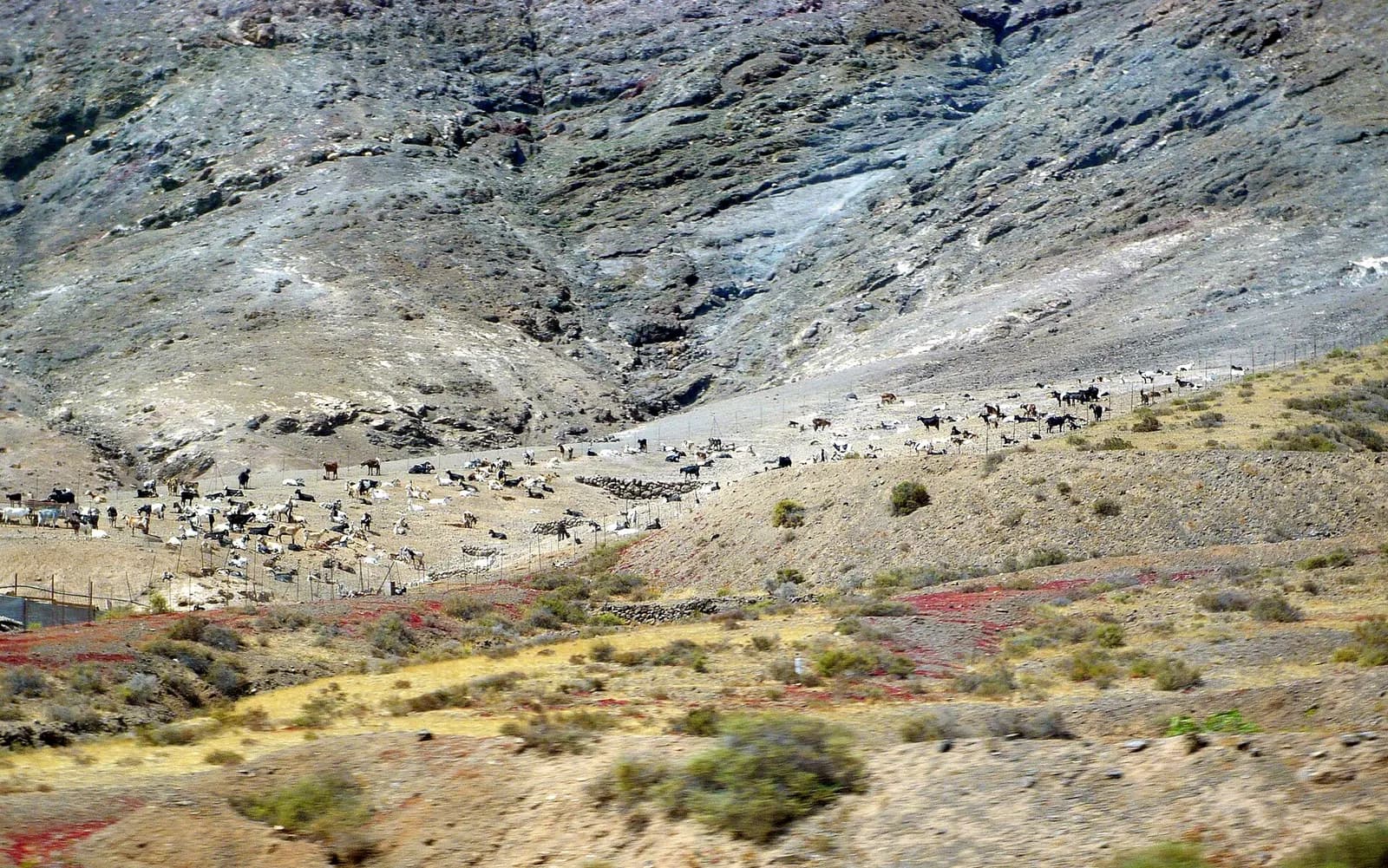
It is not what anyone expects from Fuerteventura. The island is known for wind, beaches and dunes, and for goats that live on very little. Olive trees put up with drought better than most crops, but a grove that is meant to give oil every year needs water, and on Fuerteventura water has to be pumped from the ground or taken from the sea.
How dry is Fuerteventura?
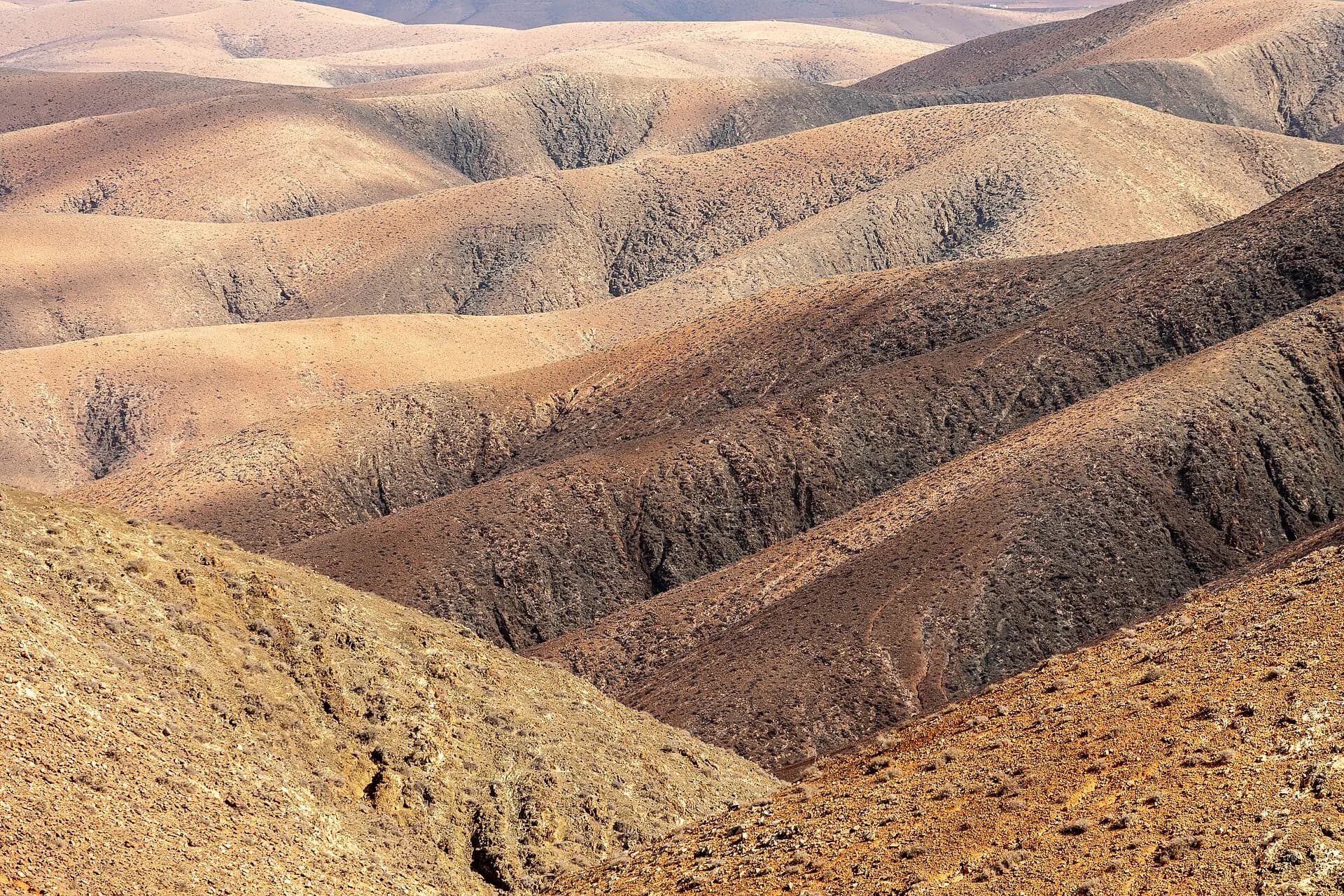
Very. At the airport weather station, the Spanish weather agency AEMET recorded an average of 98 mm of rain a year between 1981 and 2010, and an average temperature of 21.1 °C. December, the wettest month, brings 26 mm. From May to September the five months together bring 3 mm, and June, July and August average exactly zero. Most of the island gets less than 100 mm a year, and only the higher ground reaches about 250. Winter barely happens: in January, the coldest month, the average night-time low at the airport is 14.7 °C. UNESCO made the whole island a biosphere reserve in 2009.
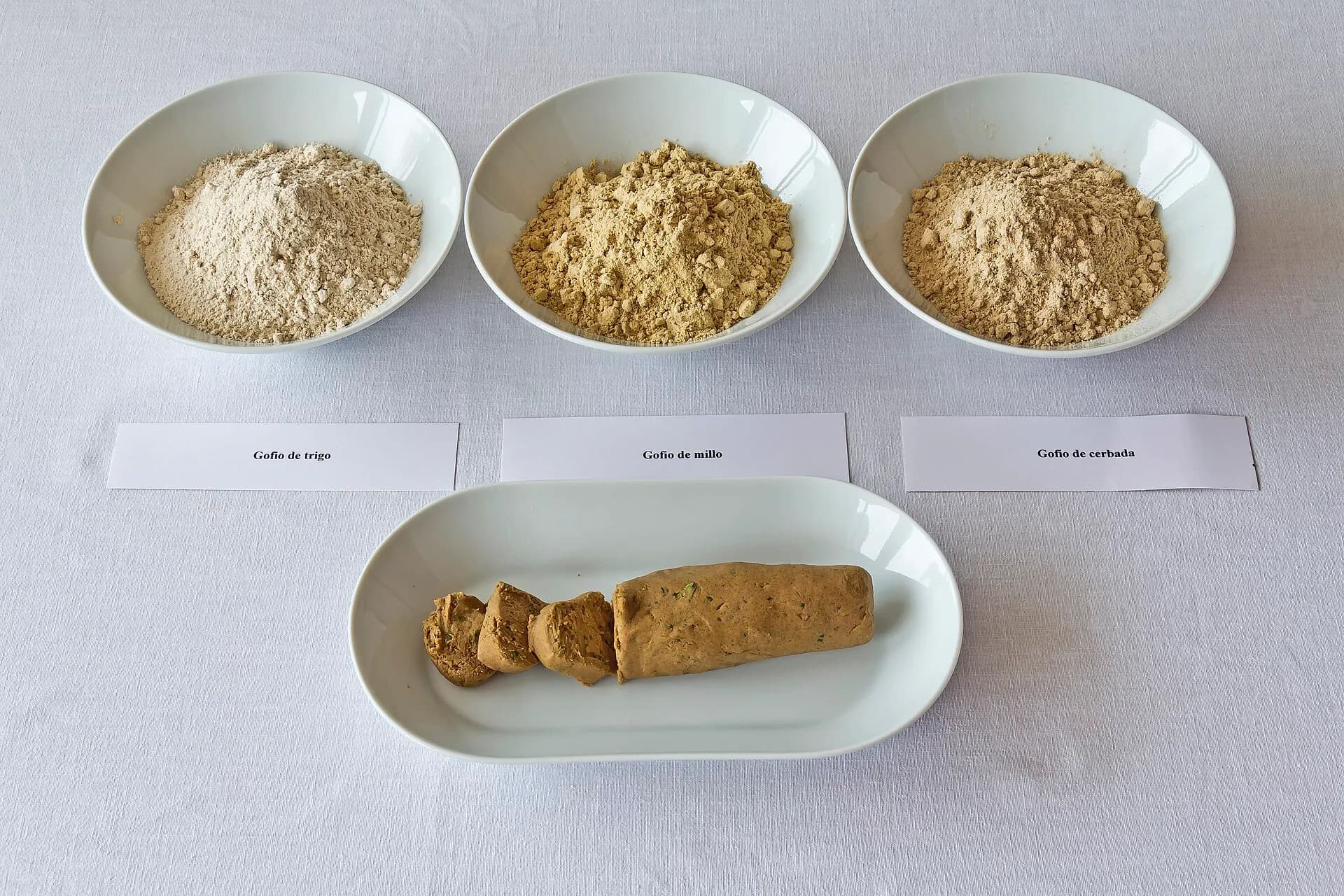
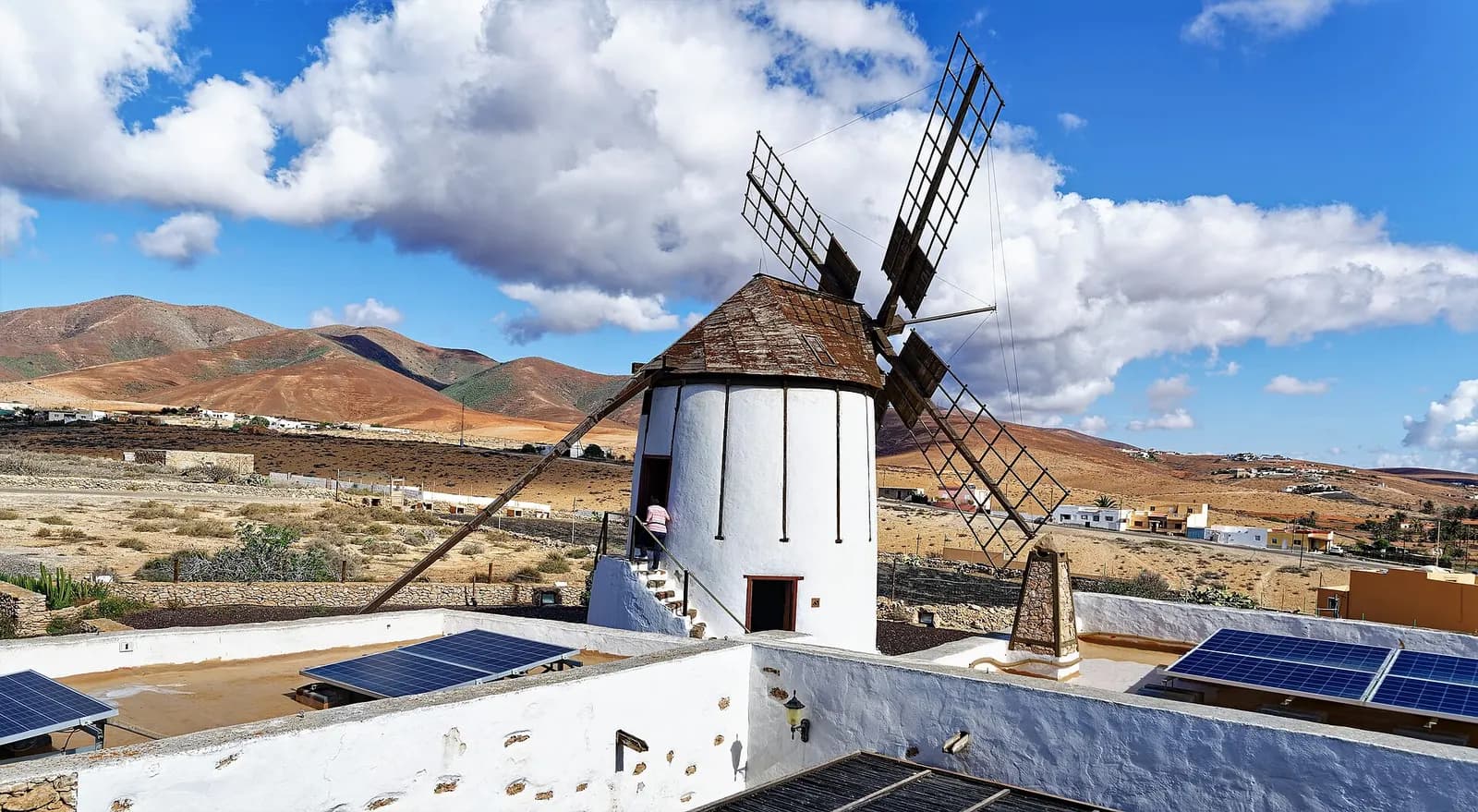
It was once a land of grain. For many years Fuerteventura was called the granary of the Canary Islands, because it grew the cereals that fed the rest of the archipelago, and the grain museum in La Oliva tells how overgrazing helped strip the island to the bare landscape it has today. In Tiscamanita, the Los Molinos visitors' centre, in a traditional house beside a restored windmill, explains how that grain became gofio, for centuries the island's defence against hunger. That story is told in what is gofio.
The new olive groves of the Canary Islands
Olive oil as a crop is recent in the Canaries. According to the Canary Islands Institute of Agri-food Quality (ICCA), the islands' olive harvest tripled between 2012 and 2022, from 411 to 1,326 tonnes. In 2023 the institute put the area of olive groves at 232.1 hectares on Gran Canaria, 165.5 on Fuerteventura and 108.1 on Tenerife, with a few hectares on the other islands. That year the islands made 165.07 tonnes of extra virgin olive oil, and 62.07 of them came from Fuerteventura, more than from Gran Canaria.
The regional competition has grown with the groves. In 2023 it judged 16 oils from 11 mills. At Agrocanarias 2024, held on 31 January at the Mirador de La Peña on El Hierro, 28 oils from 17 mills on six islands were tasted blind by eleven specialists, who warmed each glass in their hands to about 28 to 30 °C before tasting. Thirteen of the 28 came from Fuerteventura, Canarias7 reported. Besides the best oil of the Canaries, the island took home a gold and a silver medal.
Then there was no competition at all. The 2025 edition was not held, the ICCA explained later, because the 2024 harvest had been practically non-existent. It came back in March 2026 on La Gomera, with 21 oils from 12 mills. The best extra virgin olive oil of the Canaries was again an arbequina and hojiblanca blend from Fuerteventura, from another producer, and Teguerey won a gold medal with a blend of arbequina, hojiblanca and picual.
Teguerey, in Tiscamanita
Tiscamanita is a village in the municipality of Tuineje, in the middle of Fuerteventura. Luis Hernández, born in San Mateo, on Gran Canaria, in 1950, came to olives from the hospitality trade, and began buying land between Tiscamanita and Tuineje, as Canarias7 told in a profile. Today the Teguerey estate covers more than 85,000 square metres, with more than 2,500 arbequina, picual and hojiblanca olive trees. Around 2008 he bought a desalination plant to water them, and around 2014 he set up his own mill. Mohamed Galdi El Aouni, who worked on the estate as his assistant and was in charge of the mill by 2024, now runs Teguerey.
They pick the olives the traditional way, when they are between green and yellow and never black, and do not pile them up, so the weight does not bruise the ones underneath. The olives never go into cold storage: they are washed and milled in the estate's own mill at most six hours after picking. Hammers crush them, the paste is mixed at a low temperature, a centrifuge turning at 6,500 revolutions a minute separates the oil from the water and the solids, and the oil rests for two or three months in stainless steel tanks. The stones end up as biomass fuel.
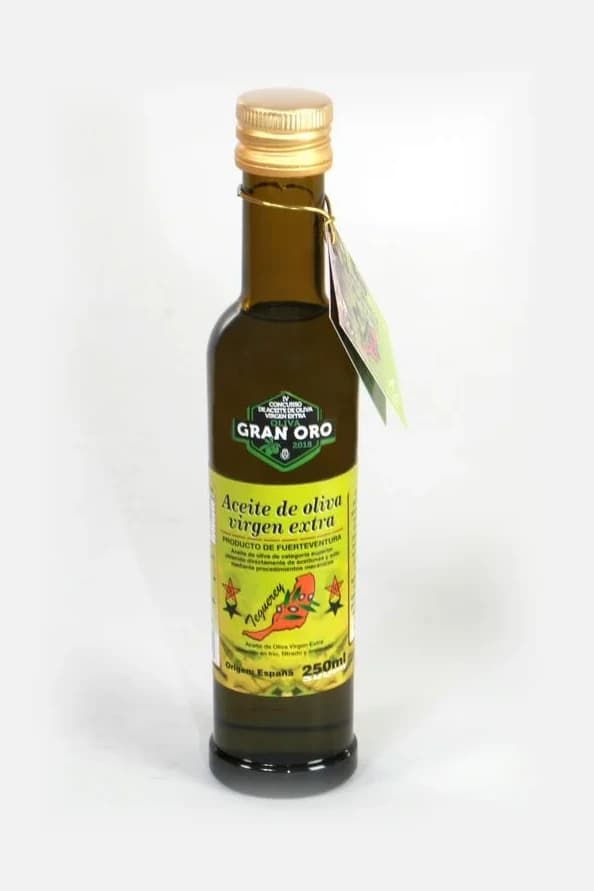
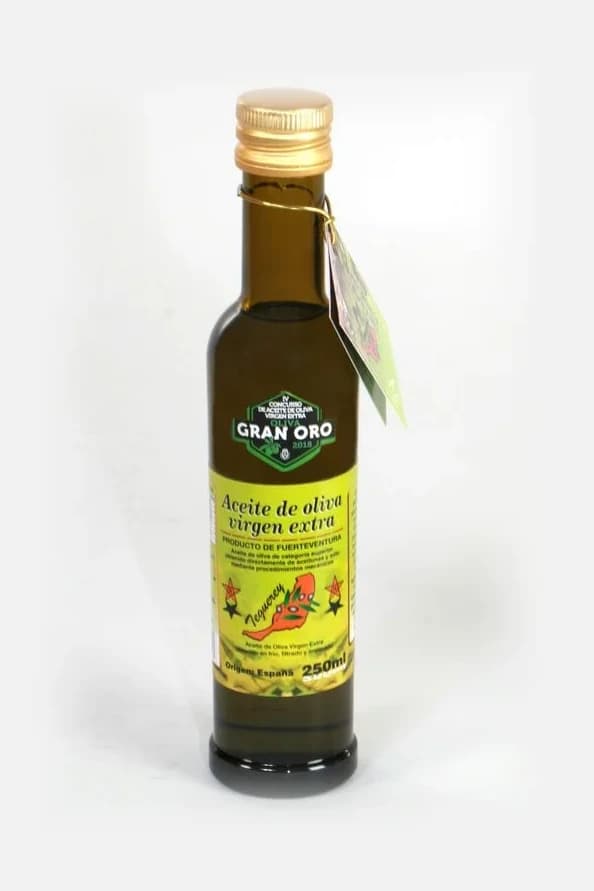
Their oil was the best in the Canary Islands at Agrocanarias in 2018, 2022, 2023 and 2024, and a different blend won each year. In 2023 it was hojiblanca and picual. In 2024 the winner was the arbequina and hojiblanca blend, the same two varieties as the Teguerey extra virgin olive oil we sell, which has an acidity of 0.1%. All three are varieties of mainland Spain: arbequina from Catalonia, named after the village of Arbeca, and picual and hojiblanca from Andalusia.
In February 2023, after one of those wins, Canarias7 ran an interview with Hernández under a headline that sums up the scale of the place: "Tengo 2.500 olivos y no planto ni uno más, ni en una maceta". In English: he has 2,500 olive trees and is not planting a single one more, not even in a flowerpot.
Do olive trees need watering in the desert?
On Fuerteventura, yes. In the Canarias7 profile Hernández explained that an olive tree needs about 30 litres of water a day, some 200 a week, and called the idea that olives do not need watering a mistake. The first land he bought had water, but he went looking for more, and the desalination plant came on top. That is the honest arithmetic behind olive oil on a dry island: the trees are fed partly with water from which the salt has been removed, with the energy that takes.
Water is not the only problem. In August 2025 RTVC reported that the 2024 olive harvest on Fuerteventura had been a historic zero across the whole island. For 2025 Teguerey expected about half of its 2023 crop. Mohamed put it down to a winter without enough cold and a long, hot summer, which upset the flowering, to climate change in general and to a moth that attacks the flowers and the olives. Quality, he said, was not the problem. Quantity was.
Olive trees need a spell of cool weather in winter to flower well. On an island where a January night averages 14.7 °C, that spell does not always come, and no desalination plant can supply it.
What makes an oil extra virgin?
Extra virgin is a legal category, not a marketing adjective. Under EU Regulation 2022/2104, an extra virgin olive oil must have an acidity of 0.8% or less and stay within limits for peroxides, for ultraviolet readings that reveal old or damaged oil and for ethyl esters. It must also pass a panel of trained tasters: no defects at all, and some fruitiness. Fail the panel and it is not extra virgin, whatever the lab says.
Two phrases on a label mean something precise:
- Cold extraction may only be used for virgin and extra virgin oils obtained below 27 °C by centrifuging or percolating the olive paste. Teguerey extracts its oil cold.
- Acidity may only be printed on the label if the peroxide value, the wax content and the ultraviolet readings are printed with it, in the same size of type and in the same field of view.
Teguerey's 0.1% is a long way under the legal limit of 0.8%. Low acidity alone does not make a great oil, but it usually means the olives were sound and reached the mill quickly, which, with picking and milling within six hours, is the point.
How to use Fuerteventura olive oil
Use it raw, where you can taste it: on bread, on tomatoes, on grilled fish or on potatoes. Keep the bottle away from light, at about 20 °C, and finish it rather than saving it for a better day.
The island has its own match for it. Majorero cheese, a protected designation of origin, is made from the milk of the Majorera goat, sometimes with a little sheep's milk, and ripened for at least eight days. Its sides carry the marks of the palm-leaf bands that hold it in shape, and the rind may be rubbed with paprika, olive oil or toasted maize flour, which in the Canaries means gofio. A piece of Majorero, some bread and a little oil from the same island make a simple lunch with almost no travel in it.
Fuerteventura's interior, between the windmills and the groves
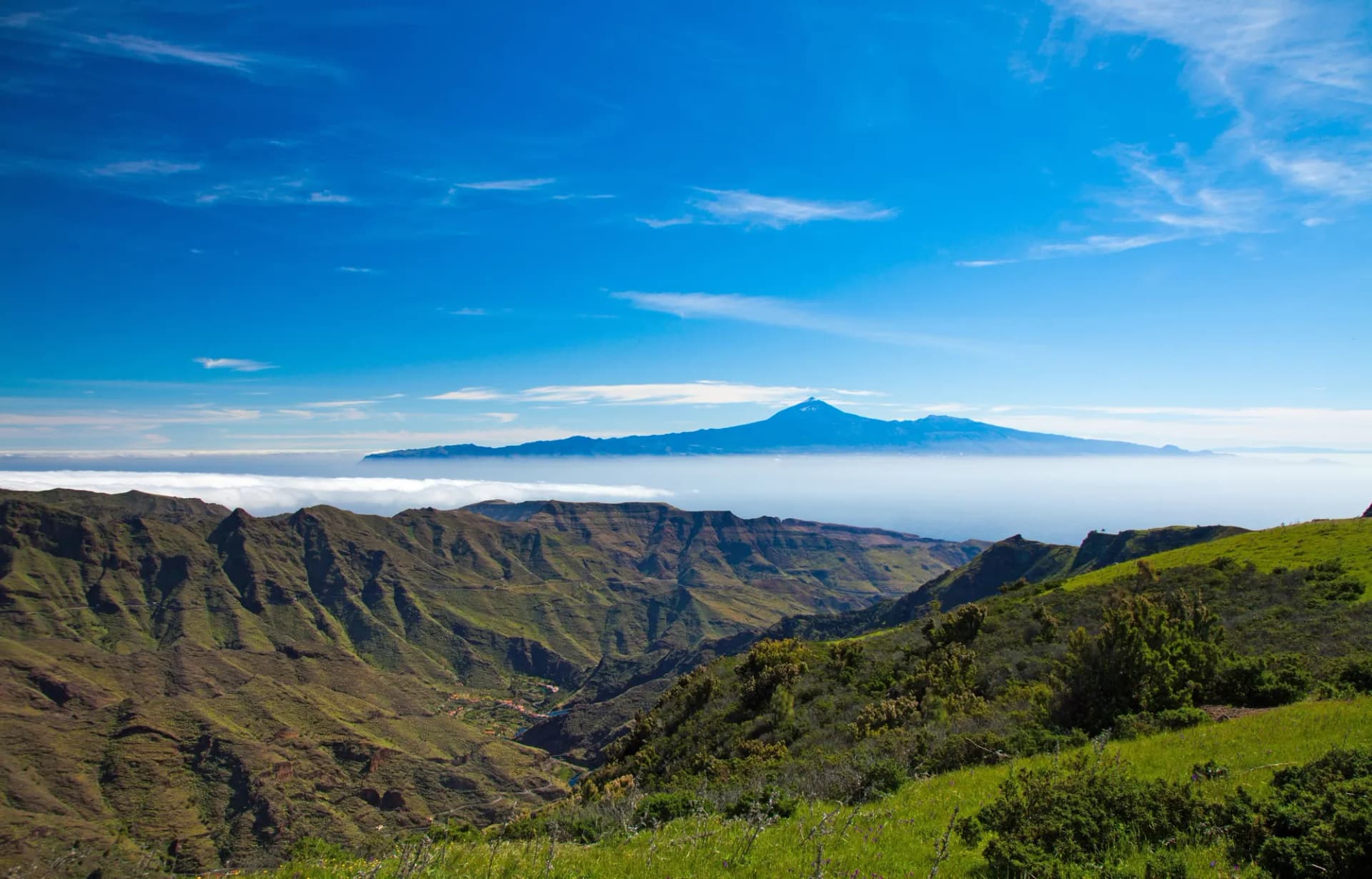
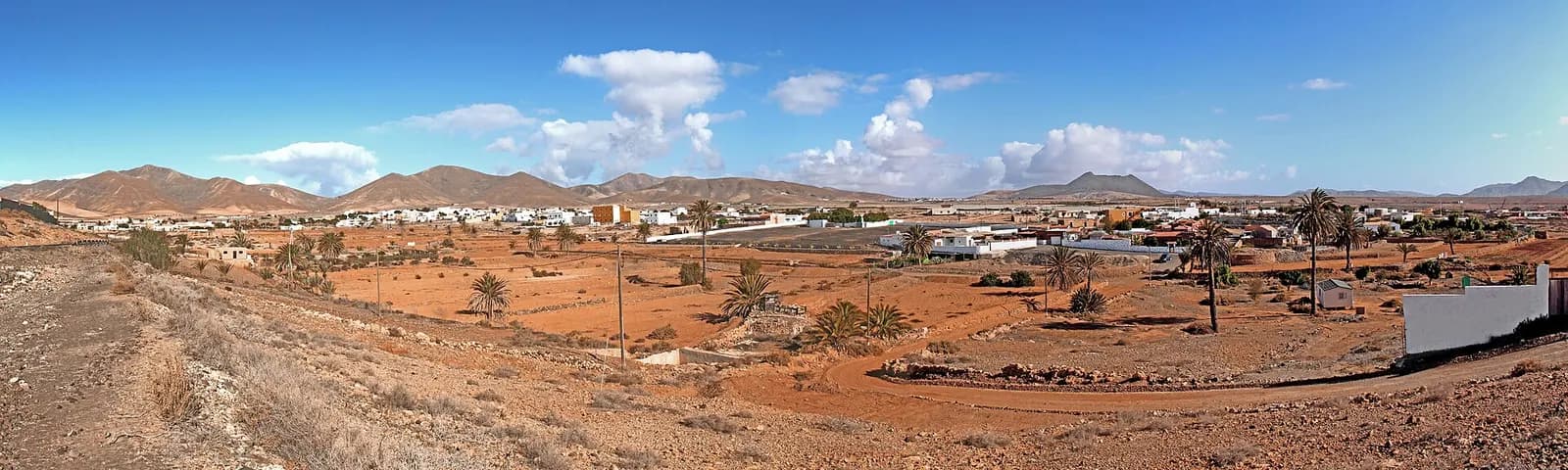
Most visitors come for the coast, the wind and the sea; the kite and windsurf side of the island has its own story. The interior is different: wide brown valleys, low worn-down volcanoes, white villages and windmills that once ground grain. Tiscamanita has its windmill centre. The groves are harder to spot. On an island this bare, a patch of grey-green trees in rows usually means someone has found water.
The ICCA publishes the results of the Agrocanarias oil competition every year it is held. Reading the list and tasting the Fuerteventura winners side by side is the most useful homework a visitor can do. The rest of the Canary Islands make oil too, and Gran Canaria has the most groves.
In 2024 the island's olive harvest was zero. Between May and September the sky over it brings, on average, 3 mm of rain. Every bottle from Fuerteventura is also a weather report.
Questions
- Can olive trees grow in Fuerteventura?
- Yes, with irrigation. Fuerteventura gets about 98 mm of rain a year, so its olive groves are watered, partly with desalinated water. In 2023 the island had 165.5 hectares of olives, the second largest area in the Canary Islands after Gran Canaria, and made 62.07 tonnes of extra virgin olive oil, more than any other island.
- What is the best olive oil in the Canary Islands?
- Agrocanarias, the official competition of the Canary Islands government, named Teguerey, from Tiscamanita in Fuerteventura, the best extra virgin olive oil of the Canaries in 2018, 2022, 2023 and 2024, each year with a different blend. There was no competition in 2025. In 2026 the title went to another arbequina and hojiblanca oil from Fuerteventura, and Teguerey won a gold medal.
- Why was there no olive harvest in Fuerteventura in 2024?
- The 2024 olive harvest in Fuerteventura was a historic zero, RTVC reported, and the regional olive oil competition was cancelled in 2025 for lack of oil. Growers blamed a winter without enough cold and a long, hot summer, which upset the flowering, together with a moth that attacks the flowers and the olives.
- What does extra virgin olive oil mean?
- Under EU Regulation 2022/2104, extra virgin olive oil must have an acidity of 0.8% or less, stay within laboratory limits for peroxides and ultraviolet readings, and pass a tasting panel with no defects and some fruitiness.
- What does cold extraction mean on an olive oil label?
- Under EU rules, cold extraction may only appear on virgin or extra virgin olive oil obtained below 27 °C by centrifuging or percolating the olive paste. Teguerey in Fuerteventura extracts its oil cold, on the day the olives are picked.
- What is Majorero cheese?
- Majorero is the goat's cheese of Fuerteventura, a protected designation of origin made from the milk of the Majorera goat, sometimes with a little sheep's milk, and ripened for at least eight days. Its rind may be rubbed with paprika, olive oil or toasted maize flour.