What is gofio, the toasted flour of the Canary Islands
Firgas, Gran Canaria//Products/9 min read
The islanders were grinding toasted barley before the Spanish arrived. Today maize rules, almost all the grain is imported and the master miller still sets the roast by smell.
 Written with by Eduardo Peire
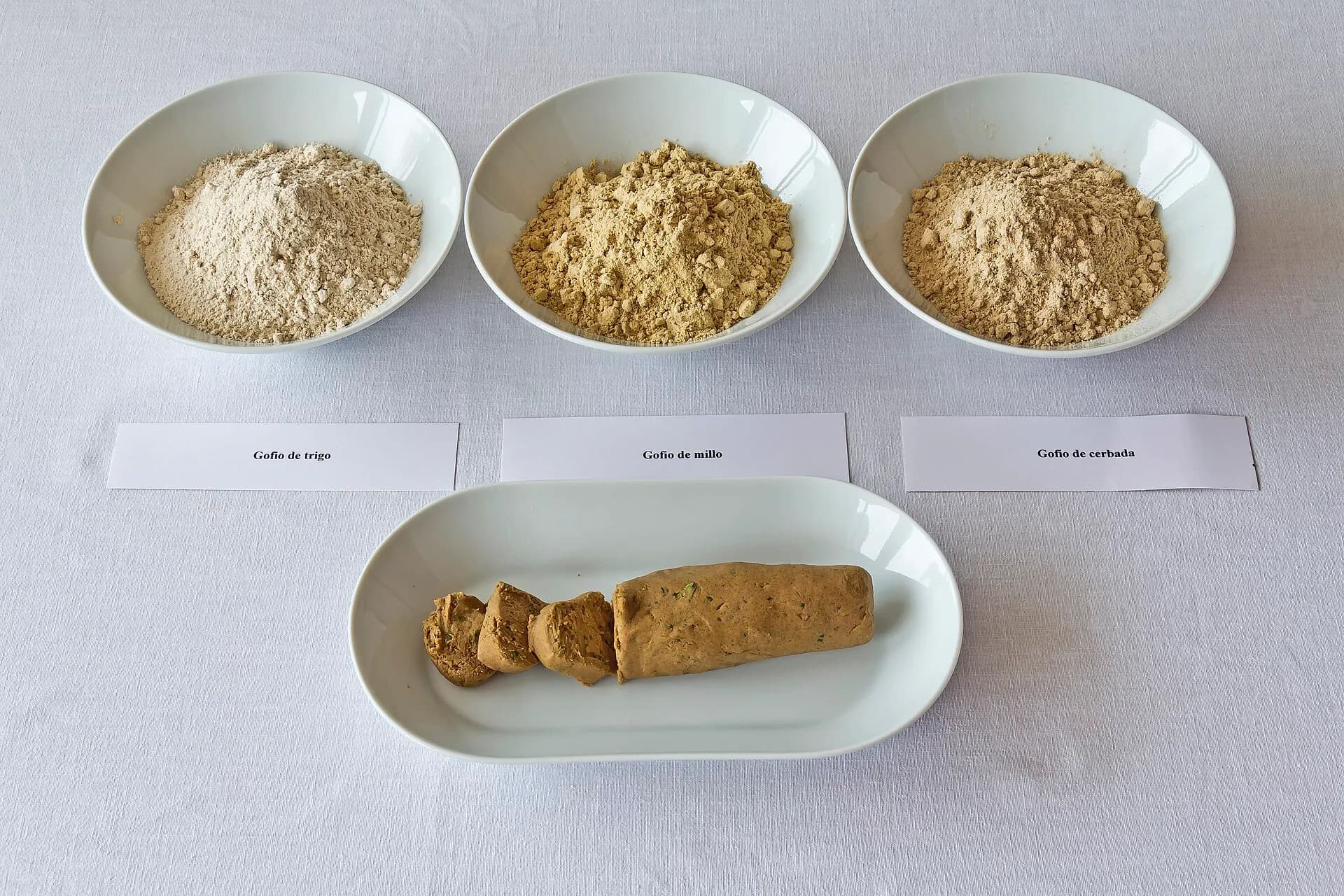
What is gofio? It is flour made from grain that is toasted before it is milled, so it is already cooked when it leaves the mill. In the Canary Islands it goes into the breakfast milk, into the broth of a fish stew and into a dough eaten with cheese, and the islanders were making it long before the Spanish conquest of the 15th century. Since 2014 Gofio Canario has been a Protected Geographical Indication (PGI) of the European Union: the toasting, the milling and the packing have to happen in the islands, under rules that cap the roast at 200 °C.
The toasting is the whole point. Ordinary flour has to be cooked before anyone can eat it. Gofio can be stirred into a glass of milk or a bowl of broth and eaten on the spot, which made it the food of farmers, shepherds, fishermen and emigrants for centuries, and explains why it never left the Canarian kitchen. It smells of toasted cereal and nuts and, depending on the roast, says its official specification, tastes of mocha, coffee or a sponge cake just out of the oven.
What is gofio made of?
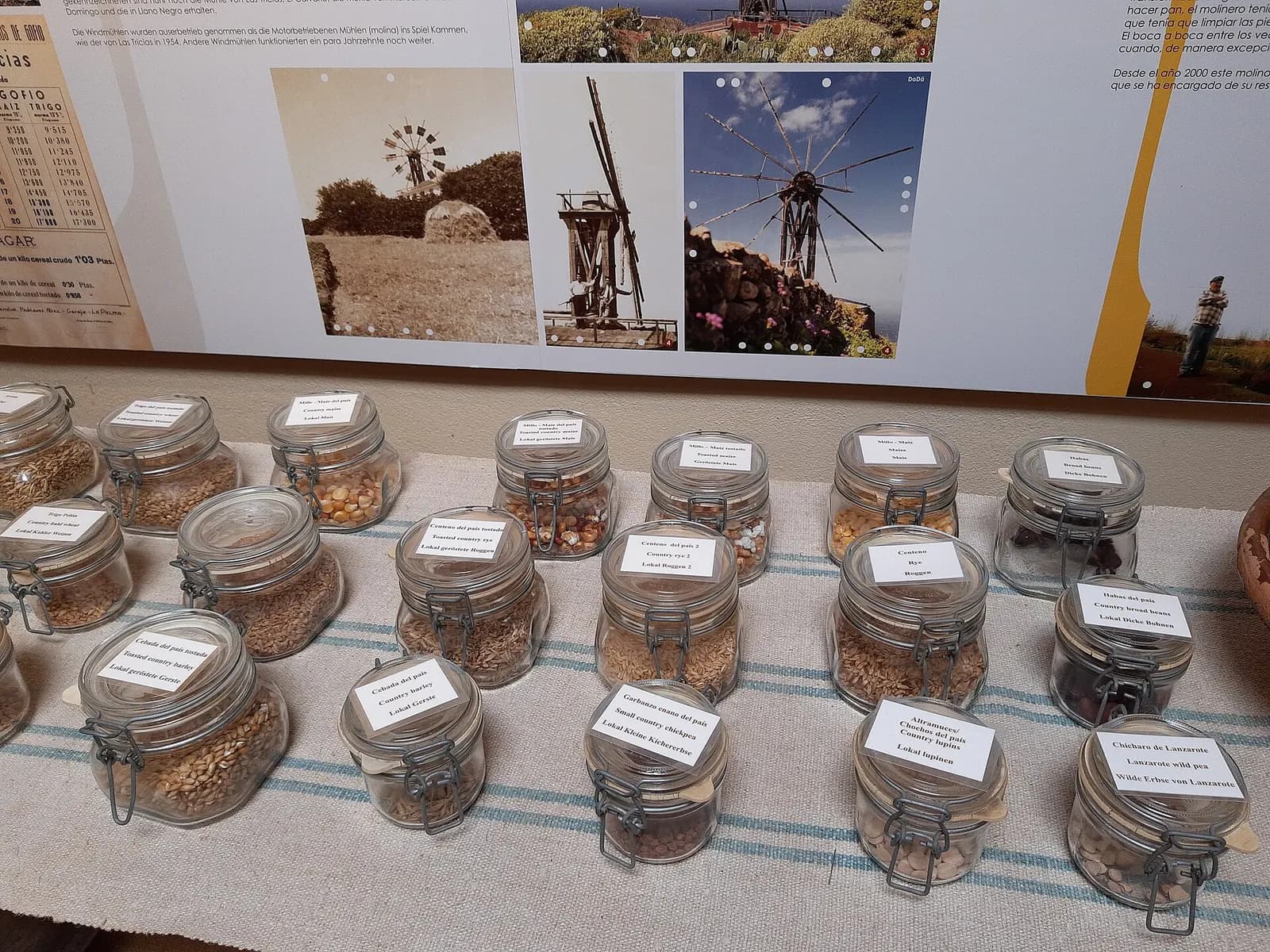
The specification for Gofio Canario, published by Spain's Ministry of Agriculture, lists the grains that can go into it: wheat, maize, barley, rye, oats and rice. Broad beans, chickpeas and soya may be added, toasted the same way, and so may sea salt. The grain is cleaned, toasted in roasters that may not go above 200 °C, left to cool in sacks or bins called cajas de enfriamiento, cooling boxes, and milled until the particles are about the size of those in wholemeal flour.
The person who decides when each step is finished is the maestro molinero, the master miller, and the specification describes his job at length. There is no programmed milling time, it says. He sets the roast by the aroma of the grain and by judging what comes out of the roaster, adjusting heat and time to each cereal and each batch. He stops the grinding when the flour feels smooth and slightly sticky between his fingers, and checks every batch before it is bagged. Mills have added steel rollers and machinery, but the end point is still set by a person. When the grinding is done between millstones, the label may say artesanal or elaborado en molino de piedra, made in a stone mill.
The colour runs from ivory yellow, through honey, to a dark reddish brown, depending on the grain and the roast. In 2024 the islands made 6.74 million kilos of gofio, up from 5.68 million in 2014, and sent about 1.7 million kilos abroad, according to figures reported by RTVC, the Canary public broadcaster, in September 2025. Maize, called millo in the islands, makes up 58% of it, wheat 20%, cereal mixes 16% and mixes of cereals and pulses 4%. Gran Canaria mills 3.48 million kilos and Tenerife 2.5 million. La Palma goes its own way: almost three quarters of its 846,000 kilos are wheat.
Where do gofio and its name come from?
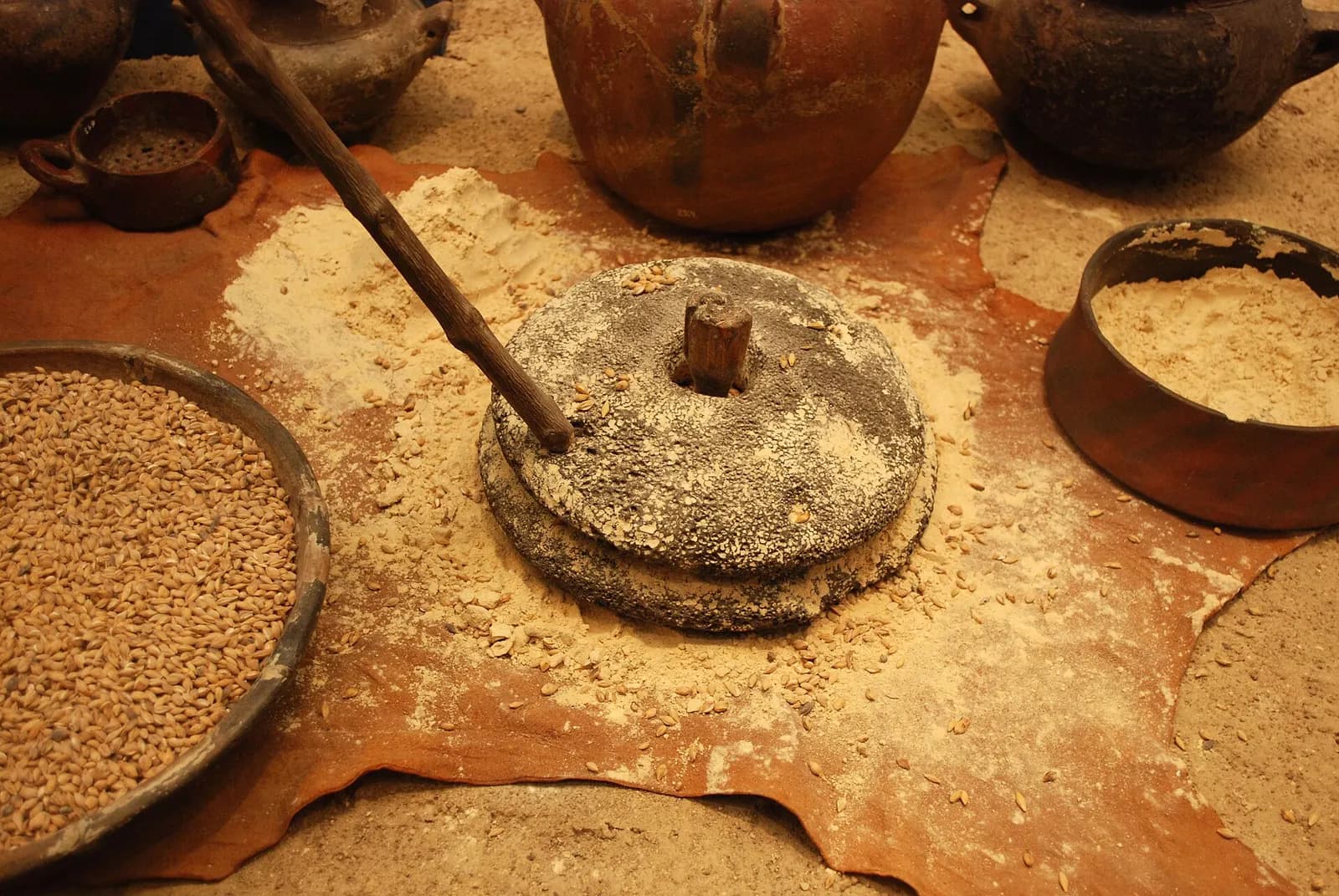
When the first Europeans reached the islands, the specification says, they found the islanders lightly toasting barley and other grain and grinding it in stone hand mills. The people of Gran Canaria already called it gofio. The specification, written in 2014, says the Royal Spanish Academy's dictionary gave the word a Guanche origin. The current edition of that dictionary puts it more carefully: a pre-Hispanic word, originally from the Canary Islands. Chroniclers wrote about the food from the start, among them the friar Abreu Galindo, whose history of the conquest of the seven islands dates from about 1590 to 1602, and Marín y Cubas in 1694.
The conquerors adopted it, and the emigrants took it with them. Canarians carried gofio across the Atlantic, and the word spread so far through Spanish America that, as the Canarian scholar José Pérez Vidal pointed out in 1955, some Spanish dictionaries had begun to list it as an Americanism. The Academy's dictionary still records its American lives. In Cuba, Puerto Rico, the Dominican Republic and Uruguay, gofio is a dish of very fine toasted maize flour and sugar; in Nicaragua, Puerto Rico and Venezuela, a sweet made from coarser toasted flour. In Cuba, it adds, comer gofio, to eat gofio, means to say or do something out of place. That use is marked as Cuban only.
How maize took over gofio
Barley was the grain of the ancient islanders. Maize came later, from the Americas, and how quickly it took over can now be read in bones. In May 2025 eleven researchers from the universities of Las Palmas de Gran Canaria, La Laguna and Burgos, the Museo Canario and the Institute of History of Spain's research council, the CSIC, published a study in the American Journal of Biological Anthropology on about a hundred human remains from 16th to 18th century sites in the north of Gran Canaria, and on livestock bones from around the old Hospital de San Martín in Las Palmas. Maize leaves a different carbon signature in the body from wheat and barley. As RTVC reported, the trace is already there in the 16th century, a mixed diet of maize and Mediterranean cereals settles in during the 17th, and by the 18th maize was a basic part of what the islanders ate. The animals were eating it too.
The harvest records agree. In 1789 Gran Canaria produced 42,554 fanegas of maize and 74,116 of wheat. By 1813 it was 98,708 of maize against 57,527 of wheat. A fanega is an old measure of volume, here 55.5 litres, so the comparison says more than the totals. In the wetter north of the island maize pushed out sugar cane, and with it came the gofio that dominates the islands today, gofio de millo.
Is gofio made with Canarian grain?
Mostly, no. In 2023 RTVC reported that barely 2% of the raw material for gofio was grown in the islands, on less than 700 hectares. Millers have bought maize abroad for years because local harvests are small, and they can tell the two apart at a glance: millo del país, local maize, is rounder and reddish, while imported maize is yellower and longer. The PGI protects the toasting and the milling, not the field. The specification allows the label to name the island and where the grain comes from, but does not require it.
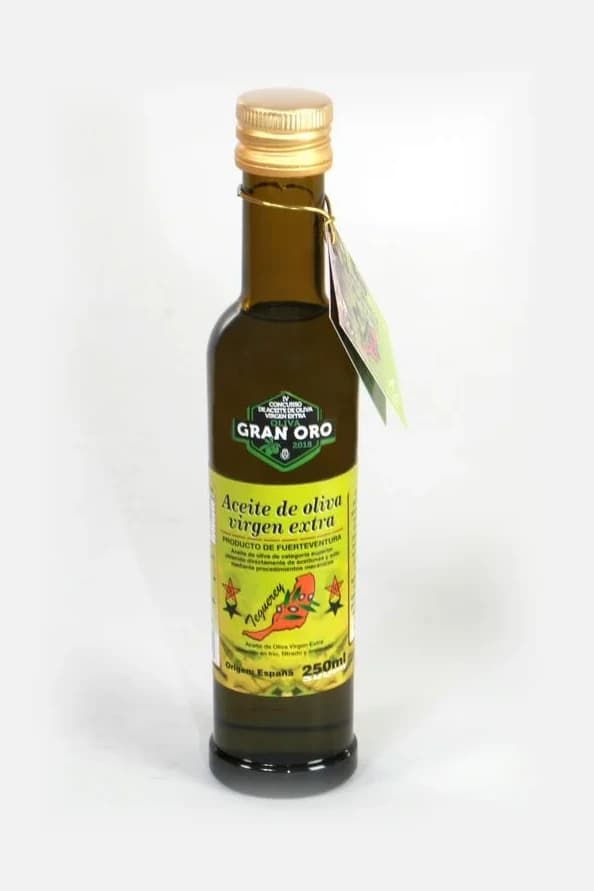
It was not always like this. Fuerteventura, which visitors now know for its wind and beaches, was once called the granary of the Canary Islands because it grew the cereals that fed the rest of the archipelago. In the village of Tiscamanita, the Los Molinos visitors' centre, beside a restored windmill, explains how gofio was for centuries the island's defence against hunger. The same village now makes olive oil, which is another story.
The official contest has noticed. The Agrocanarias gofio competition, run by the Canary Islands Institute of Agri-food Quality (ICCA), has given a special prize for the best gofio made from local grain since at least 2023. In 2023 and 2024 it went to a maize gofio from La Gomera, made by the mill in Hermigua that won best gofio of the Canaries five editions running up to 2024. In 2025 it went to a chickpea gofio from Lanzarote.
Gofio de millo in Firgas
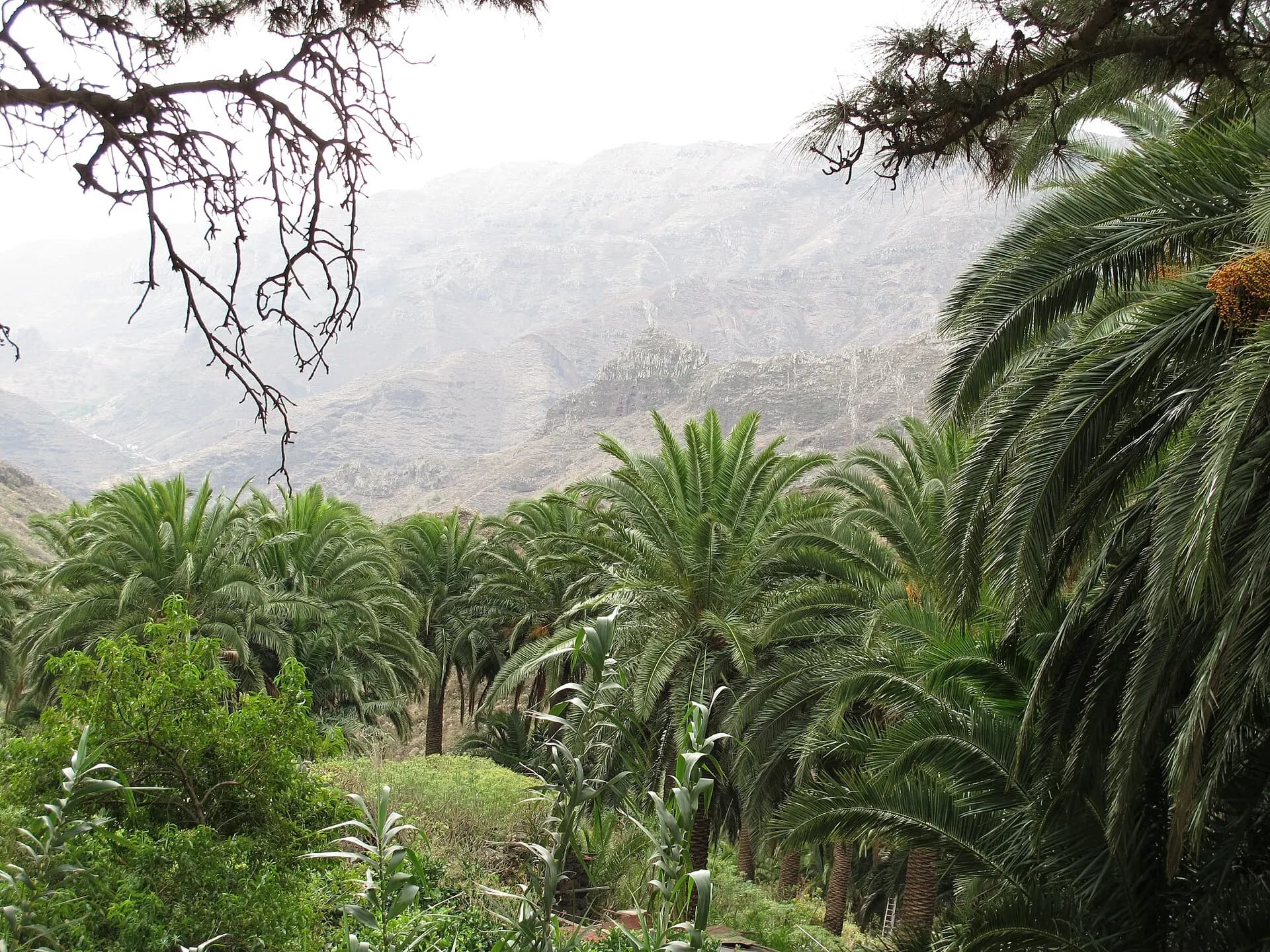
Firgas is in the green north of Gran Canaria, the side of the island that catches the rain. Its water mill, the Molino de Agua de Firgas, also called the Molino del Conde, dates from the 16th century and ground grain without a break for more than four hundred years, until the drought of 1959 stopped it. Restored, it is now a museum and the town's tourist office.
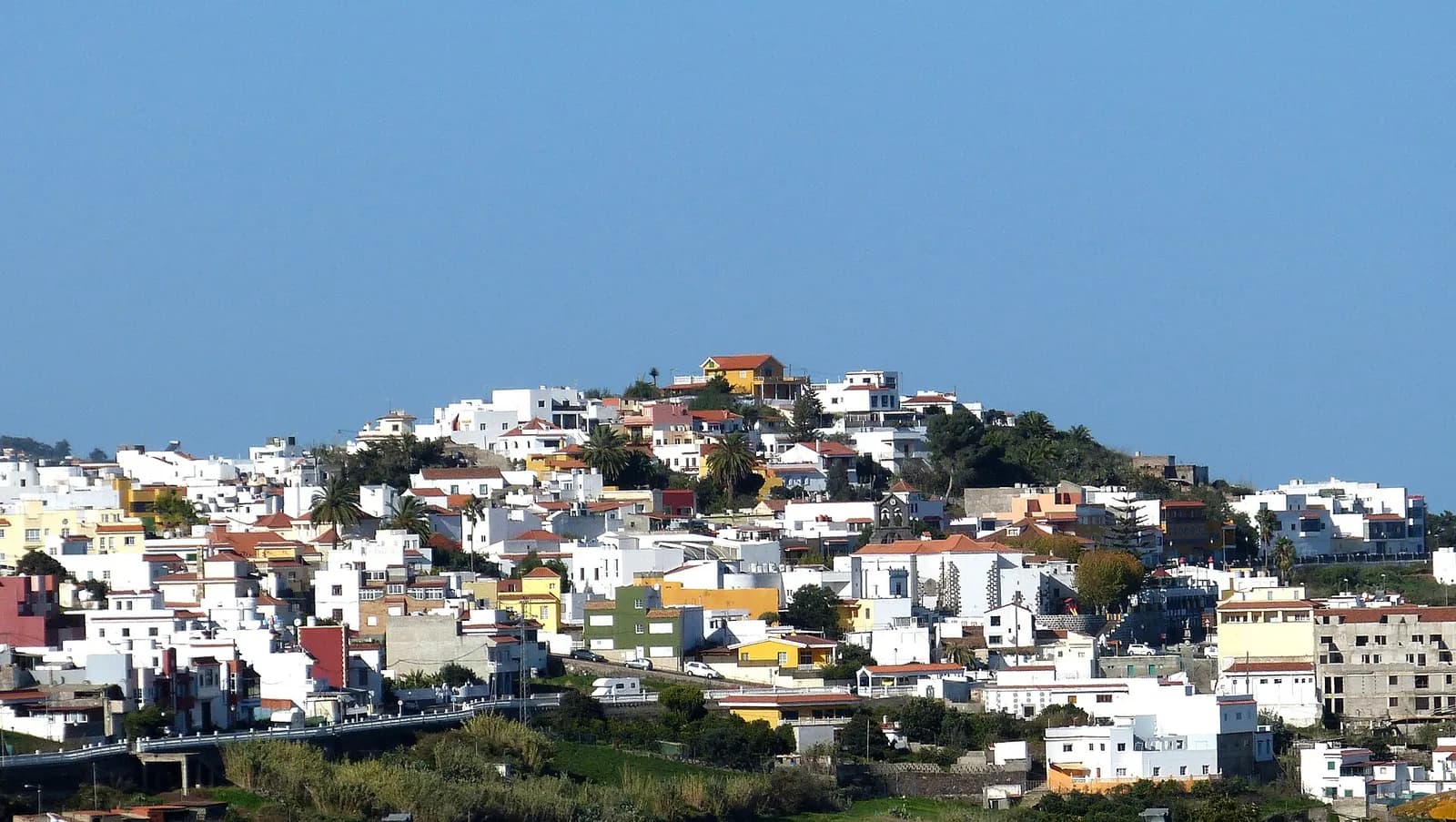
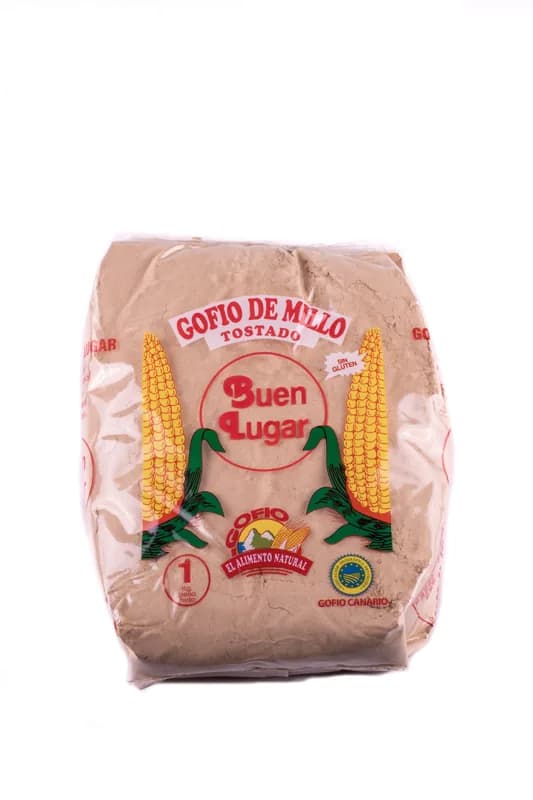
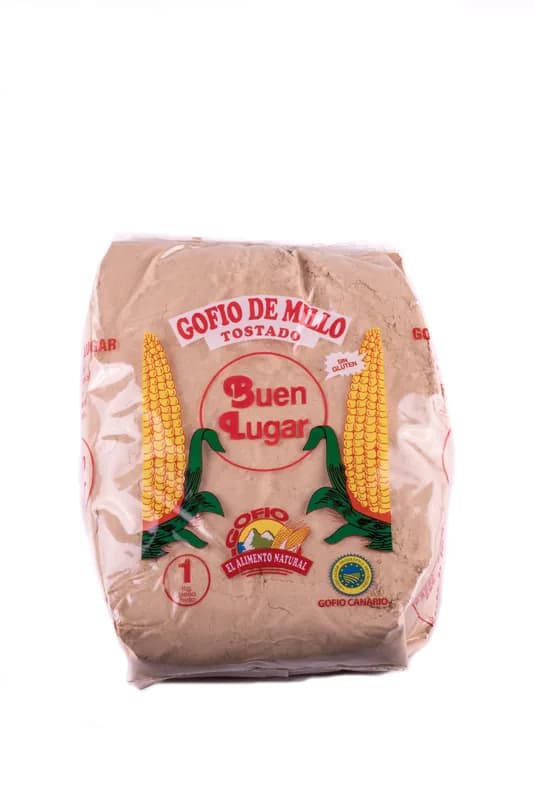
About three kilometres from that mill, on the Buen Lugar road, the Almeida family has milled gofio since 1958 at Gofio Buen Lugar. They toast maize and nothing else, grind it between stones and have passed the trade down the generations. In July 2025 the Agrocanarias tasting panel judged 41 samples from eleven mills without knowing whose they were and named their medium roast maize gofio the best gofio of the Canary Islands. After five years of wins for Hermigua, the title went to Gran Canaria. The year before, Buen Lugar had won gold with its dark roast and silver with the medium. We sell their toasted maize gofio, which carries the PGI seal and is labelled gluten free.
How do you eat gofio?
The Canarian way in is breakfast: a few spoonfuls stirred into hot or cold milk, sweetened or not. After that it gets serious.
- Escaldón: hot broth, often from a fish or meat stew, poured over gofio and stirred until it holds together, then eaten next to the stew it came from.
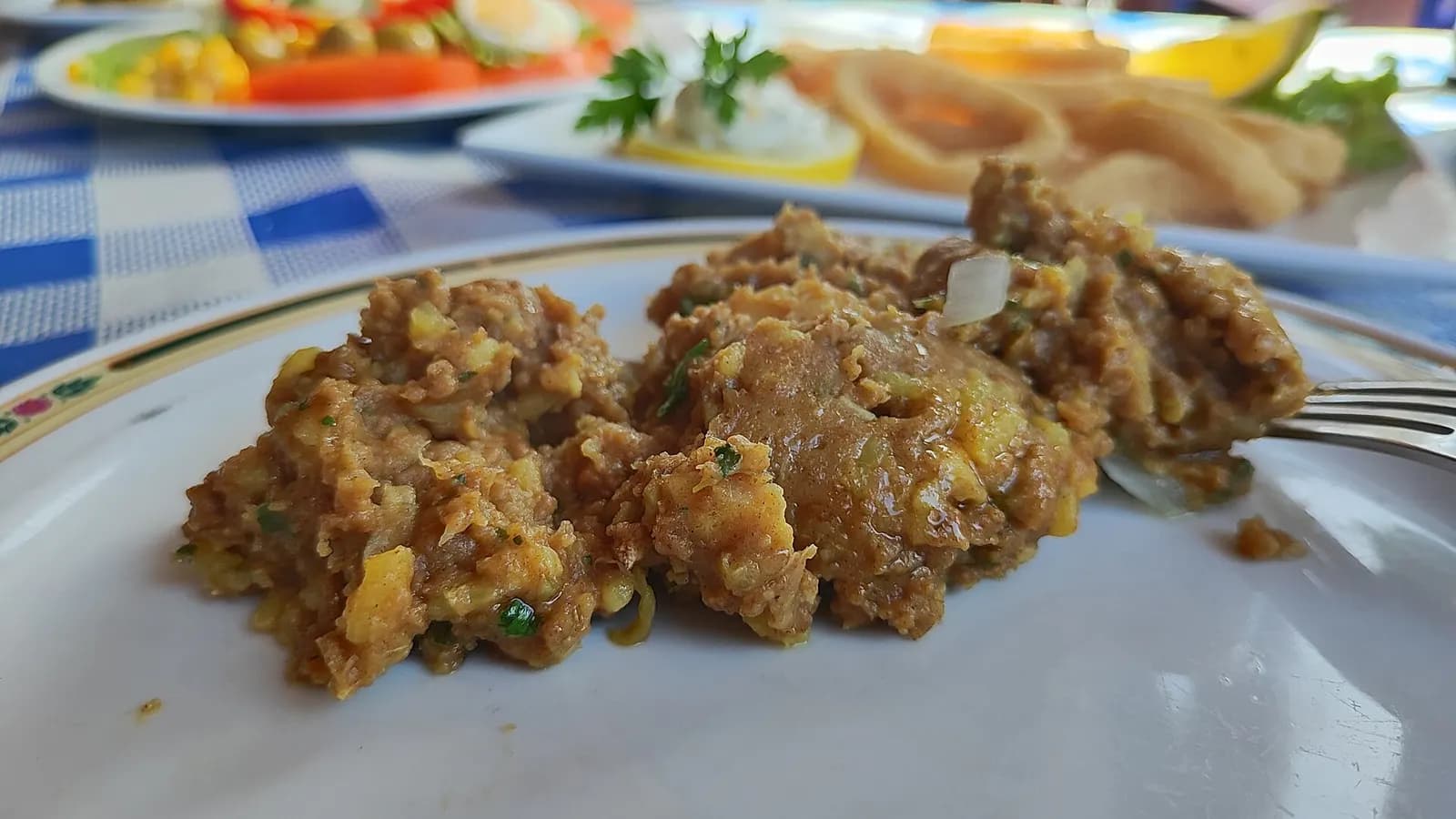
- Pella or gofio amasado: gofio kneaded with water, and sometimes a little oil, sugar or salt, into a dough that is rolled, sliced and eaten with cheese, fish or mojo.
- Sancocho: salt fish boiled with potatoes and sweet potatoes, served with kneaded gofio and mojo, one of the classic dishes of the islands.
- In soups and stews, a spoonful at the end to thicken them, and in desserts.
At home, start with the milk, then try a spoonful in yoghurt. Stir some into a vegetable soup just before serving, where it thickens without needing to cook. Knead a little with water and oil into a small pella, slice it and eat it with a strong cheese. Keep the bag closed, dry and cool, because toasted flour picks up damp and other smells.
Whether gofio has gluten depends on the grain. Wheat, barley and rye gofio contain it. A gofio of maize alone has no gluten grain in it, which is why the Ruta del Gofio recommends the Buen Lugar mill to people with coeliac disease, but only a gluten free label covers what else passes through a mill, so read the bag.
Where to see gofio being made in Gran Canaria
Gran Canaria's tourist board publishes a Ruta del Gofio, a route of mills and museums across the island, most of them small family places where the machinery stays in view. It takes in the water mill in Firgas, the gofio museum that opened in Valleseco in 2013 in the restored Casa del Estanco, a mill in Telde that has roasted over a direct flame since 1903, and one in Gáldar built between 1878 and 1880, driven by water until 1938 and now the oldest working mill on the island. Buen Lugar is on it too. Which mill roasts darkest, and whether you like it that way, is the part you have to work out yourself.
The rest of the Canary Islands have mills of their own, and La Palma still prefers wheat.
In Firgas the water mill has not turned since 1959. Three kilometres away, the stones still do.
Questions
- What is gofio made of?
- Gofio is made from cereal grains that are toasted and then milled: maize, wheat, barley, rye, oats or rice, sometimes with chickpeas, broad beans or soya and sometimes with sea salt. Under the rules of the PGI Gofio Canario, the grain is toasted at no more than 200 °C.
- How do you eat gofio?
- In the Canary Islands gofio is stirred into milk at breakfast, mixed with hot broth to make escaldón, or kneaded with water into a dough called pella that is sliced and eaten with cheese, fish or mojo. Because the grain is toasted before it is milled, gofio can be eaten without further cooking.
- Is gofio gluten free?
- It depends on the grain. Wheat, barley and rye gofio contain gluten. Gofio made only from maize has no gluten grain in it, but only a gluten free label covers traces from other grains milled in the same place. The toasted maize gofio of Gofio Buen Lugar, in Firgas, Gran Canaria, is labelled gluten free.
- Is gofio made with grain from the Canary Islands?
- Mostly not. In 2023 the Canary broadcaster RTVC reported that only about 2% of the grain used for gofio is grown in the islands, on less than 700 hectares. The PGI Gofio Canario protects how the grain is toasted, milled and packed in the Canaries, and the label may, but does not have to, say where the grain comes from.
- What is the difference between gofio and flour?
- Ordinary flour is milled from raw grain and has to be cooked. Gofio is milled from grain that has already been toasted, so it is darker, smells of toasted cereal and nuts and can be eaten straight away, stirred into milk or broth.
- Where can you see gofio being made in Gran Canaria?
- Gran Canaria's Ruta del Gofio, published by the island's tourist board, links mills and museums across the island: the 16th century water mill of Firgas, now a museum, the gofio museum of Valleseco, opened in 2013, a mill in Gáldar built between 1878 and 1880 that is the oldest working mill on the island, and family mills such as Buen Lugar in Firgas.