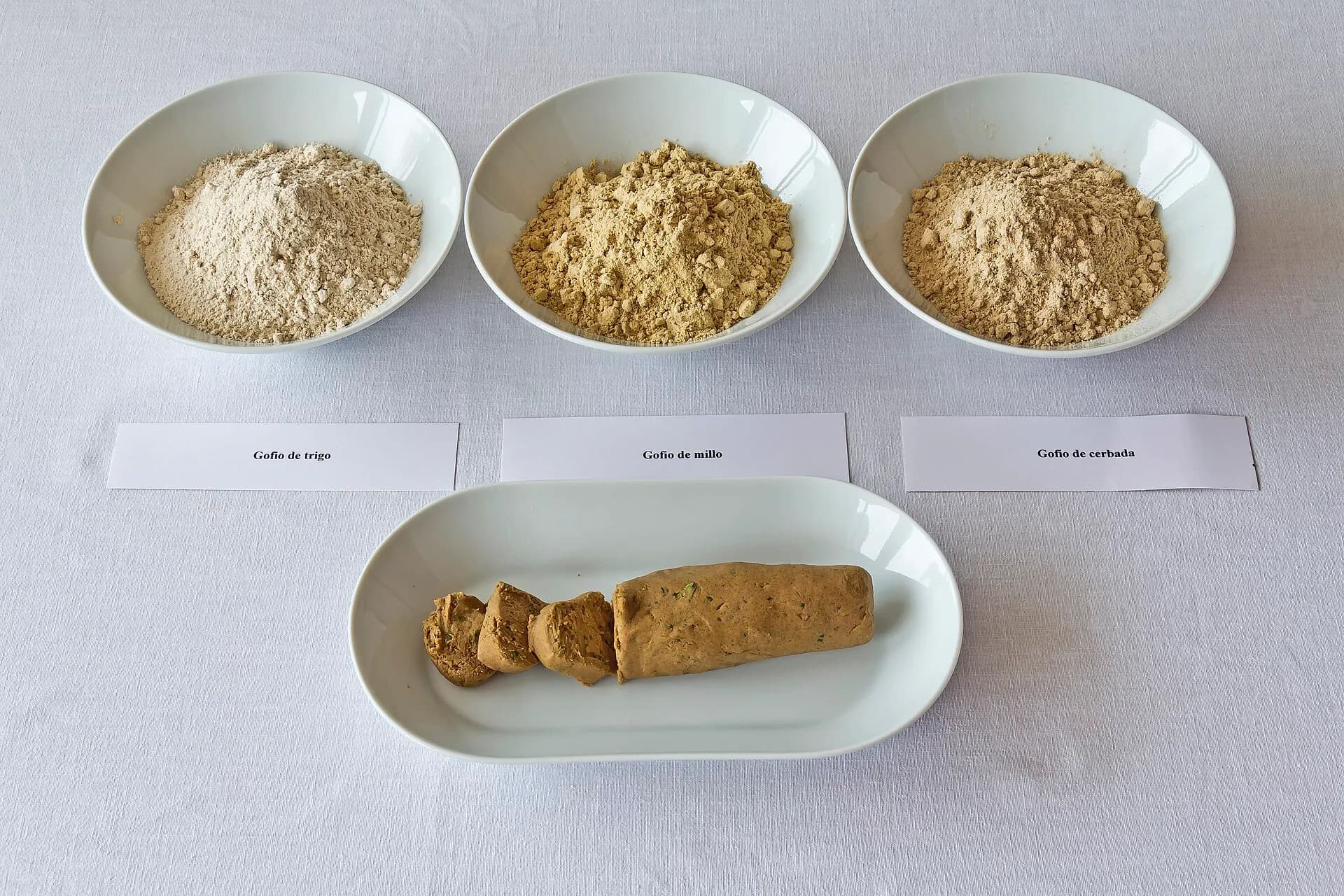
La Gomera palm honey: the syrup that cannot be called honey
Las Hayas, La Gomera//Products/8 min read
Every evening in season, sap drips from the crown of a Canary palm into a can. By morning it has to be collected and cooked, or it turns.
 Written with by Eduardo Peire
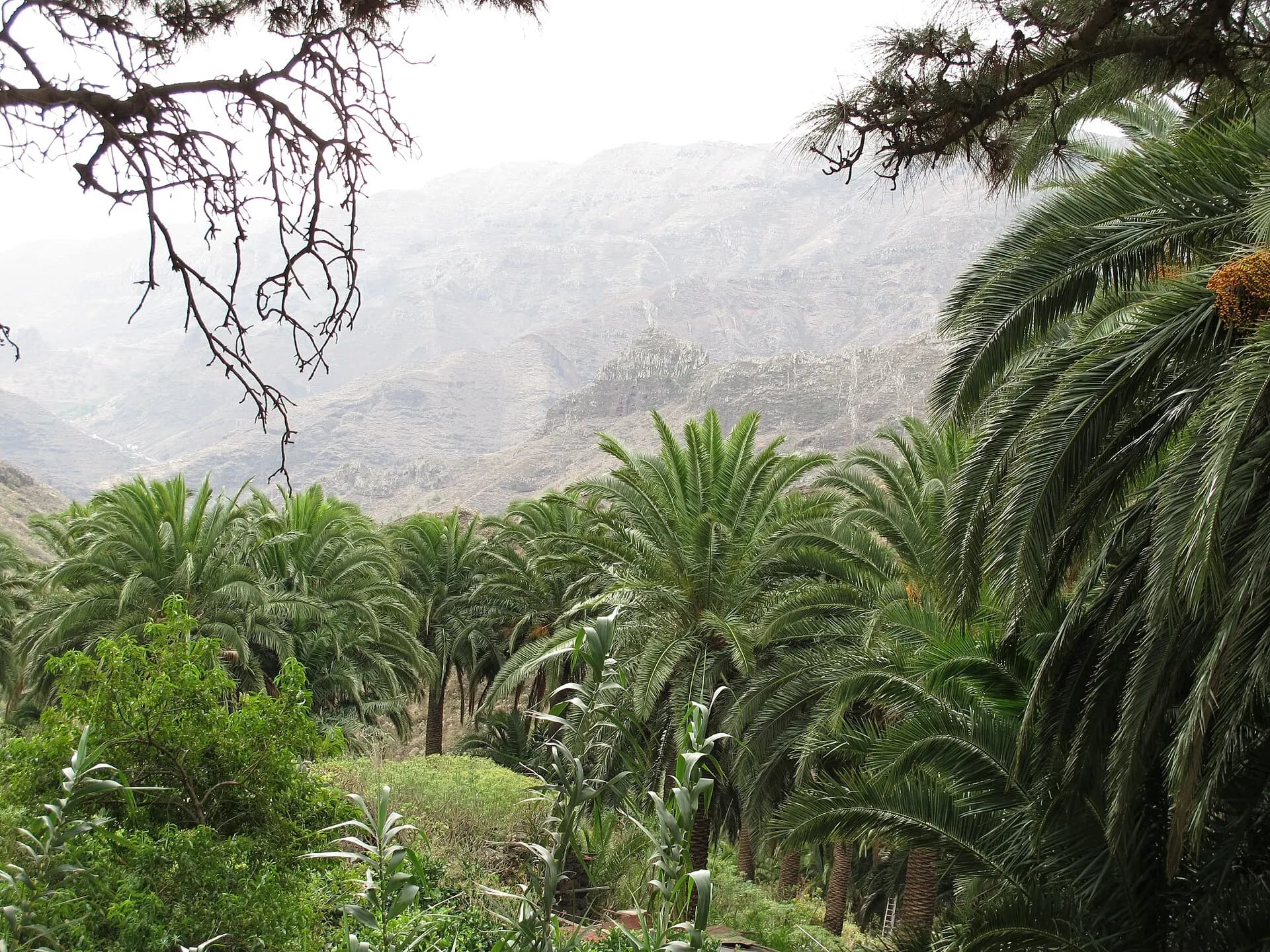
La Gomera palm honey, miel de palma, is a dark syrup made by slowly cooking guarapo, the sap of the Canary Island date palm, for seven or eight hours until six to eight litres become one. It is not honey. No bee is involved, and European law keeps the word for what bees make, so the bottles say palm syrup. On La Gomera, the island where the craft survived, it goes over desserts, fresh cheese and yoghurt, and everyone calls it honey anyway.
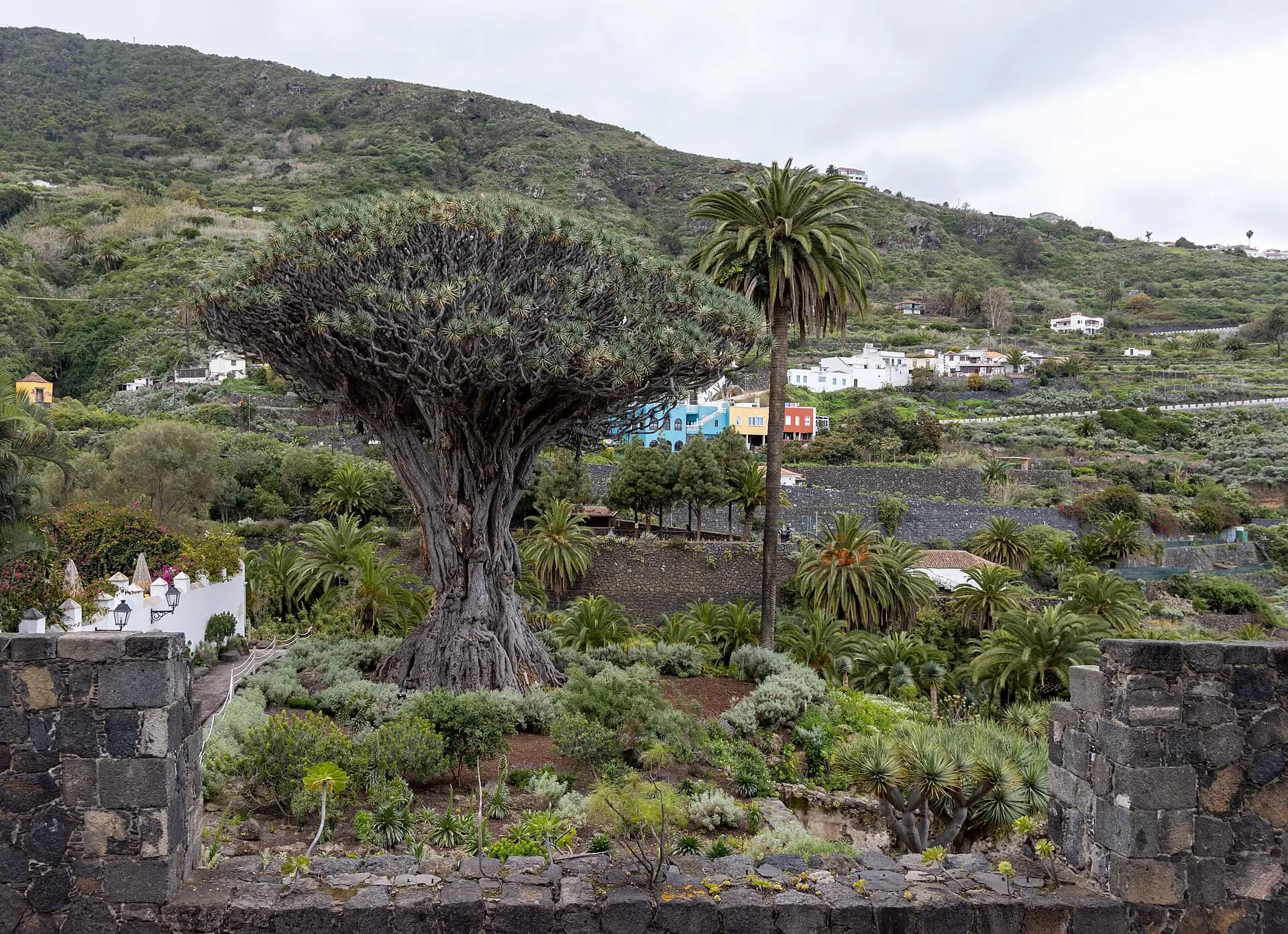
The sap comes from a wound. In season, a guarapero climbs the palm in the afternoon, shaves a thin layer off the white heart of its crown and leaves the sap to drip through the evening and the night into a can. He collects it at dawn, before the warmth can start it fermenting. Cut too deep and the palm dies. Cut well, and it closes the wound, grows a new crown, rests for years and can be tapped again.
What is La Gomera palm honey?
Guarapo, the raw sap, is sweet, cloudy and watery, between cinnamon and yellow in colour. It smells and tastes of dates and dried fruit and reminds people of grape must, according to a study of traditional palm tapping written in 2022 for the Cabildo de La Gomera, the island government, by its rural development association, AIDER La Gomera. It can be drunk fresh, and visitors who are offered a glass should take it, Diario de Avisos advised in August 2026, because fresh guarapo cannot be bought or exported: it is drunk where it is tapped. With air and warmth it can ferment within hours, and that sets the timetable of the whole trade.
Between February and July anyone walking the ravines of La Gomera will see ladders against the palms and men at work in the crowns, sometimes twenty metres up. A palm gives about 12 litres of guarapo a day, and the best ones up to 20, the same paper reported. The cooking is slow and watched. It starts at around 60 °C until the foam has gone, then rises to about 70 °C, when the liquid begins to thicken, and goes on for seven or eight hours with someone stirring all the time. Between 85% and 88% of what came down from the palm goes up as steam.
Nobody uses a thermometer for the end. The syrup is ready when a trickle poured from the spoon forms a continuous thread that pulls back, elastic, to the edge of the pot. El Masapé, a family firm from Alojera, described the point to the food site Directo al Paladar as "sticky, forming threads, but not glass". One of the guaraperos interviewed for the Cabildo study says that in Tazo, in the north-west of the island, five litres of guarapo make a litre of syrup, against eight elsewhere, because the sap there is richer.
Why can't palm honey be called honey?
Because of a bee. The EU honey directive of 2001 defines honey as the natural sweet substance produced by Apis mellifera bees from the nectar of plants, and reserves the word for that product alone. Palm syrup has never been near a bee, so the labels must say sirope de palma, palm syrup, or savia de palma, palm sap. The islanders call it miel de palma all the same, and chroniclers wrote that the people of the islands made syrups before the conquest, including one from palm juice.
The island defends the name in its own way. In 2016 the Cabildo's councillor for industry and trade, who is also responsible for the island's food quality seal, Alimentos de La Gomera, asked an ice cream company to withdraw a vanilla and guarapo ice cream described as palm sap but pictured on top of a jar of bee honey, Diario de Avisos reported. He said the description had nothing to do with guarapo or palm honey. The company replied that the label complied with EU rules.
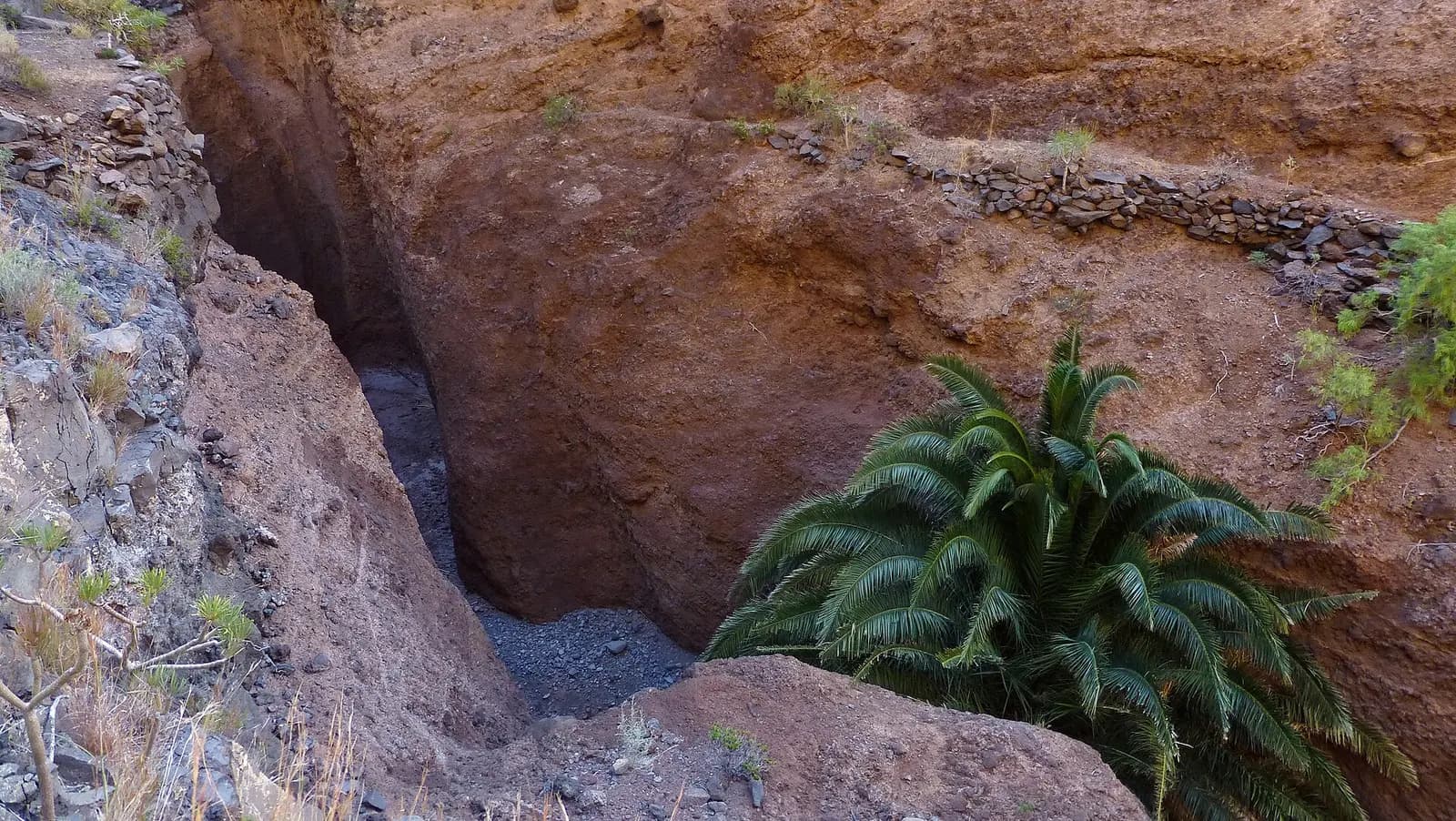
How does a guarapero tap a palm without killing it?
The Cabildo study describes the work step by step. The guarapero, also called tabernero, climbs the palm with a rope, a ladder or stakes driven into the trunk. He cuts away the fronds at the top and pares down the old scars until he reaches the white heart of the crown, the cogollo. Every day, with a very sharp chisel called a formón, he shaves off a thin layer of it. This daily cut is the cura. It keeps the wound open, and the palm keeps sending sap to it.
The wound, the campo, is round and flat, about the size of a dinner plate, and sloped so that the sap runs to its lowest edge. From there a channel of wood or cane carries it to a can or bucket. How thick each shaving is decides how long the season lasts, usually four to six months. Below the heart there is a limit, the toza, past which nothing may be cut: cut into it and the palm cannot grow back, and dies.
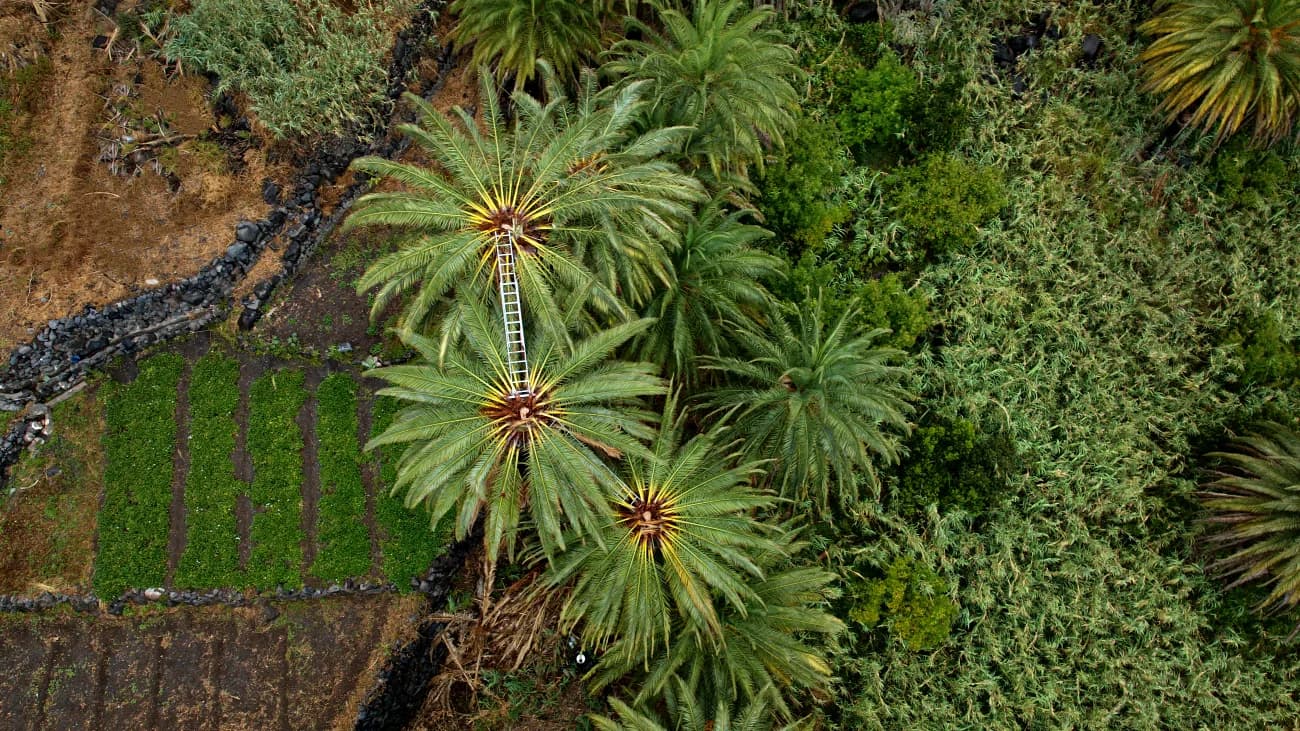
The guaraperos interviewed largely agree that a palm needs to rest for about five years before it can be tapped again. The work itself has no rest at all. For six months the guarapero climbs several palms almost every day, at heights of up to about 20 metres, with knives, chisels and the spines at the base of the fronds for company.
Fewer palms and less rain
La Gomera has well over a hundred thousand Canary palms. In the 2020 season only 640 of them could be tapped, RTVC, the Canary public broadcaster, reported in 2024. The trade brings in close to €2 million a year and employs 31 people on the island, and drought and heat are cutting the number of palms fit for tapping, so guaraperos have had to move to new areas to find healthy ones.
The Cabildo study gives the numbers behind that. Over the last decade, below 700 metres, the average yearly temperature on the island has risen by almost 1 °C and summer averages by about 3 °C. In some years rainfall has stayed under 100 mm on the south side and under 250 mm on the north, figures the authors call more typical of arid or desert land. In 2021 Directo al Paladar counted about ten small firms making palm syrup, and the trade was short of people willing to climb.
Casa Efigenia, in Las Hayas at the edge of Garajonay
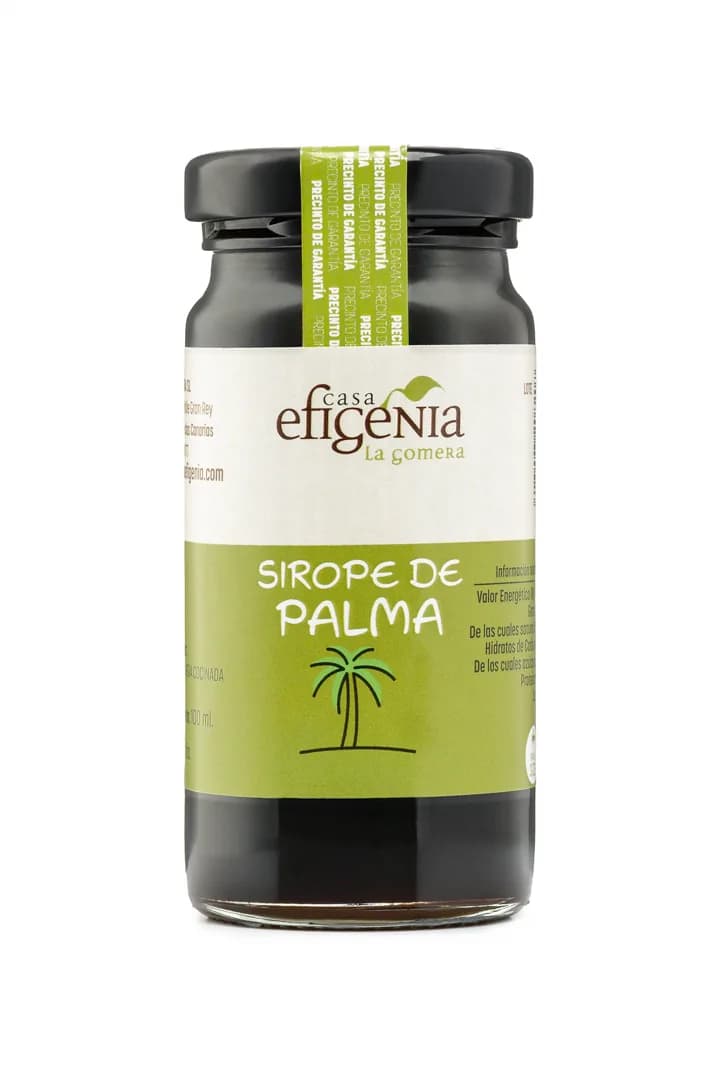
Las Hayas is a hamlet in Valle Gran Rey, next to Garajonay National Park. Efigenia Borges, who was born in Arure, opened a place to eat there when there were hardly any houses or electricity. Her cooking has always been vegetarian, Angela Merkel has eaten at her table, and in 2025 she received the Gold Medal of the Canary Islands. Today her son Sergio Méndez runs Casa Efigenia, and they make their own palm syrup: the guarapo is collected in the morning, cleaned and cooked for hours until it is ready. We sell it in 100 ml jars and 500 ml bottles.
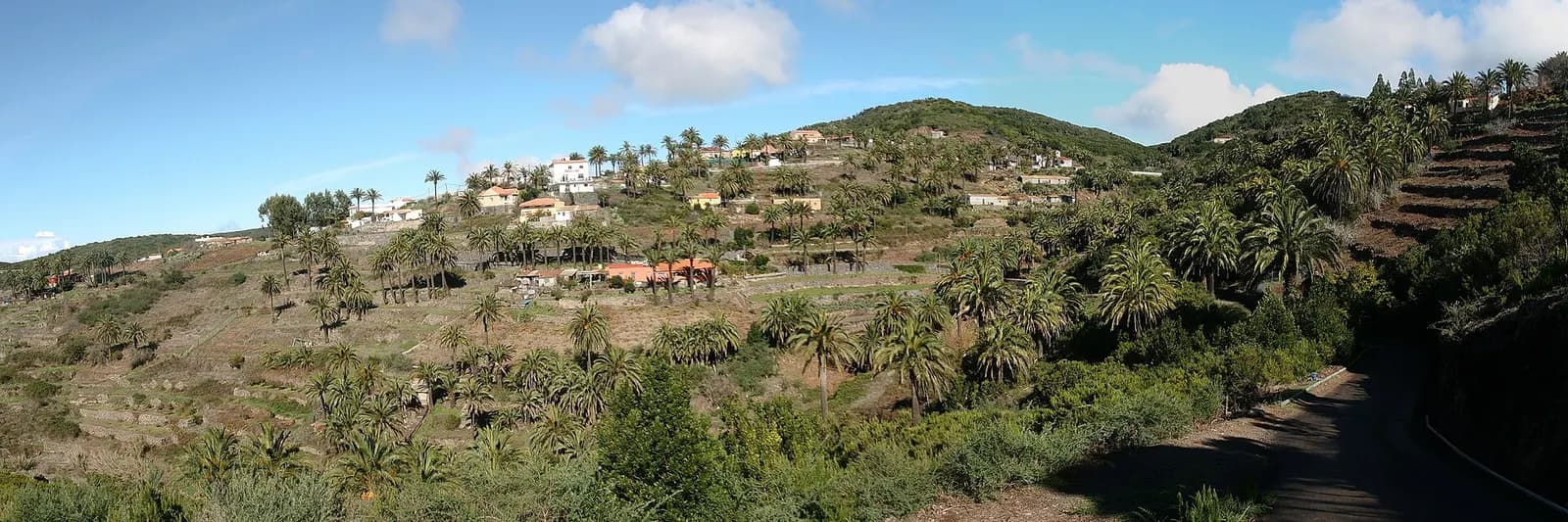
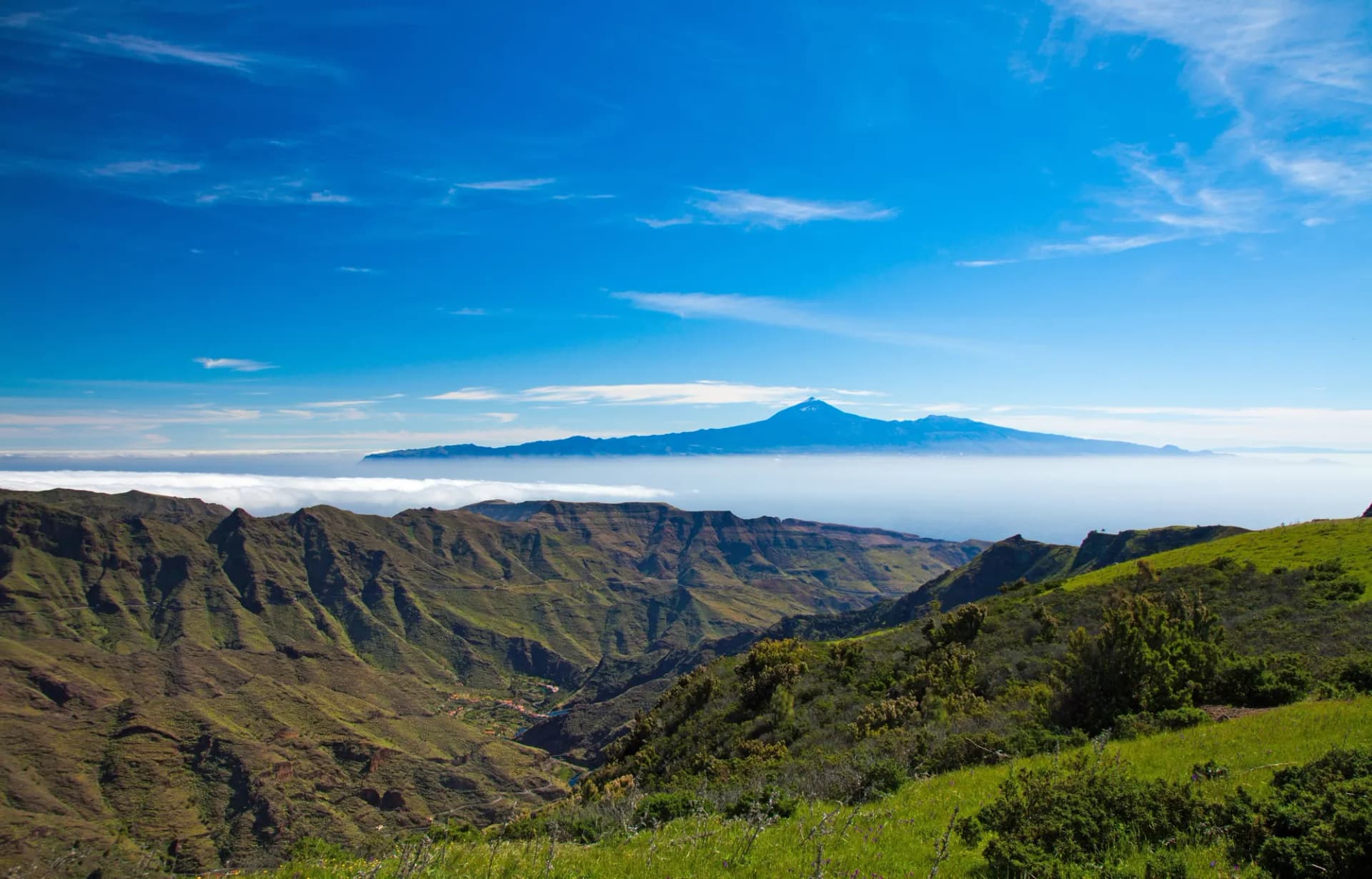
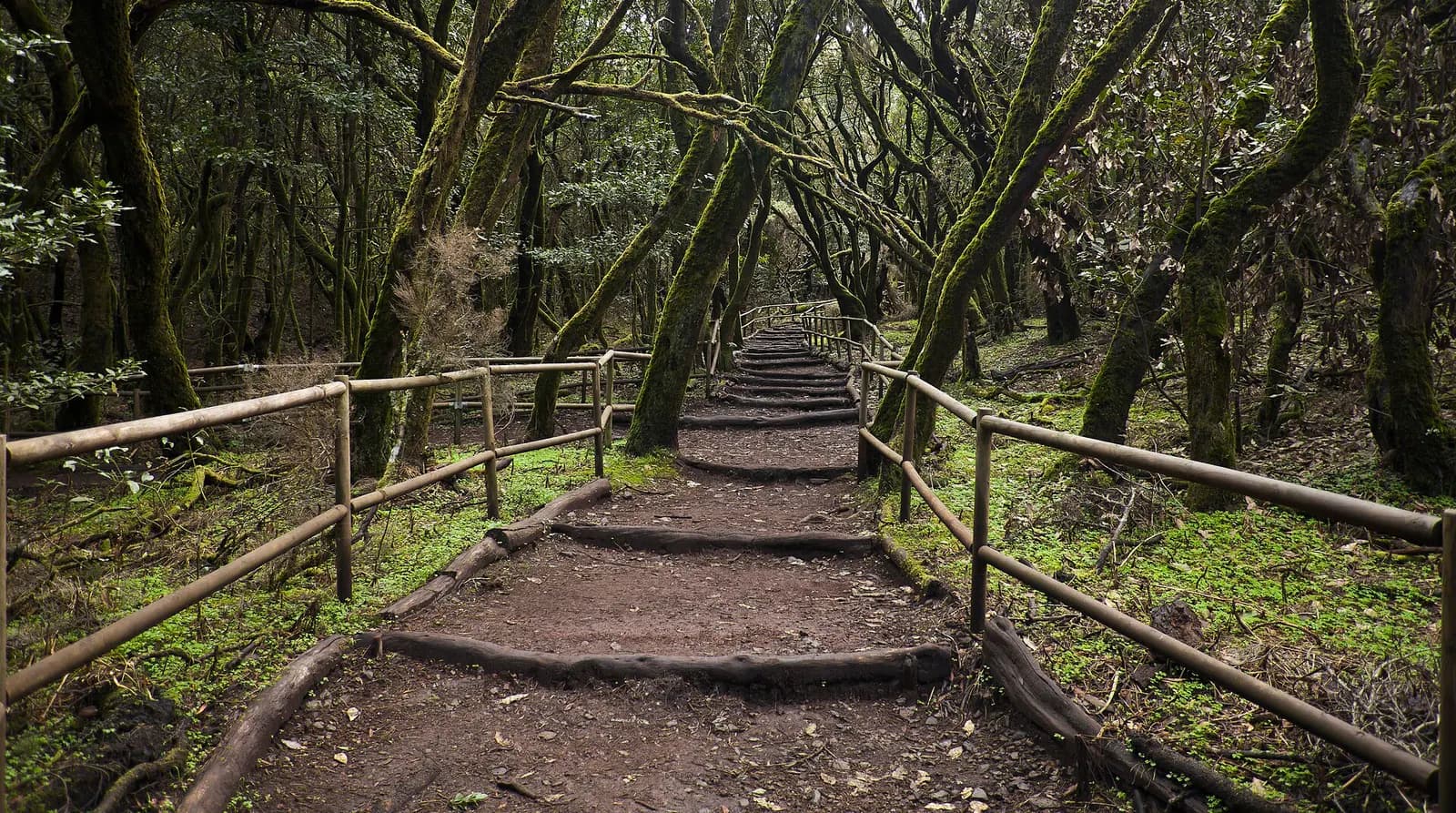
Next to the hamlet the laurel forest begins. Garajonay has been a UNESCO World Heritage site since 1986. It covers 3,984 hectares, about 11% of La Gomera, and laurel forest covers some 70% of the park, a relic of the warm, wet forests that covered much of Europe and North Africa in the Tertiary. The forest lives on fog, and the park holds the best preserved network of permanently flowing streams in the Canary Islands, UNESCO notes, which makes it one of the island's main sources of water. The paths through it are another story, told in walking in Garajonay.
Almogrote, the other jar from La Gomera
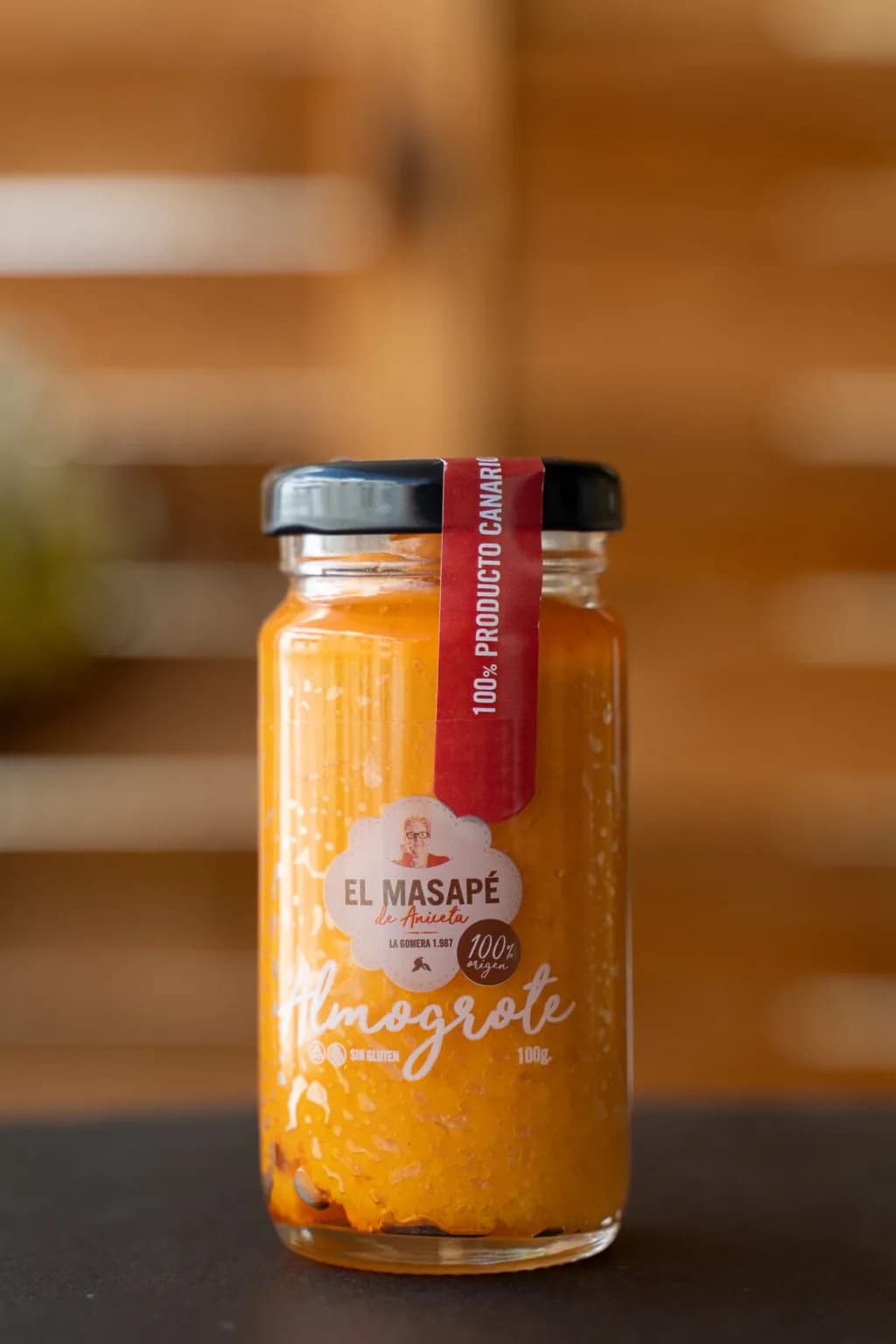
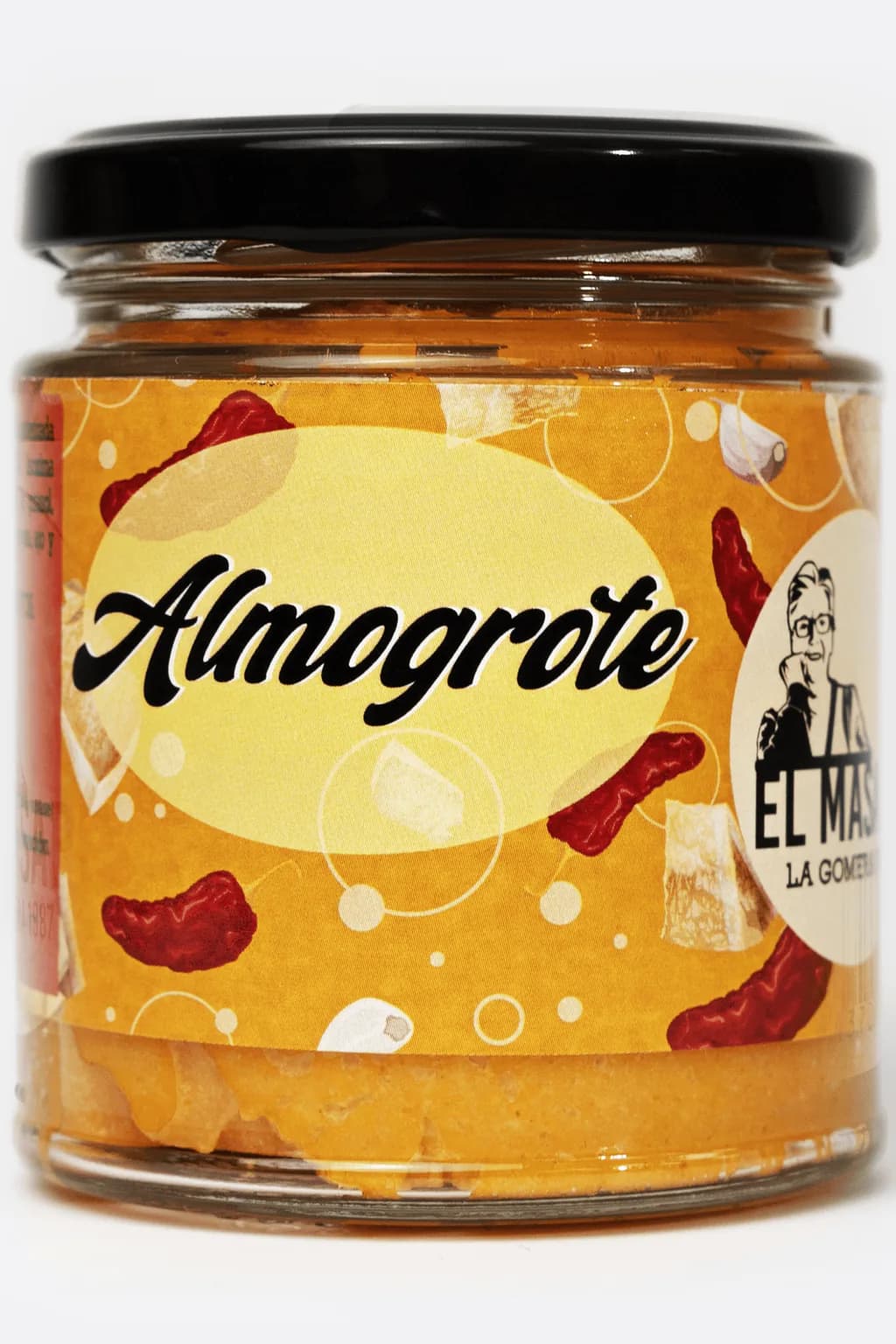
In Alojera, on the north-west coast of the island, Doña Aniceta baked biscuits in a wood-fired oven for her neighbours and for anyone passing through. She started at 16, and the oven is still there. In 2006 her son Domingo set up El Masapé with her, and today they make biscuits, mojos, jams, liqueurs and almogrote. They have tapped palms too: in 2021 Directo al Paladar reported that they took guarapo from about 70 of them, some their own and some rented, and rested each one for four years.
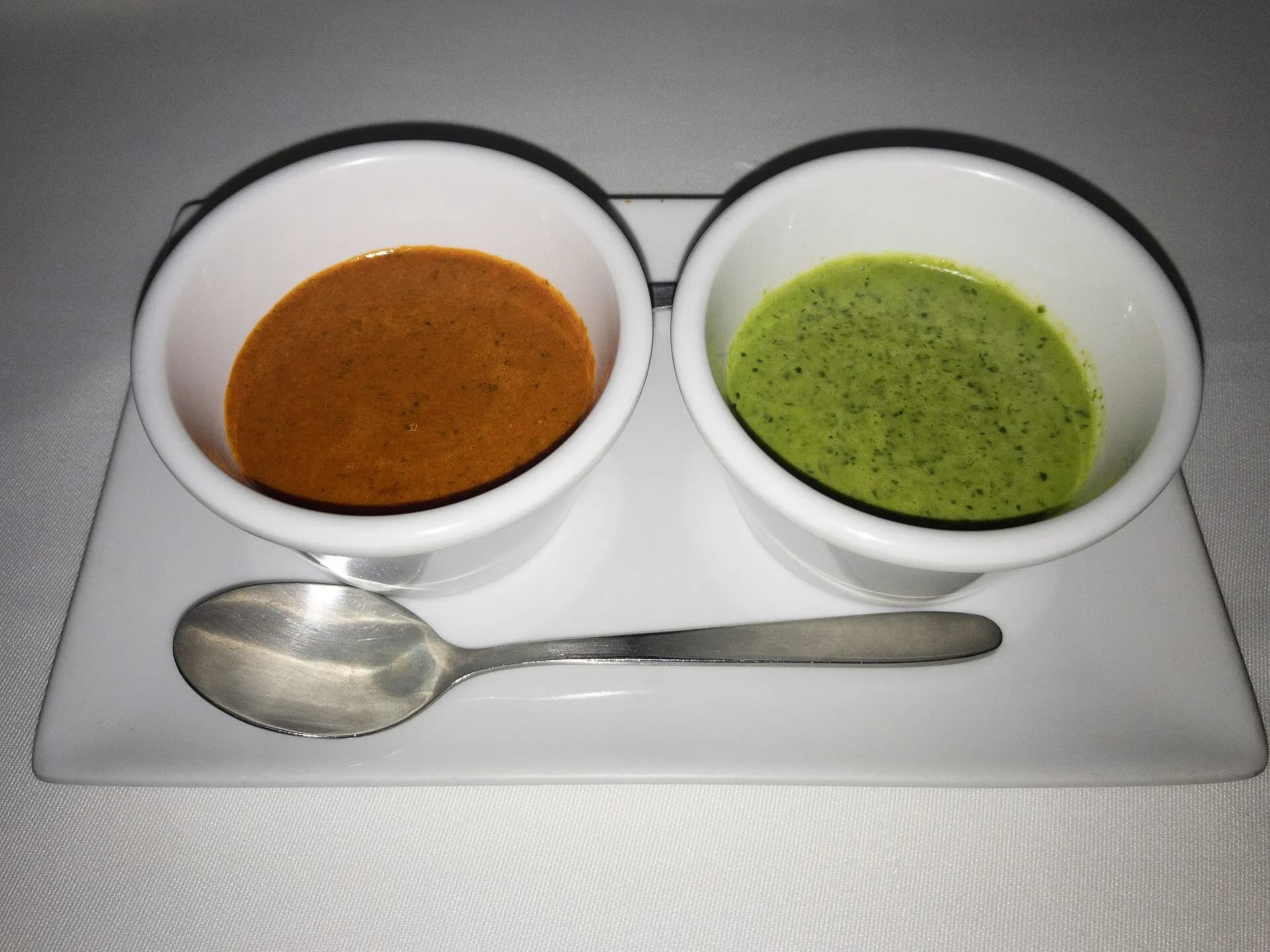
Almogrote is La Gomera's spread of hard aged cheese pounded with pepper, garlic and oil, strong and a little hot. El Masapé makes its almogrote in its kitchen in Candelaria, on Tenerife, with aged cheese of cow's, sheep's and goat's milk, sweet paprika, dried pepper, cayenne and garlic. It is spread on bread or toast, or eaten with potatoes, the same potatoes that on other days get mojo.
How to eat palm syrup, and where to learn more
In the islands palm syrup goes with fruit, coffee and desserts, with frangollo, a sweet maize pudding, with yoghurt and above all with the white fresh cheeses of La Gomera and La Palma, Directo al Paladar noted. On La Gomera it also goes into gomerón, aguardiente, which the island calls parra, mixed with palm syrup and served cold as a shot. At home, start with a spoonful over plain yoghurt or a young goat's cheese. On the same table, the almogrote takes care of the savoury side.
The Casa de la Miel de Palma, in the hamlet of Aldama, in Alojera, run by AIDER La Gomera, explains the trade with guided visits and tastings of guarapo and palm syrup. The season, from February to July, is when the cans are up in the palms. Which valley makes the best syrup is an open question on the island. Asked for the Cabildo study, the old guaraperos mostly named the same places: Tazo, Alojera and the rest of Vallehermoso, in the north-west. Whether they are right is something only a spoon can settle.
A palm that has not been cut past the toza closes its wound, grows a new crown and is left alone for about five years. Then someone climbs it again.
Questions
- What is palm honey from La Gomera?
- La Gomera palm honey, miel de palma, is a dark syrup made by slowly cooking guarapo, the sap of the Canary Island date palm, for seven to eight hours at around 60 to 70 °C, stirring all the time. Six to eight litres of guarapo make one litre of palm syrup, which is ready when it falls from the spoon in an elastic thread.
- Why is La Gomera palm honey sold as palm syrup?
- EU Directive 2001/110/EC reserves the word honey for the sweet substance made by Apis mellifera bees. La Gomera palm honey comes from palm sap, not bees, so the label has to say palm syrup or palm sap, even though islanders still call it miel de palma.
- Does tapping guarapo kill the palm?
- Not if it is done well. On La Gomera the guarapero shaves a thin layer off the palm's crown each day and never cuts past a limit called the toza; cut into it and the palm dies. After a season of four to six months, guaraperos rest each palm for about five years.
- When is guarapo collected on La Gomera?
- On La Gomera guarapo is tapped from February to July. The guarapero shaves the palm in the afternoon so the sap drips through the evening and night, and collects it at dawn, because guarapo can ferment within hours in the warmth.
- How do you eat palm syrup from La Gomera?
- In the Canary Islands palm syrup goes with fresh white cheese, yoghurt, fruit, coffee and desserts such as frangollo, a sweet maize pudding. On La Gomera it is also mixed with aguardiente to make gomerón, served cold as a shot.
- What is almogrote?
- Almogrote is a spread from La Gomera made of hard aged cheese pounded with pepper, garlic and oil, strong and a little hot. It is eaten on bread or toast or with potatoes.