San Andrés in Tenerife: new wine, chestnuts and the tablas of Icod de los Vinos
Icod de los Vinos, Tenerife//Traditional events/7 min read
At the end of November the north of Tenerife opens its new wine, roasts chestnuts and sends its young people down the steepest streets in town on wooden boards.
 Written with by Eduardo Peire
San Andrés, the feast of Saint Andrew on 30 November, is when the north of Tenerife opens its new wine. On the last nights of November, young people in Icod de los Vinos slide down the town's steepest streets on wooden boards called tablas, families in Puerto de la Cruz drag strings of tin cans to the harbour square, and everyone eats roasted chestnuts with the first wine of the harvest. San Andrés in Tenerife is a local feast, loud and a little dangerous, and the best excuse there is to see the north of the island at the end of autumn.
What is San Andrés in Tenerife?
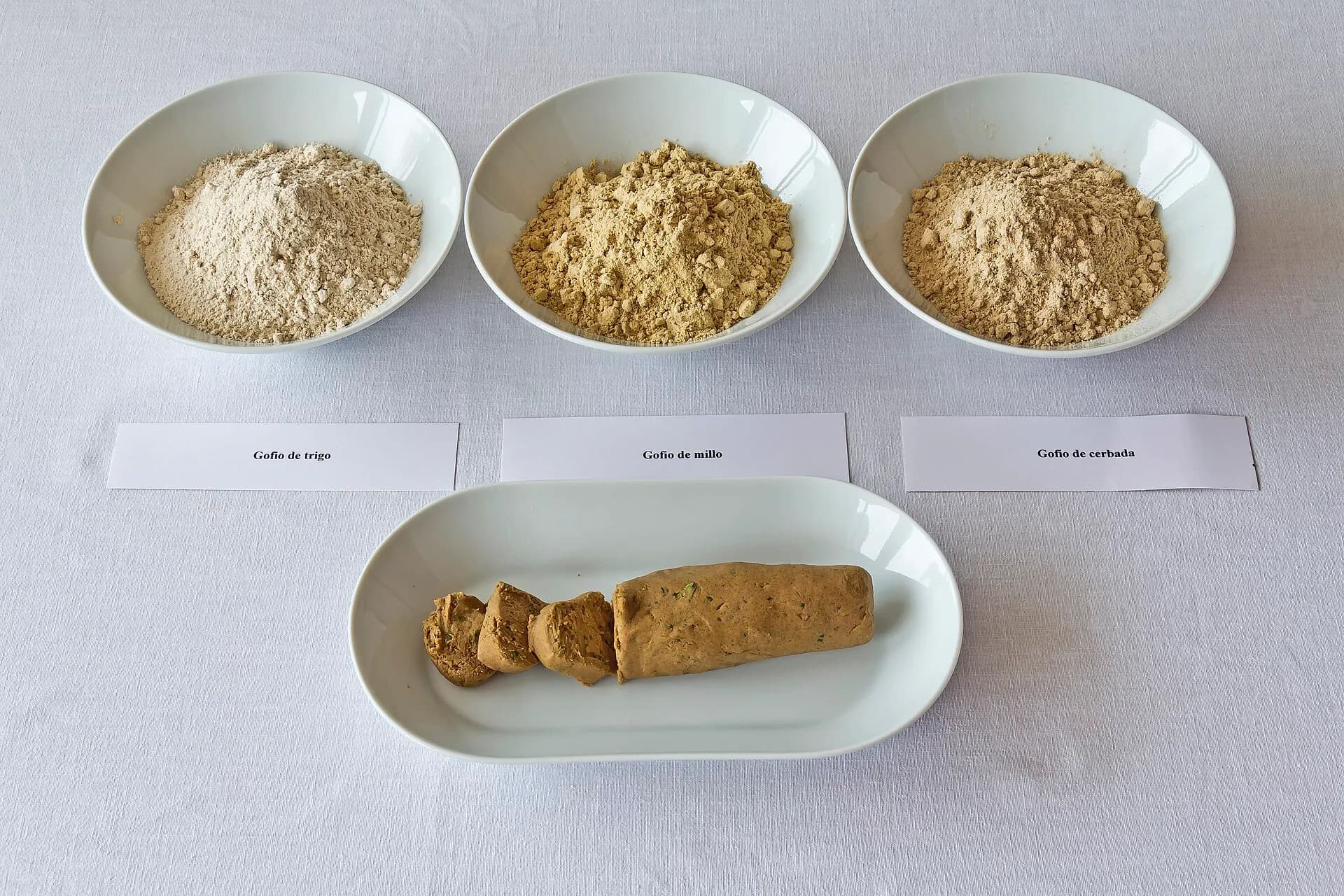
In the Canary Islands the end of the wine year has a calendar of its own. On La Palma the new wine is opened on the night of 10 November, the eve of San Martín. On Tenerife the date is San Andrés, and the eve, 29 November, is the loudest night. The Canary government's teaching material for schools sums it up in one line: everything is tied to the opening of the cellars and the new wine, with chestnuts and gofio on the side.
The custom changes from town to town. In many places people corren el cacharro, running a chain of pots and cans through the streets to make as much noise as possible. In Icod de los Vinos they do something that looks, to anyone arriving for the first time, like a bad idea: they ride boards down the hills. The south of the island keeps the feast too. In San Miguel de Abona, the Canary Islands tourism site lists a programme in the Plaza de la Constitución with a fair of local food, workshops for children, a traditional cart descent and the drag of the cacharros.
The tablas of Icod de los Vinos
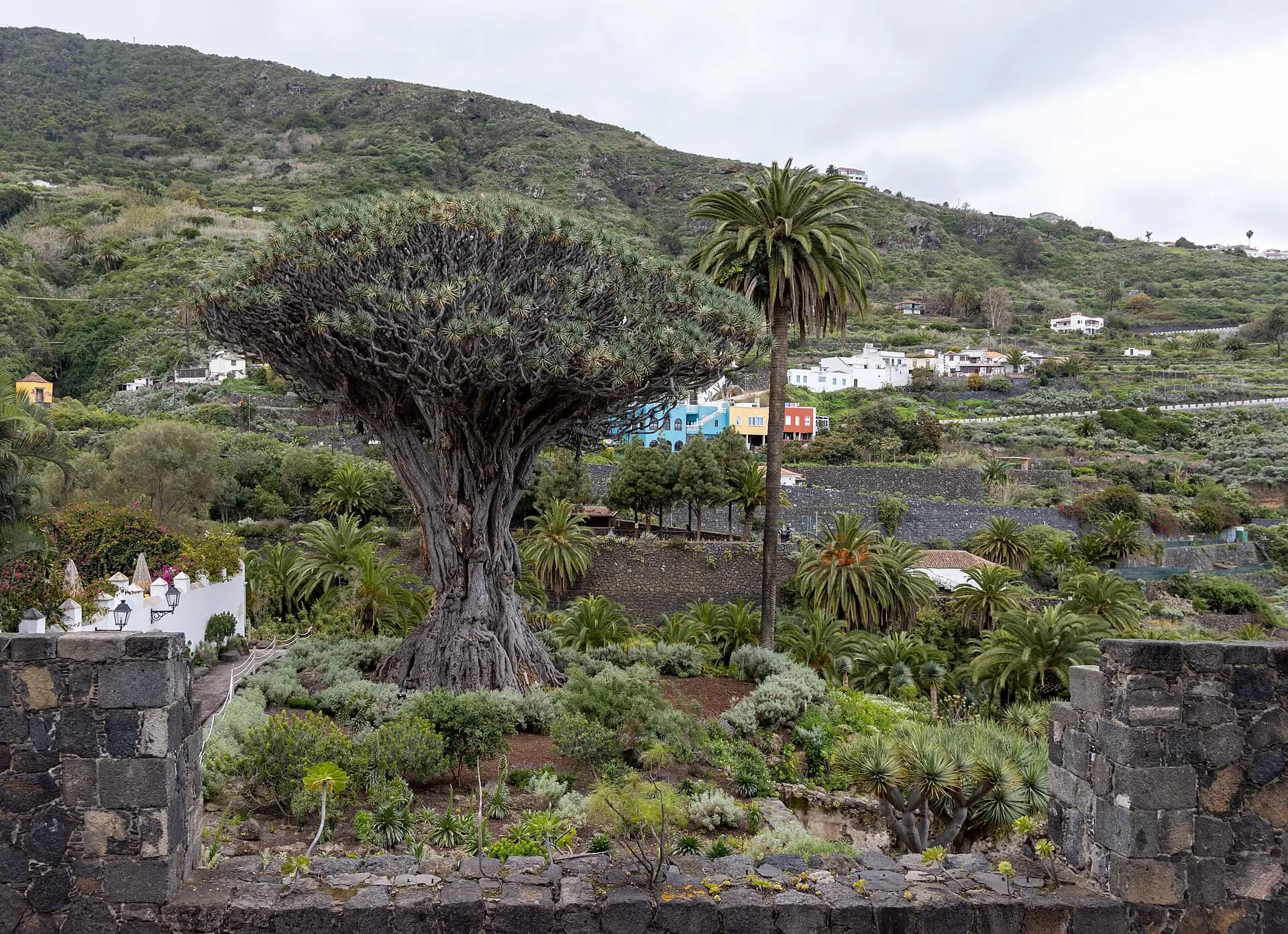
Icod de los Vinos is a town of steep lanes on the north-west coast, best known for its Drago Milenario, an ancient dragon tree declared a national monument in 1917. Each year around San Andrés the council closes a set of streets to traffic, and for three days the arrastre de las tablas takes over: riders sit on wooden boards with their legs out in front and slide down the slopes, one after another, while the crowd lines the pavements.
In 2025 the festival ran from 28 to 30 November. It opened at 21:00 on the Friday with the formal uncorking of the first bottle of the new harvest in the Plaza Andrés de Lorenzo Cáceres, broadcast live on regional television. The tablas then ran on the streets of El Plano, San Antonio and Hércules, where riders reach about 70 kilometres an hour, according to the regional broadcaster RTVC, which expected more than 30,000 people over the three days. The Saturday brought the Gran Fiesta del Vino, and the feast day itself closed with the Batalla de Polkas in the evening.
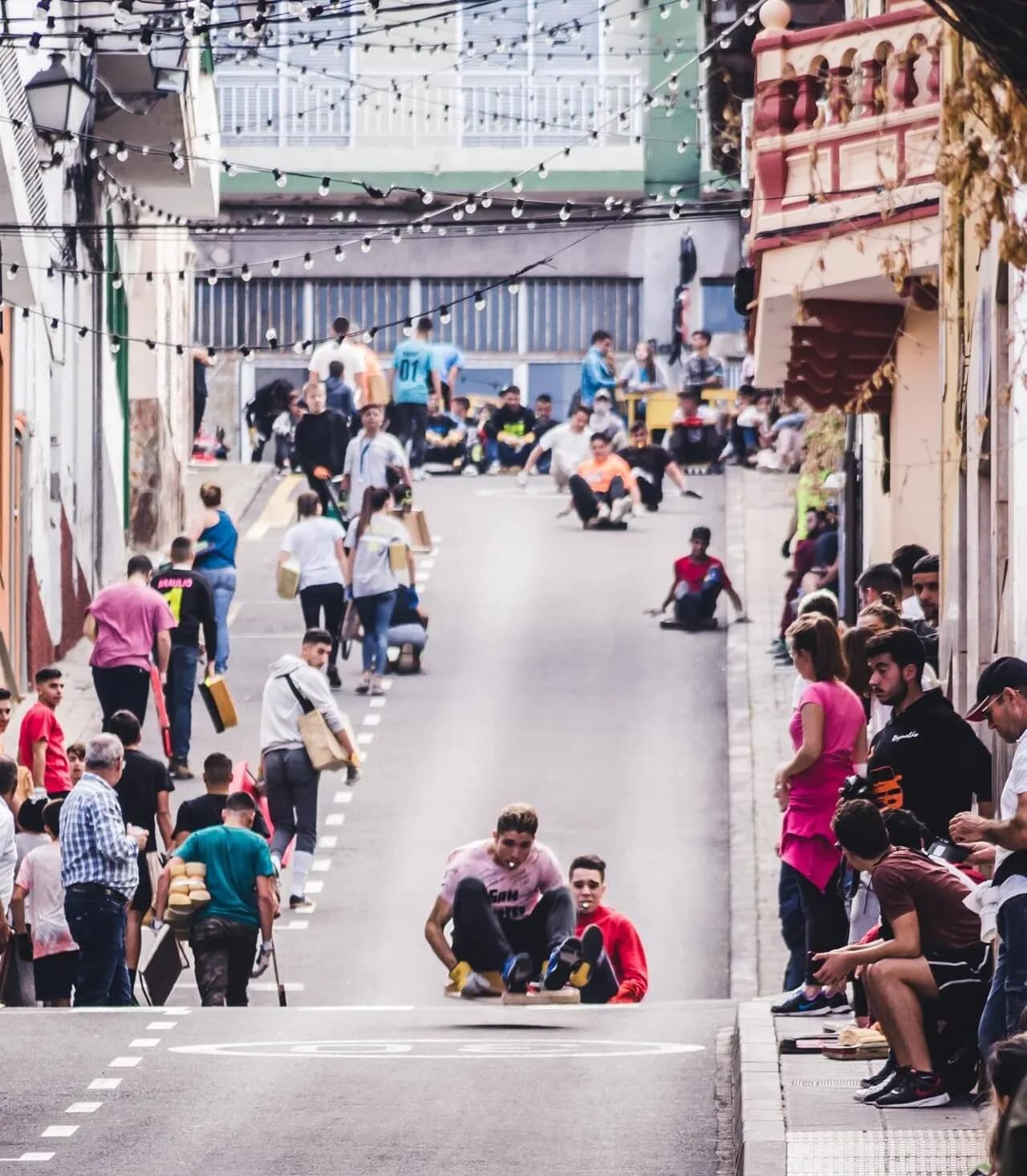
Nobody agrees on how old the custom is. RTVC calls it more than 500 years old; a 2018 master's thesis at the University of La Laguna describes it as "just about to turn 500". The usual explanation is the timber once brought down from the mountain to the coast, with the cellar workers riding on the wood. What is certain is that the town treats it with care. In 2023 it put up street maps marking which runs were for adults and which for children, and the mayor, Javier Sierra, asked for caution and advised anyone who had never done it to go down with someone who had. That advice is worth taking literally.
The cans of Puerto de la Cruz
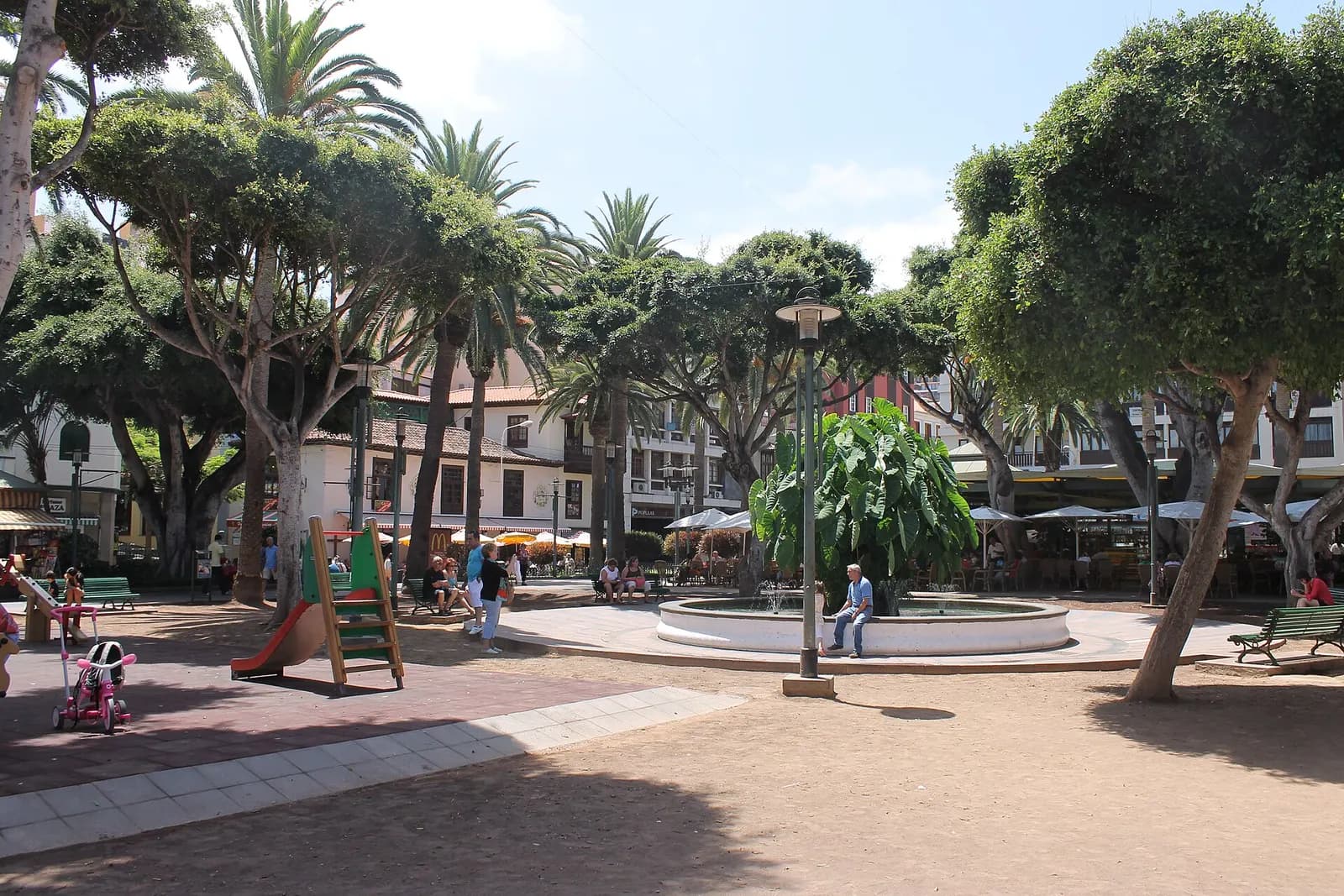
Further east along the coast, Puerto de la Cruz has its own version. On the evening of 29 November locals tie tins, pots and old cans to lengths of wire and drag them through the streets, and the noise ends in the Plaza del Charco, by the old harbour. The island's tourist board calls it the Fiesta del Cacharro y la Castaña, and in the square there are roasted chestnuts, gofio bread, sweet potatoes and the island's wine.
Why cans? The version repeated by the local press is that the cellar men of the hills used to drag their wine barrels down to the seafront to wash them out before the new wine went in. Whatever the truth, the town council keeps the custom going: in 2023 it handed out tins to families who arrived without their own, and Diario de Avisos counted hundreds of families around the square. The point, as far as anyone can tell, is the racket.
Why the north of Tenerife makes wine
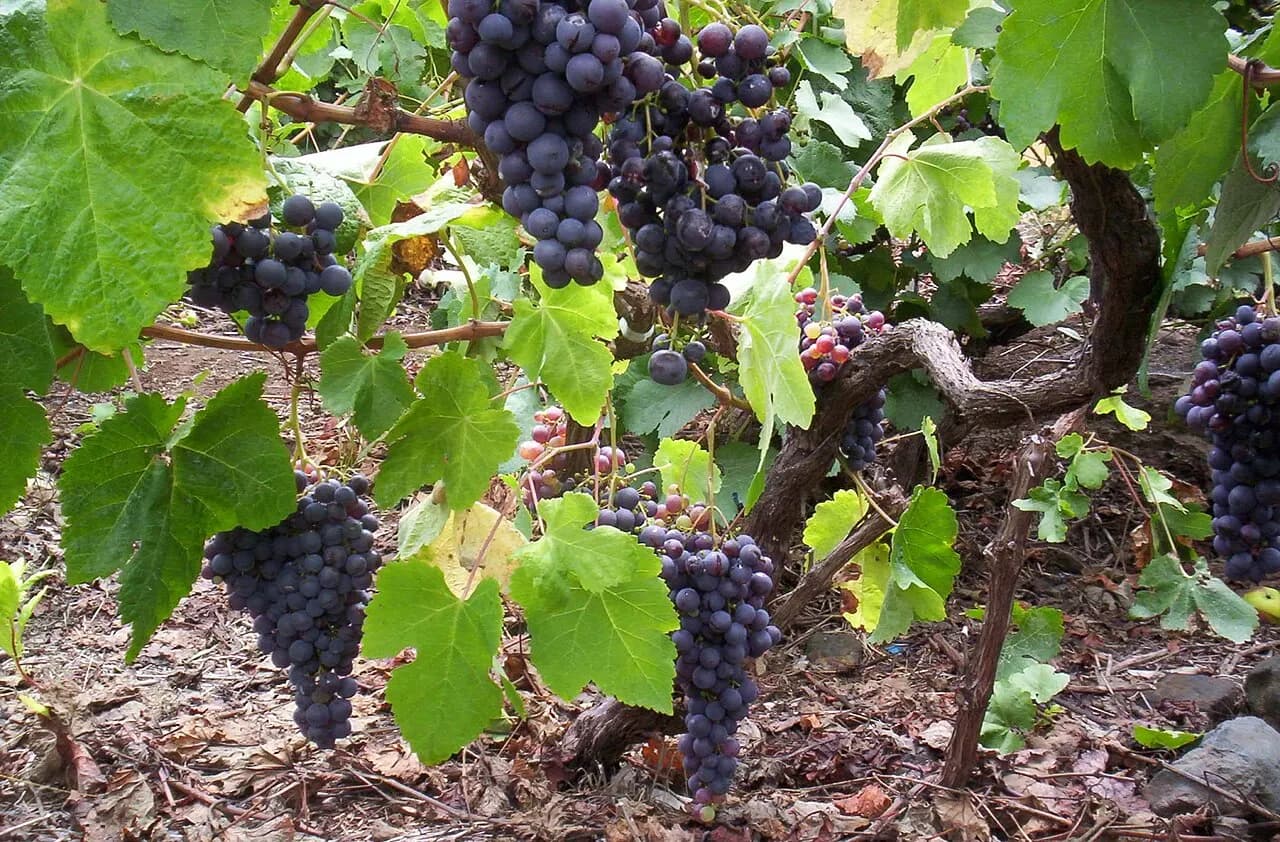
The wine at the centre of all this has a long history abroad. In Shakespeare's Twelfth Night, Sir Toby tells Sir Andrew "thou lackest a cup of canary", meaning the sweet wine of these islands, which London already drank. Today the north grows mostly listán negro and listán blanco, with negramoll and a long list of old local varieties, on small plots between the coast and the pine forests.
The island is split into several wine denominations. Tacoronte-Acentejo covers the north-east. The north-west, around Icod, has its own: DO Ycoden-Daute-Isora, named after Ycoden and Daute, two of the Guanche kingdoms of the island, and the lands of a princess called Isora. According to its regulatory council, it takes in nine municipalities from San Juan de la Rambla to Guía de Isora, its vineyards lie between 50 and 1,400 metres above the sea, mostly on terraces too small and steep for machines, and listán blanco and listán negro cover 80 per cent of them. The wine opened at San Andrés is the young wine of that autumn's harvest, and for the growers it is the first verdict on the year.
What is a guachinche?
The other place to drink the new wine is a guachinche: a temporary tavern where a grower sells the wine of their own harvest, with a few dishes to go with it. They are so much part of life in the north that the Canary government regulated them in 2013, in Decreto 83/2013.
The rules are short and say a lot. The wine must come from vineyards the owner farms and be made by the owner, in a registered winery, and the only other drink allowed is water. The kitchen may serve up to three cooked dishes, plus pickles, nuts and fruit, mostly from the farm or from local tradition. A guachinche may open for no more than four months a year and must close when its wine runs out, and a legal one carries an official plaque by the main door. That closing rule is the best guide to the season: the new wine appears in late autumn, and a few months later many of the doors are shut again.
Finding one is part of the game. Some are signposted and many are not. Ask in the village, look for the plaque, expect a short list of home cooking, perhaps potatoes with mojo, and a jug of whatever the family made this year. Do not expect a menu in English.
San Andrés 2026: dates and how to plan it
The rule is simple: San Andrés is 30 November, the eve is 29 November, and the events in Icod and Puerto de la Cruz fall on the days around them. In 2026 there is a complication, because 29 November is the day of Spain's general election. Icod has kept the feast and moved its official acts around the vote: according to RTVC, the first bottle is uncorked on Friday 27 November, the arrastre and other activities take place on Saturday 28, and the streets for the boards are ready for Sunday 29. The council has had to agree the permits with the electoral board, not least because the town's court stands close to Calle del Plano, one of the classic runs. The mayor was not worried. "Habrá Tablas de San Andrés, evidentemente," he told RTVC: there will be tablas, because nobody can stop a custom born of the people, not even a general election.
Each town publishes its programme a few weeks before, so check the councils of Icod de los Vinos and Puerto de la Cruz rather than a travel site.
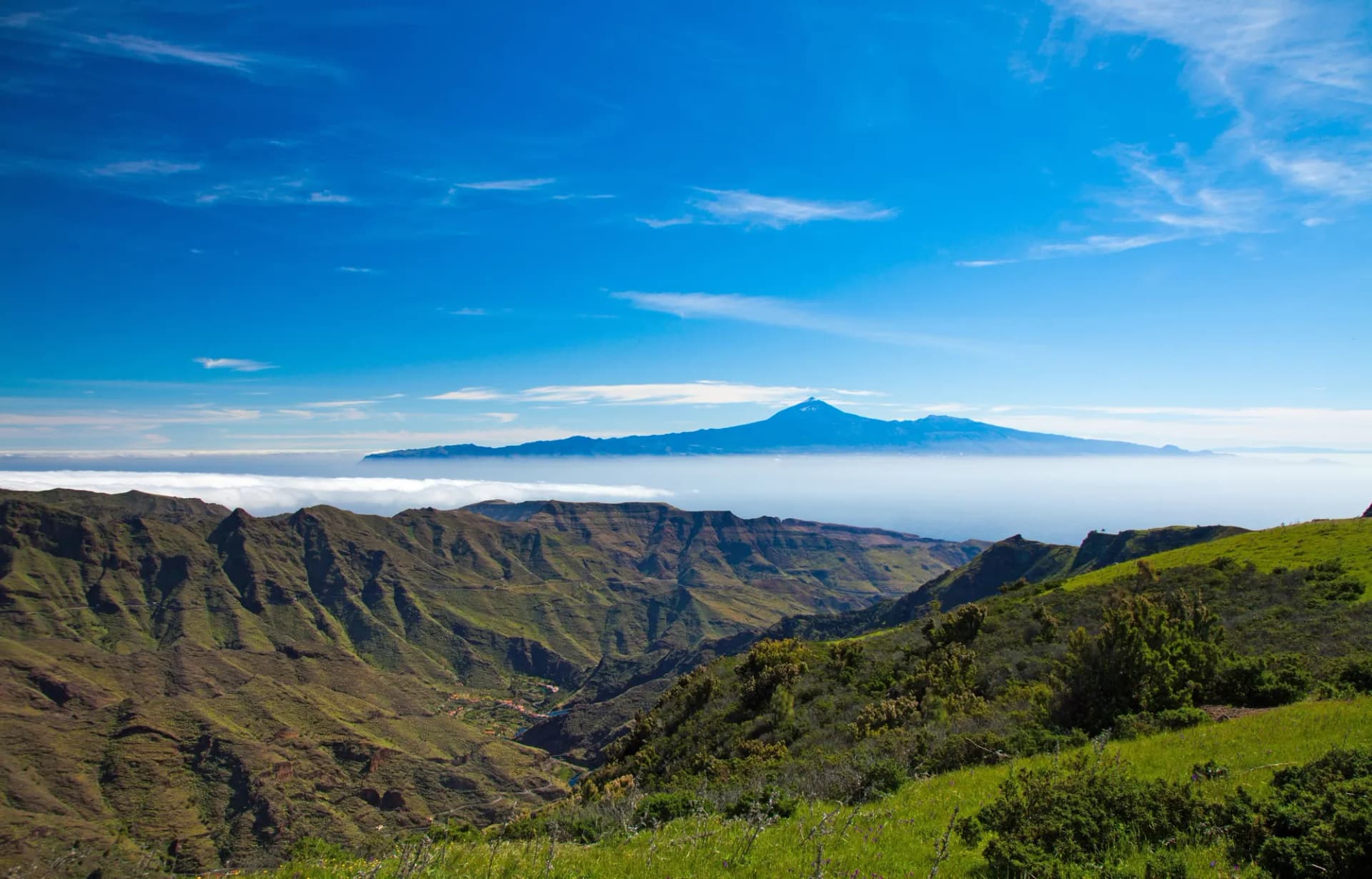
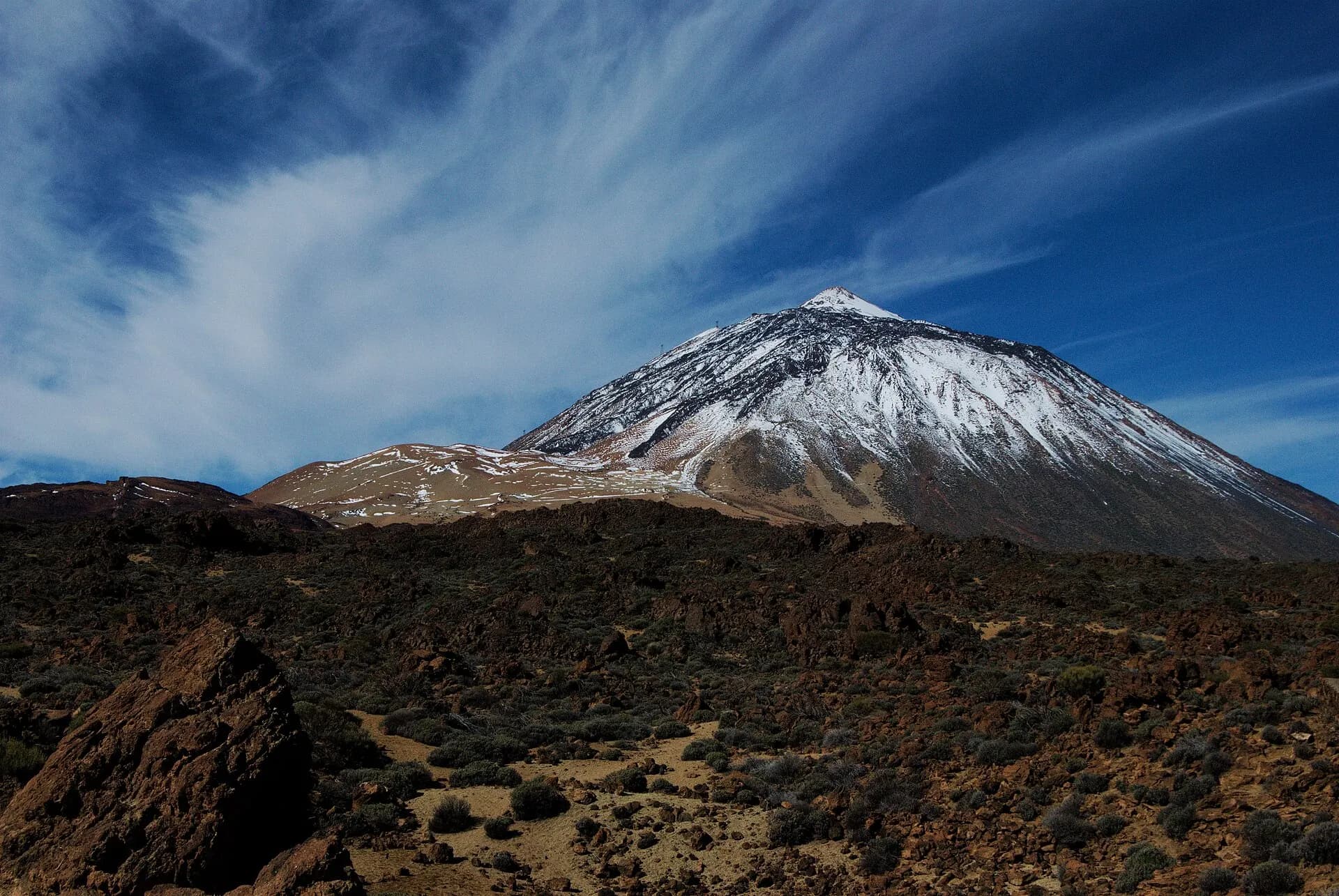
Stay in the north, not in the resorts of the south, and leave the car: the streets of the tablas close to traffic for the three days, and the point of the evening is the wine. The north is greener than the south for a reason, so bring a jacket for the night. If you want to try a board, go with someone who has done it and wear long trousers. If you only want to watch, stand behind the barrier, not at the bottom of the hill. For a colder way to see the island the next morning, there is the climb up Mount Teide.
For the end of the night, the quiet version of San Andrés is a bag of hot chestnuts and a glass of young listán negro in a guachinche that, by law, will be shut again by spring.
Questions
- When is San Andrés in Tenerife?
- San Andrés, the feast of Saint Andrew, is on 30 November, and the loudest night in Tenerife is the eve, 29 November; towns hold their events on the days around it. In 2026, with Spain's general election on 29 November, Icod de los Vinos uncorks the new wine on Friday 27 November, holds the arrastre on Saturday 28 and has the streets ready for the boards on Sunday 29.
- What are the tablas de San Andrés?
- The arrastre de las tablas is a San Andrés custom of Icod de los Vinos, in Tenerife, in which riders sit on wooden boards and slide down the town's steepest streets. The council closes streets such as El Plano, San Antonio and Hércules, where riders reach about 70 kilometres an hour according to RTVC, and in 2025 more than 30,000 people were expected over three days.
- Can visitors ride the tablas in Icod de los Vinos?
- Watching the tablas of Icod de los Vinos is open to everyone; riding is fast and steep. The council has marked which streets are for adults and which for children, and the mayor has advised first-timers to go down with someone who has done it before. Wear long trousers if you ride, and if you only watch, stand behind the barriers rather than at the bottom of the hill.
- What is the Fiesta del Cacharro in Puerto de la Cruz?
- On the evening of 29 November, people in Puerto de la Cruz, Tenerife, tie tins, pots and old cans to lengths of wire and drag them noisily through the streets to the Plaza del Charco. The island's tourist board calls it the Fiesta del Cacharro y la Castaña, and the night ends with roasted chestnuts, gofio bread, sweet potatoes and local wine.
- What is a guachinche in Tenerife?
- A guachinche is a temporary tavern where a grower in the Canary Islands, most often in the north of Tenerife, sells the wine of their own harvest. Under Decree 83/2013 of the Canary government, the wine must come from vineyards the owner farms, water is the only other drink, the kitchen may serve up to three cooked dishes, and a guachinche may open no more than four months a year, closing when the wine runs out.
- Which wine regions are in the north of Tenerife?
- Several denominations of origin share Tenerife. In the north, Tacoronte-Acentejo covers the north-east and Ycoden-Daute-Isora the north-west around Icod de los Vinos, with nine municipalities and vineyards between 50 and 1,400 metres above the sea. Listán blanco and listán negro cover about 80 per cent of the Ycoden-Daute-Isora vineyards, alongside negramoll and many old local varieties.