Pole and line tuna in the Canary Islands: one fish at a time
Arrecife, Lanzarote//Products/9 min read
No net round the school, one hook per fish and almost nothing caught but tuna. How the Canary Islands fish yellowfin, bigeye and skipjack, and how to tell from a jar.
 Written with by Eduardo Peire
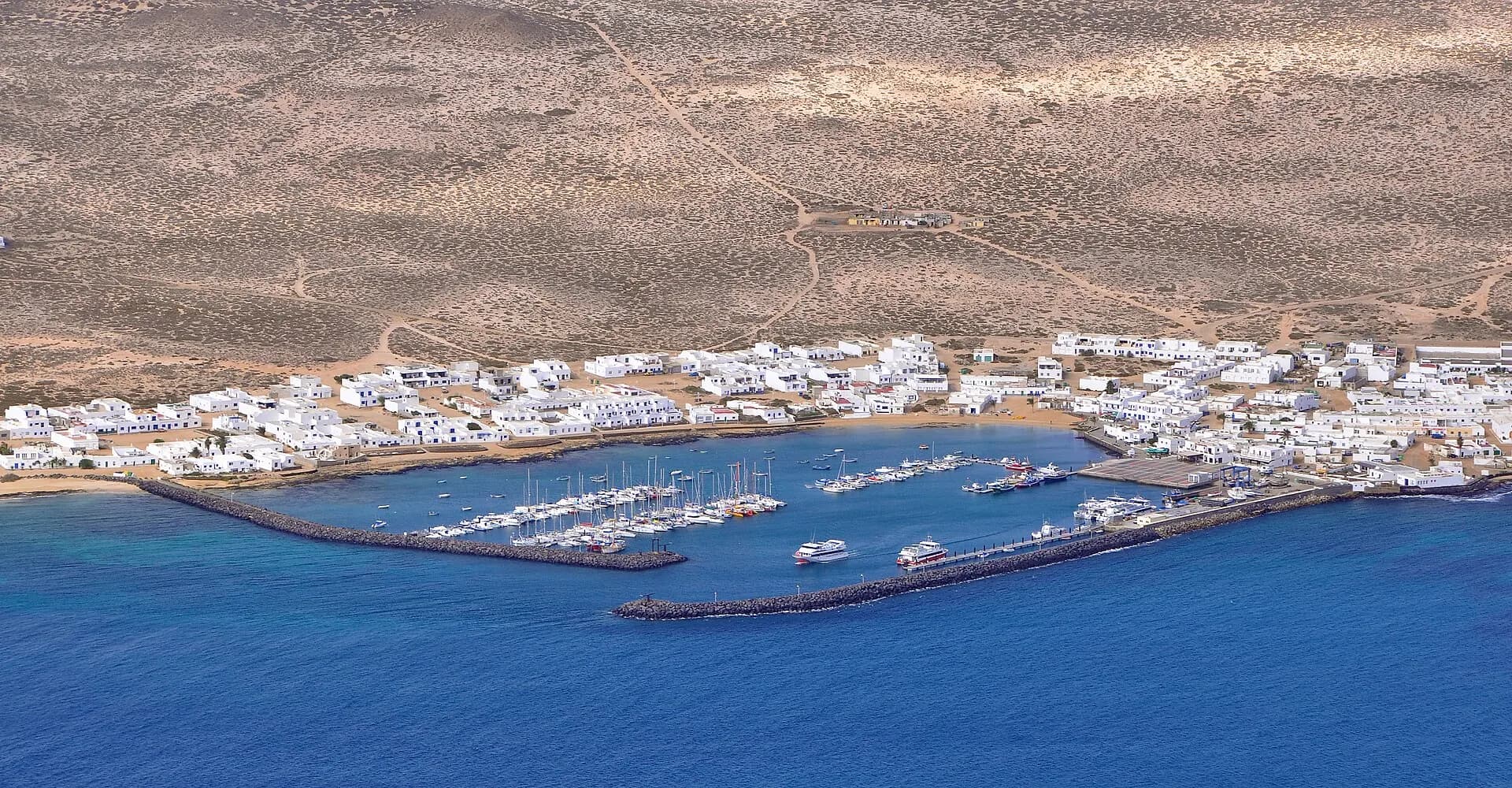
Pole and line tuna in the Canary Islands is tuna caught one fish at a time: the boat finds a school, keeps it close by throwing live bait into the sea, and the crew lift each tuna out with a pole, a line and a single hook. There is no net round the school, and the method catches almost nothing but tuna. The islands' boats land five species of tuna, and together they are the archipelago's biggest catch: in 2024 they made up about 61 per cent, by weight, of the fish sold at first sale in the Canary Islands.
It sounds like a postcard and works like a production line, with people instead of machines. A good school can put tonnes of fish on deck in a quarter of an hour. A bad day means fuel and bait spent for nothing. Either way, every tuna comes up on its own hook.
How pole and line tuna fishing works
The day starts with the bait, not the tuna. According to the ICCAT manual on pole and line fishing, written by the Spanish Institute of Oceanography for the International Commission for the Conservation of Atlantic Tunas, the bait is small pelagic fish, such as sardines or anchovies or whatever the local coast offers, caught close to shore, usually at night, at a time set by the moon. It is caught with a small encircling net or a ring net on a pole. So pole and line fishing is free of nets for the tuna, not for the bait. On board, the bait is kept alive in tanks of seawater renewed four to six times an hour and lit from inside, so the fish stay down and do not suffocate at the surface.
Then the boat goes looking, usually at dawn: seabirds diving, water breaking where tuna chase small fish, a change of colour on the surface, and, on modern boats, sonar and bird radar.
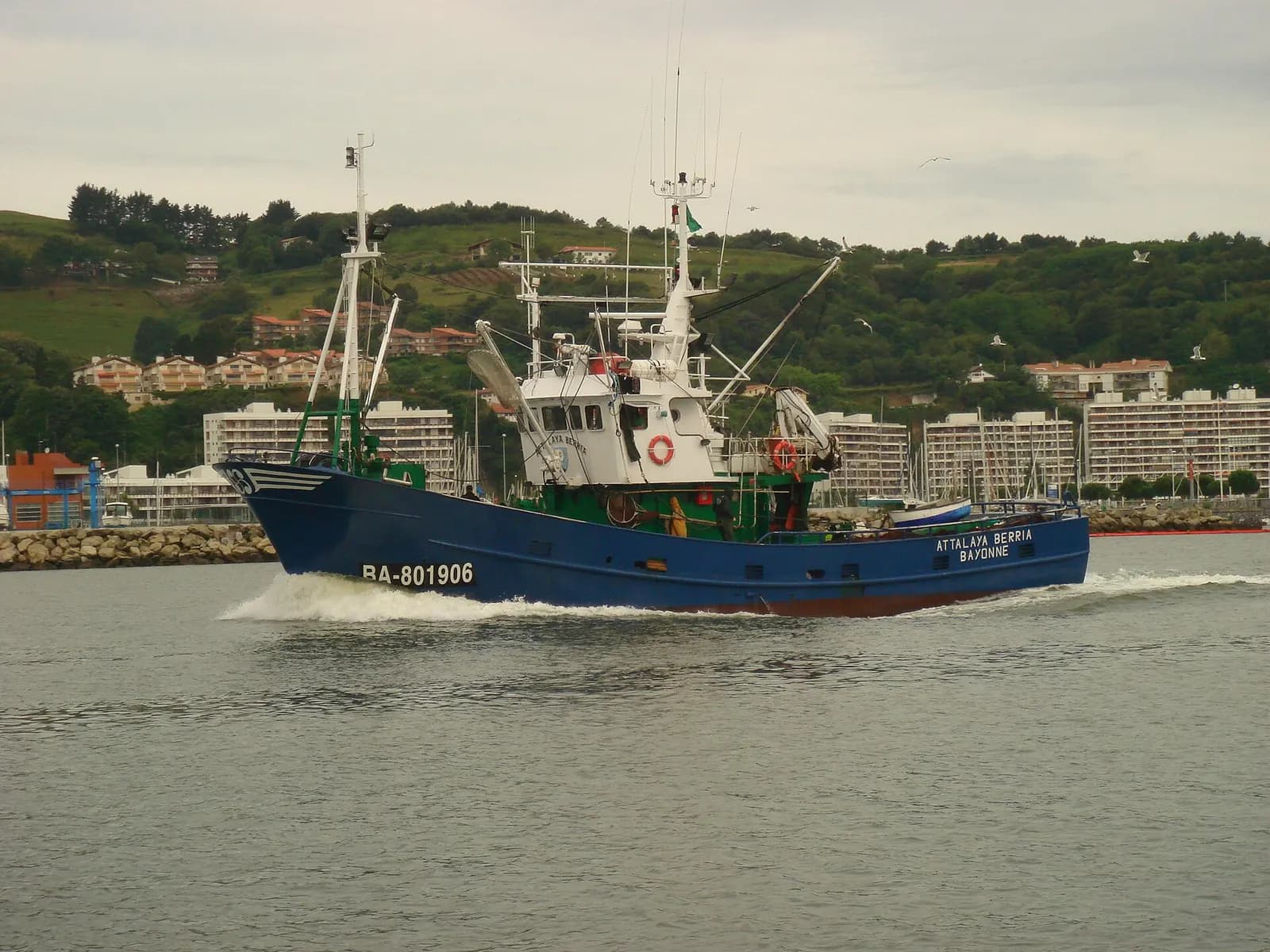
When the boat reaches a school, the crew throw live bait into the water to bring the tuna close and keep them there. Pipes along the rail spray water over the surface, which hides the poles and the shadow of the hull and looks like a shoal of small fish. The tuna start feeding hard enough to bite even bare hooks. Each fisherman swings a fish aboard, unhooks it and goes again. When the fishing is good, the manual says, an average boat can take one to four tonnes of tuna in 10 to 20 minutes. Big fish need longer poles, up to five metres, and pulleys.
The Canary Islands fleet has a trick of its own. Since the 1990s, according to the same manual, the baitboats of the Canary Islands and of Dakar have used the boat itself to hold a school together, so that it can be fished bit by bit, and when one boat is full another takes its place over the same fish. The manual notes that this could raise some of the same questions as fishing on floating objects. It is a footnote worth knowing.
Why pole and line catches almost nothing but tuna
The case for pole and line is what it does not catch. The ICCAT manual calls it a highly selective gear, with catches almost entirely limited to the tuna the boat is after. The only non-tuna species that ICCAT lists as associated with live-bait fishing are the white trevally and the yellowtail amberjack, plus some dolphinfish. No sharks, turtles, seabirds or marine mammals appear on that list.
The contrast is with purse seiners fishing on fish aggregating devices, the floating rafts that draw tuna in the open ocean. Under those rafts, young bigeye and yellowfin gather with skipjack, and a net round the raft takes them all. ICCAT's own multi-annual programme for tropical tunas, Recommendation 24-01, sets out to reduce the catch of those juveniles and closed fishing on the rafts from 17 March to 30 April in 2025. The closure covers baitboats fishing on rafts as well as purse seiners, so what the rule is after is the raft as much as the net. A hook on its own takes one fish that chose to bite.
Pole and line has its limits too. It needs live bait and schools that come up near the surface, and it cannot catch as much as an industrial net. In 2002, the manual says, live-bait boats took 23 per cent of the tropical tuna caught in the Atlantic.
Which tuna are caught in the Canary Islands, and when
Five species reach the harbours, and the islands give most of them their own names. In the fisheries statistics of the Canary Islands government, bigeye (patudo) appears as tuna, skipjack (listado) as bonito, albacore as barrilote and yellowfin as rabil, which ICCAT also records under the Canarian name albacora. Bluefin is atún rojo. On a Canarian menu, bonito means skipjack, and albacora may well mean yellowfin. In the official Spanish names, albacora and bonito del norte both mean albacore.
In 2024, according to the first-sale statistics of the Canary Islands fisheries department, the islands sold about 1,435 tonnes of bigeye, 1,345 tonnes of skipjack, 544 tonnes of albacore, 491 tonnes of yellowfin and 453 tonnes of bluefin. Bigeye was the biggest single species of fish sold in the archipelago, and Lanzarote, with 713 tonnes, sold half of it.
Much of it comes up on poles. The same statistics count gear for all fish, not only tuna, and give the islands' hand-held poles a category of their own, cañas manuales. In 2024 that category accounted for about 3,530 of the roughly 7,040 tonnes of fish sold at first sale in the Canary Islands, half the total. On Lanzarote it was about 1,030 of 1,690 tonnes, three fifths of everything sold on the island.
The seasons overlap but differ. Looking at decades of catches up to 2006, the ICCAT manual found that the Canary fleet took half its bigeye between April and June, 64 per cent of its skipjack between July and October and 67 per cent of its yellowfin between September and November. Bluefin are caught only now and then, mostly in March and April and again in November and December. The recent figures fit: in 2024 the biggest month for yellowfin was September and for bluefin April.
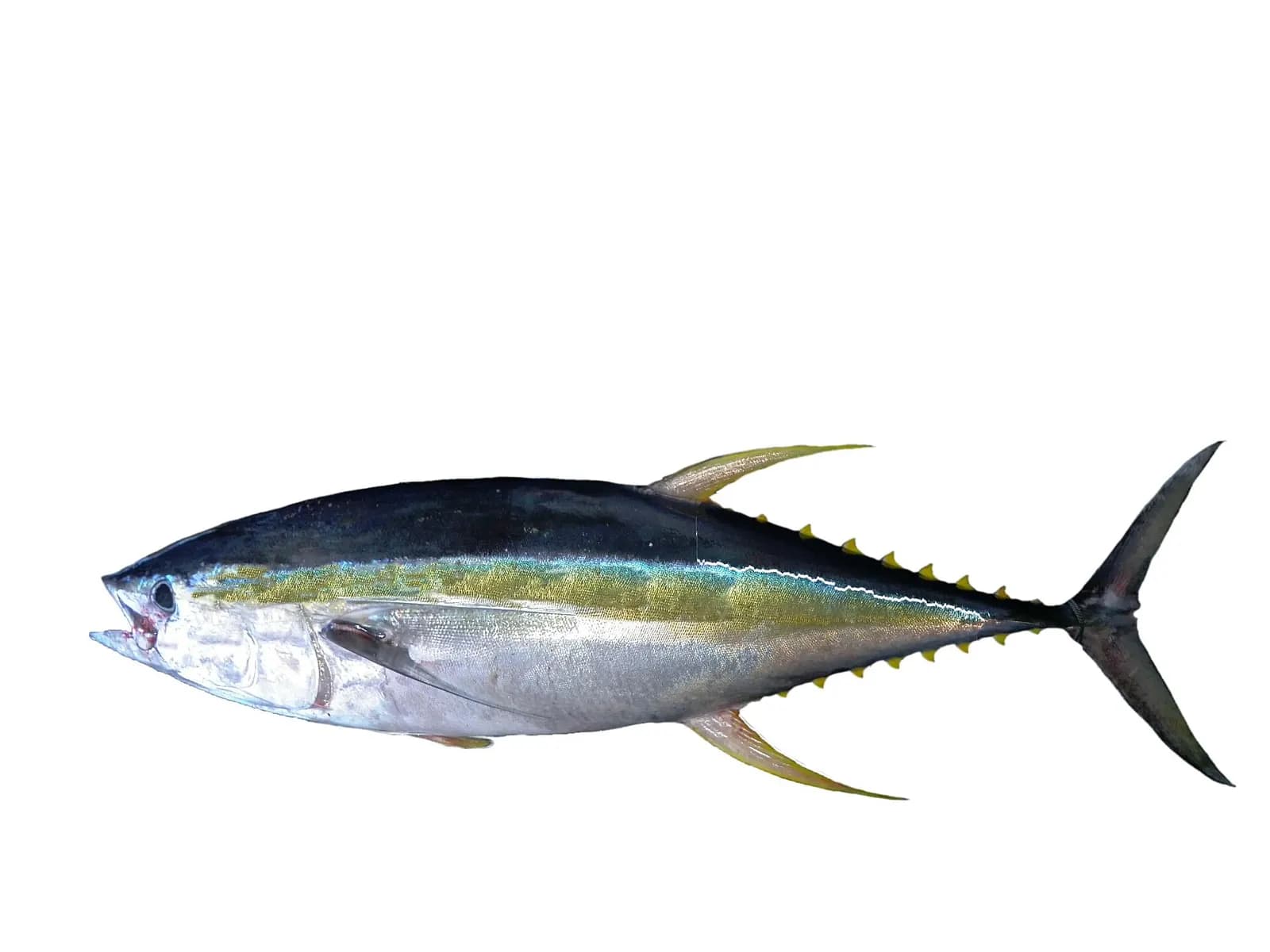
Yellowfin is named for its colour: a blue-black back, golden flanks and bright yellow fins, and in large fish the second dorsal and anal fins grow very long. It is a big fish. The largest on record measured 239 centimetres and weighed 200 kilos, and ICCAT's manual, citing the FishBase database, gives it a maximum age of eight years. The yellowfin that baitboats land around the Azores, Madeira, the Canary Islands and Cape Verde vary a lot, with average weights anywhere from 7 to 30 kilos; the bigeye they land average about 20.
Quotas: why a tuna caught by hand still has a limit
Selective does not mean there is no limit. Tuna cross oceans, so they are managed by ICCAT for the whole Atlantic. Since 2025 the total catch of Atlantic yellowfin is capped at 110,000 tonnes a year, and ICCAT is due to look at further measures for it, which may include national limits, at its 2027 meeting. Bigeye is capped at 73,011 tonnes for 2025, because the 2021 assessment found the stock overfished, though no longer being overfished, and that total is shared out among the fishing nations, the European Union among them.
The money at the first sale is modest. In 2024 yellowfin sold at first sale in the Canary Islands for an average of about 2.80 euros a kilo, bigeye for about 3 euros and skipjack for about 1 euro, according to the same statistics. Bluefin was the exception, at close to 7 euros.
There is a new idea on the table as well. In 2025 ICCAT adopted Recommendation 25-01, a pilot project to fatten bluefin and yellowfin in submersible cages in Canary waters, with up to 250 tonnes of each. Yellowfin could be caught for it from 1 July to 30 November and bluefin from 15 March to 30 May, and the project will look at whether bluefin can be caught there with purse seines. The report is due by the end of 2027. How that sits beside a fleet that fishes one tuna at a time is a question the islands will be asking for a while.
From the harbour to the jar: Los Toledo's yellowfin
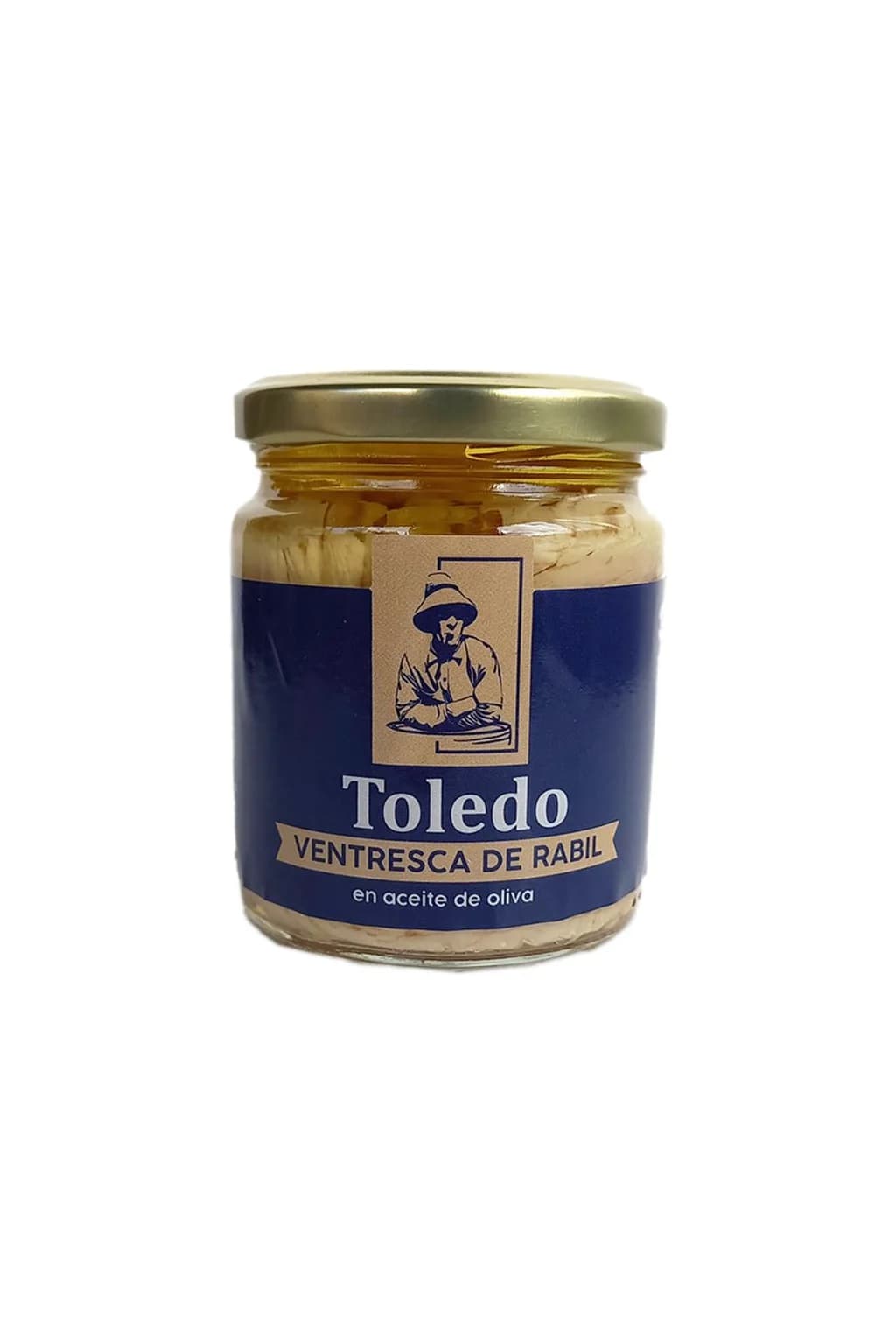
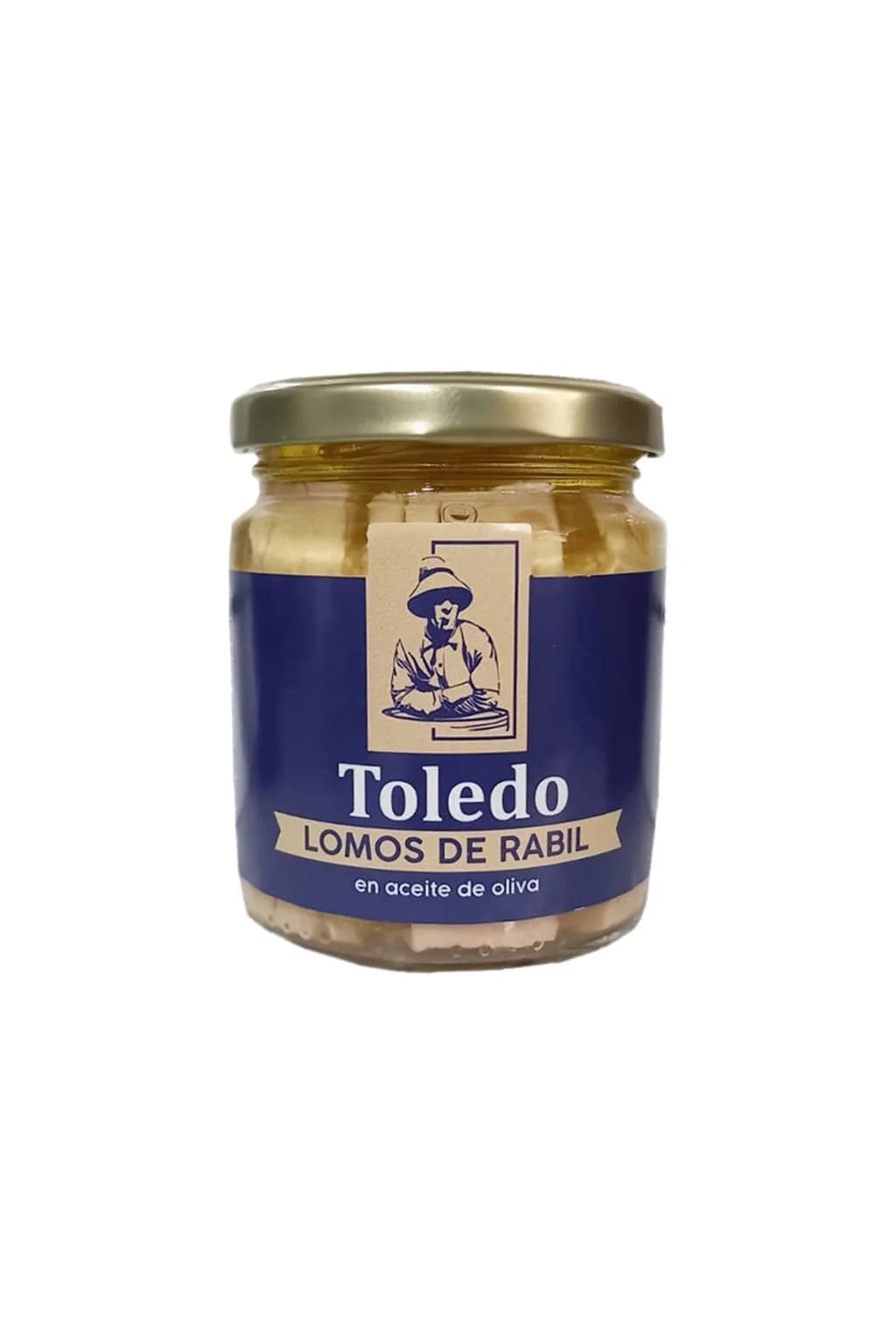
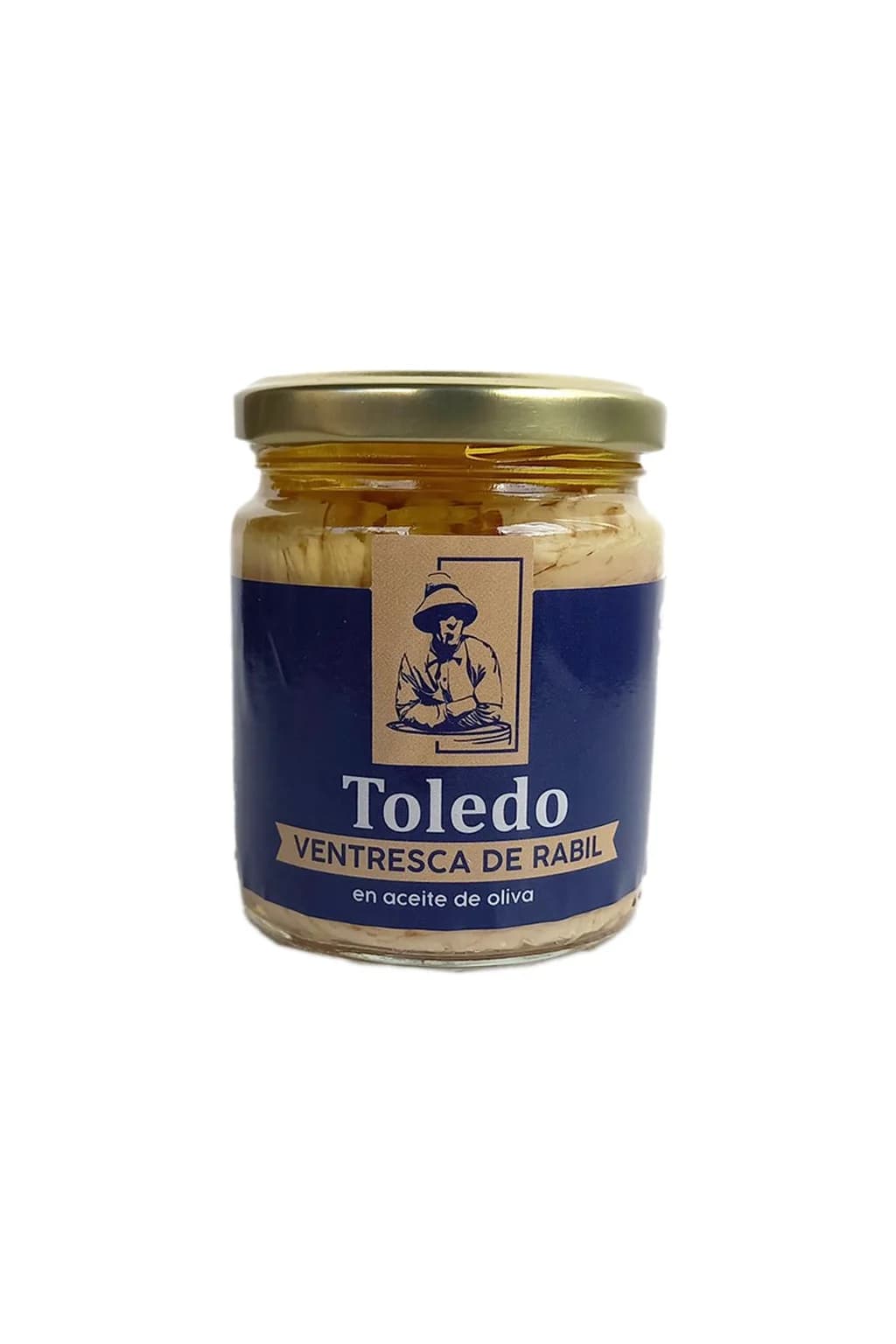
In Arrecife, Lanzarote's capital, Los Toledo preserve yellowfin from Canary waters. Luis Toledo and his father, Francis, run it. The family comes from La Graciosa, the small island just north of Lanzarote, and so does the recipe. The fisherman on the label, Antonio Hernández, is one of the family's ancestors. They buy their tuna from boats that catch it with pole and line in Canary Island waters, and the label says so.
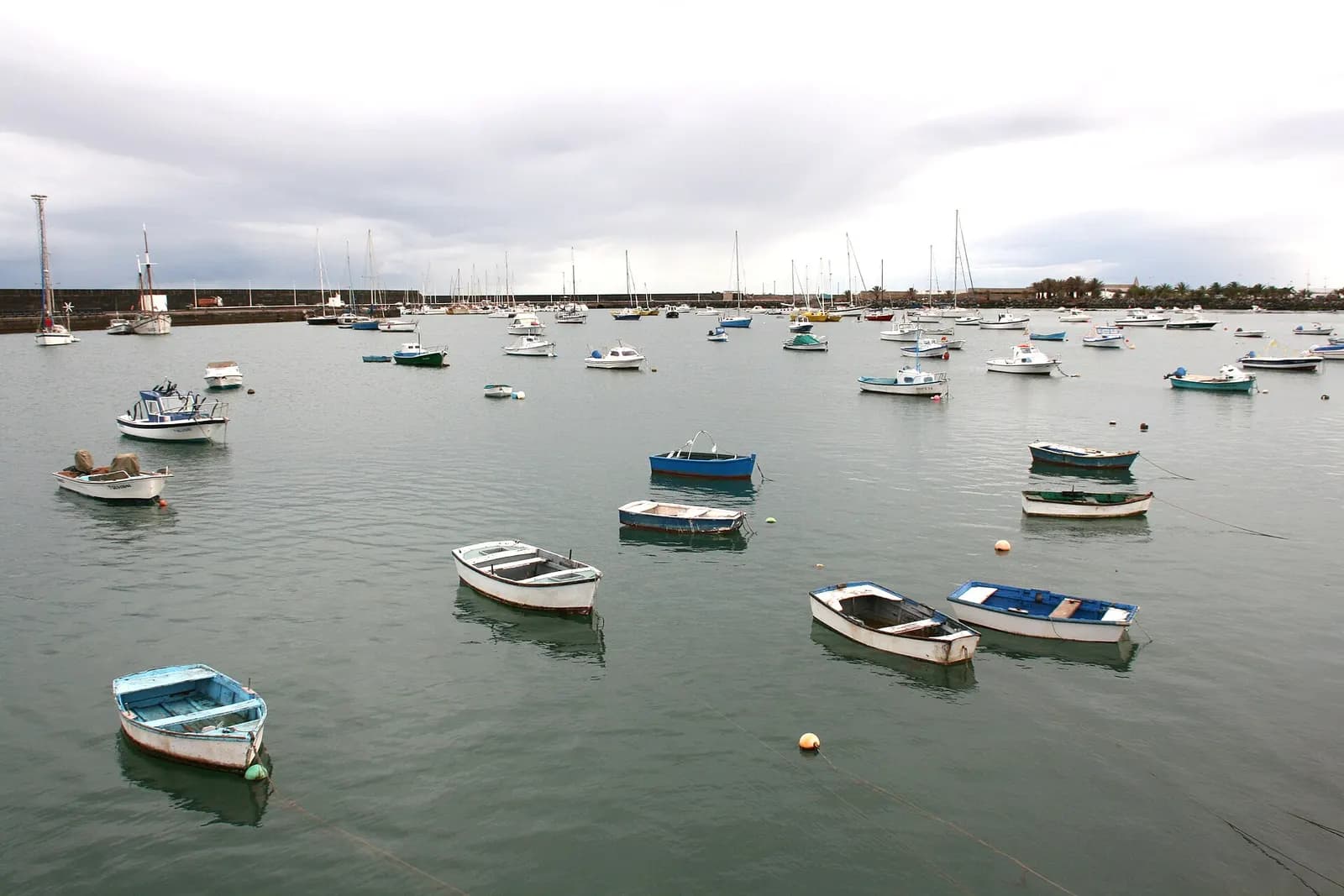
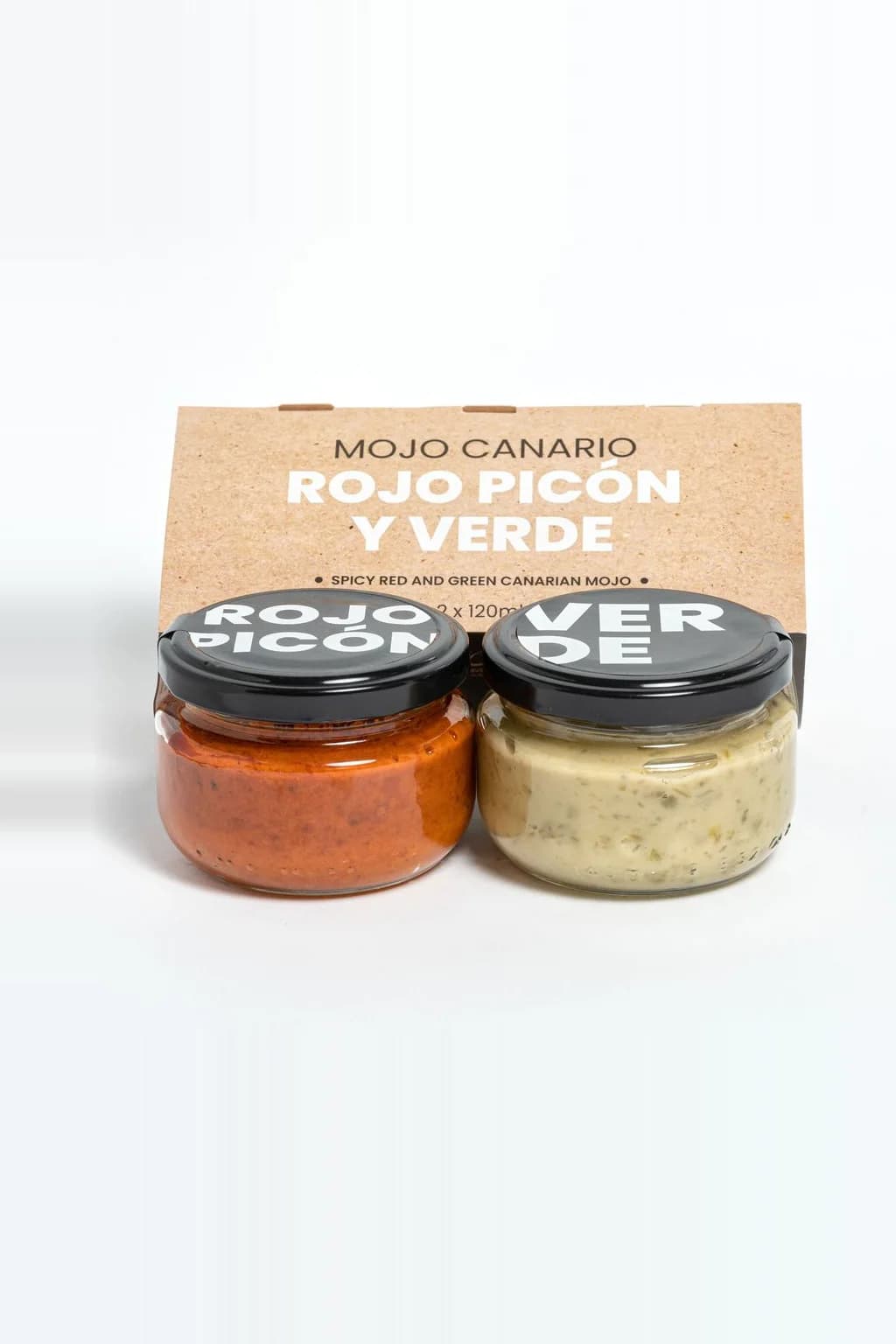
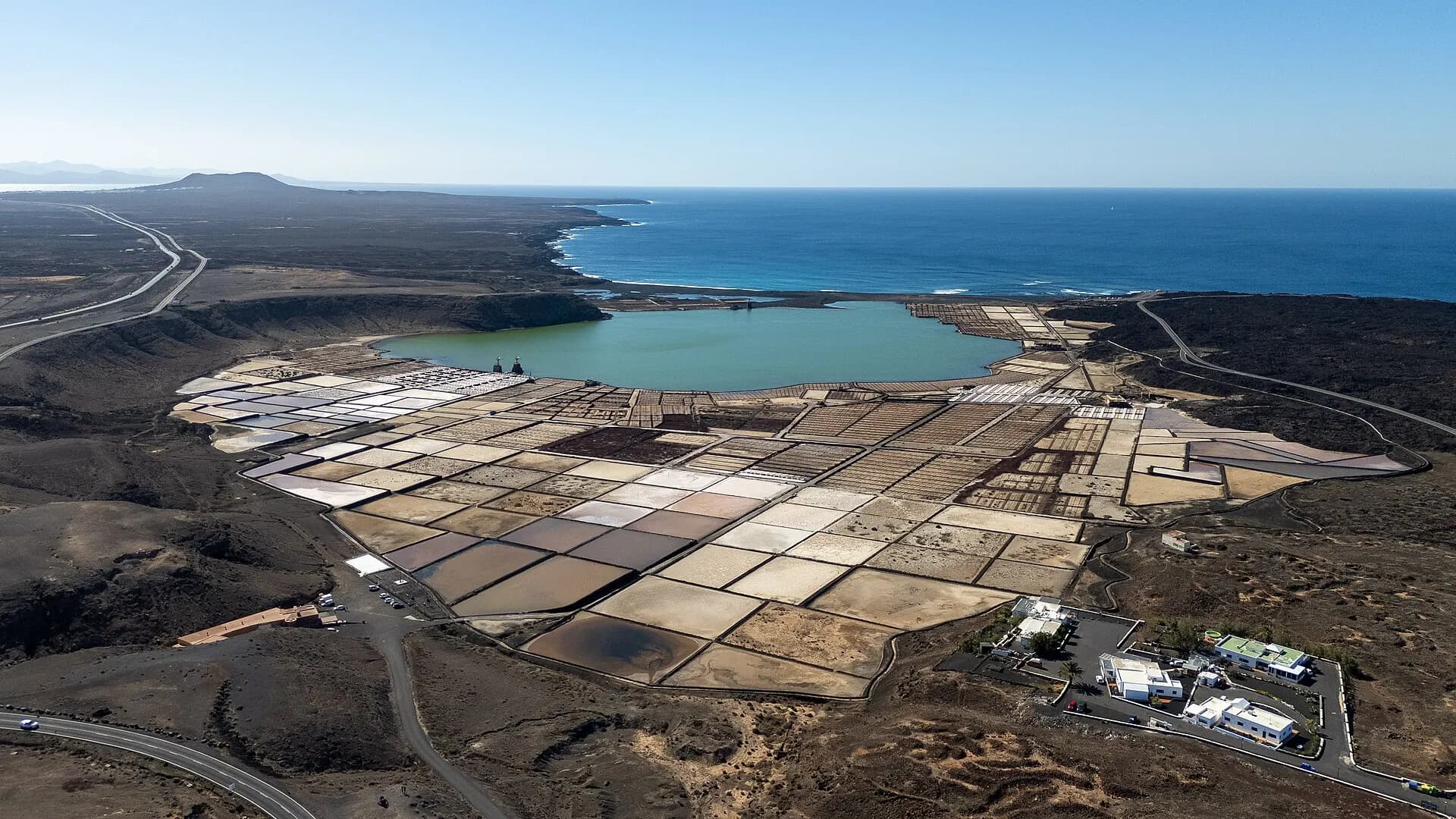
In the workshop they clean the fish and cut it by hand, then pack it in glass jars with olive oil. Two cuts go into the jars. The ventresca is the belly, the finest and most prized part of the tuna, best eaten as it comes, with pan bizcochado, the twice-baked bread of the islands, or over a tomato salad with the oil from the jar as dressing. The loins are the prime cuts, from the tenderloin to the tail, for salads, sandwiches and potatoes. In the Canaries that means papas arrugadas, boiled in very salty water, with a mojo on the side. On Lanzarote the salt for them can come from the pans of Janubio, whose salt once went to the Basque tuna fleet.
How to read a jar of tuna, and when to look for the boats
One rule is worth knowing. For fresh and frozen fish, European rules make the label give the species with its scientific name, the area where it was caught and the category of fishing gear, as set out in Article 35 of Regulation 1379/2013. For prepared or preserved fish, which is what a jar or a tin of tuna is, those rules do not apply. A preserve does not have to tell you how its tuna was caught.
So it is worth reading what a jar says of its own accord. The species: Thunnus albacares is yellowfin, Katsuwonus pelamis is skipjack and Thunnus obesus is bigeye. The catch area: FAO 34 is the eastern central Atlantic, where the Canary Islands lie. And the gear: in the EU's list, pole and line falls under hooks and lines. A label that gives all three is telling you more than the law asks. Los Toledo's jar names the fish, rabil, and says how it was caught: with pole and line, one by one.
In the islands, autumn is yellowfin time and spring is bigeye time. In Arrecife the fishing boats tie up in the Puerto de Naos, and the rest of the island is on the Lanzarote page. On a menu, ask what bonito is that day before you order it.
Questions
- What is pole and line tuna fishing?
- Pole and line is a way of catching tuna one fish at a time. The boat finds a school, throws live bait into the sea to keep it close and sprays water over the surface, and each fisherman lands a tuna with a pole, a line and a single hook. No net goes round the school.
- Is pole and line tuna better for the sea?
- Pole and line is one of the most selective ways to catch tuna. ICCAT describes it as a highly selective gear whose catch is almost entirely the target tuna, with no sharks, turtles, seabirds or marine mammals among its listed bycatch. It does need live bait, caught with small nets near the coast, and baitboats that fish around floating rafts fall under the same seasonal closure as purse seiners.
- Which tuna are caught in the Canary Islands?
- The Canary Islands fleet lands bigeye, skipjack, albacore, yellowfin and bluefin. In 2024 the islands sold about 1,435 tonnes of bigeye, 1,345 tonnes of skipjack, 544 tonnes of albacore, 491 tonnes of yellowfin and 453 tonnes of bluefin at first sale, according to the Canary Islands fisheries statistics.
- When is yellowfin tuna season in the Canary Islands?
- Yellowfin tuna, called rabil in the Canary Islands, is caught mostly in autumn: two thirds of the Canary catch came between September and November over the decades studied by ICCAT, and September was the biggest month in 2024. Bigeye peaks from April to June and skipjack from July to October.
- Does canned or jarred tuna have to say how it was caught?
- No. In the EU, fresh and frozen fish must be labelled with the catch area and the category of fishing gear under Regulation 1379/2013, but prepared or preserved fish, such as tuna in tins or jars, is not covered by that rule. Producers can still state the gear on the label of their own accord.
- What does bonito mean in the Canary Islands?
- In the Canary Islands, bonito usually means skipjack tuna (listado), not albacore. In the islands' fisheries statistics skipjack is listed as bonito, bigeye as tuna, albacore as barrilote and yellowfin as rabil.