Ebro Delta rice: flooded paddies, wintering birds and a delta that is sinking
Ebro Delta, Baix Ebre and Montsià, Tarragona//Products/9 min read
Rice made the Ebro Delta what it is, from the canals of the 19th century to a park born of a protest in 1983. Now the land is sinking and the price of rice is falling.
 Written with by Eduardo Peire
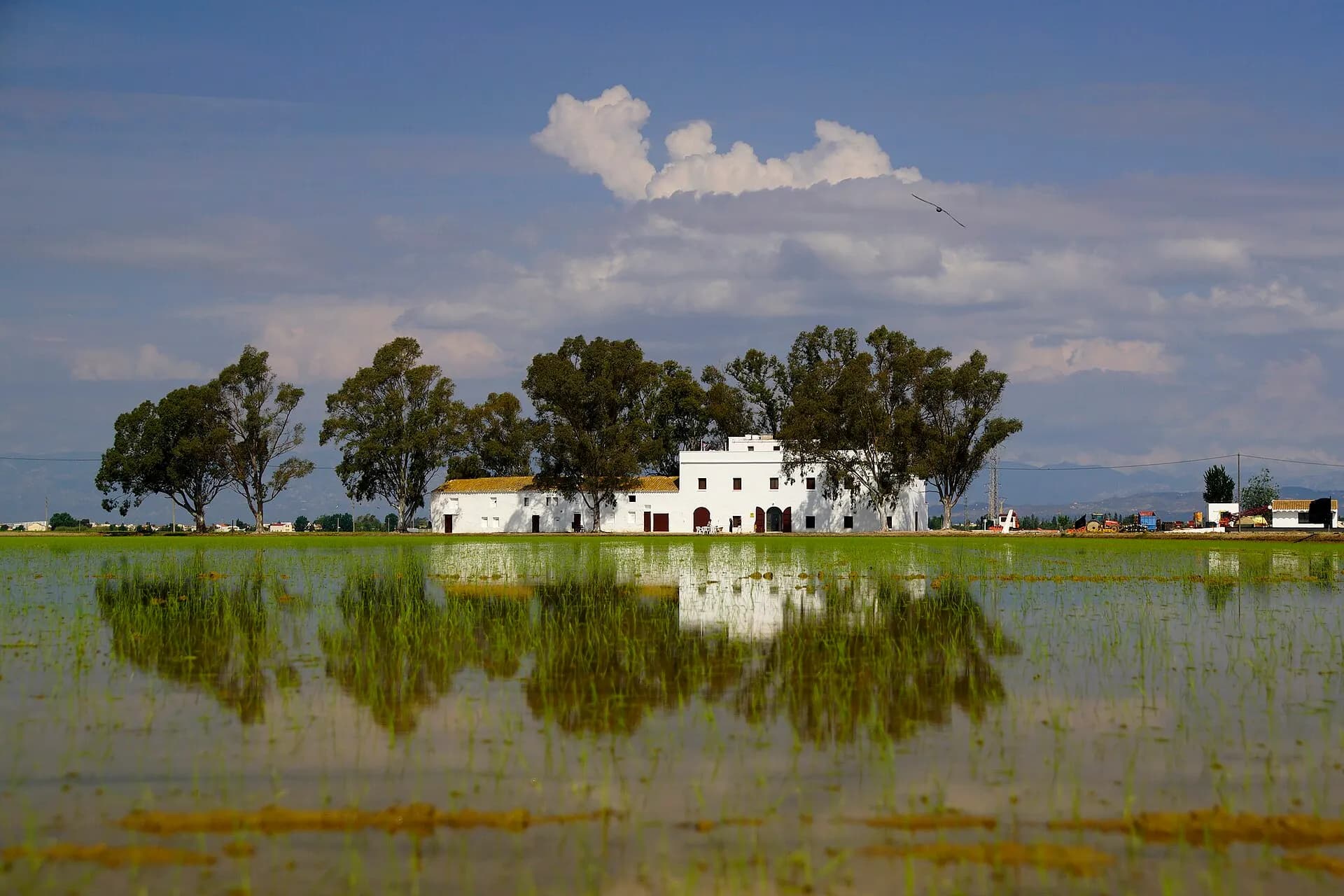
Ebro Delta rice is grown in the flooded paddies of the delta where the Ebro meets the Mediterranean, in the far south of Catalonia. The best of it is sold under the PDO Arròs del Delta de l'Ebre (Arroz del Delta del Ebro in Spanish), protected in the EU since 2008: medium-grain japonica rice, the plump, absorbent kind that Spanish cooks call arroz redondo. The paddies cover about 21,000 hectares, keep the most important wetland in Catalonia wet and sit on land that is sinking while the sea rises.
What is Ebro Delta rice?
The PDO covers white rice of the top commercial category, Extra, and since an amendment approved by the EU in 2022 also brown rice. The reference variety is Bahía, a medium grain. The others allowed are Tebre, Gleva, Fonsa, Bomba and Montsianell, plus three added by that amendment, J. Sendra, Guara and Olesa, which the file describes as the varieties best able to adapt to the wetlands of the delta. Olesa, the only long grain on the list, originated in the delta and, says the file, behaves in the kitchen like Bomba.
The rice must come from registered fields inside the delta, in Deltebre, Sant Jaume d'Enveja and the deltaic parts of L'Aldea, Amposta, L'Ampolla, Camarles and La Ràpita, and it must be milled there too. The EU file of the PDO gives a portrait of the Bahía grain that a cook can use: about 5.5 millimetres long once milled, cooked in around 16 minutes, and able to take up 1.93 grams of water for every gram of rice. That thirst is the point. Unlike most long-grain rice, delta rice is grown to soak up a stock and carry its flavour.
How rice came to the Ebro Delta
Rice is not as old here as the landscape suggests. The PDO file quotes the geographer Lluís Solé i Sabarís: there were attempts to grow rice in the delta in the 15th century, but the crop only took off in the 19th. One of the earliest records dates from 1697, when Cistercian monks of the monastery of Benifassà tried rice on their land in the flood zone and peat bogs of Carrova. The results were encouraging, but without irrigation nobody could flood the fields, and the experiment stopped.
Before the canals, the delta was mostly salty, marshy grazing land for transhumant flocks. Around 1857 the right-bank canal, which draws its water from the Ebro at Xerta, reached Amposta, and rice spread with the fresh water. Work on the left-bank canal started in 1872 and was finished on 5 May 1912. Fresh water did two jobs at once: it let farmers grow rice, and it washed the salt out of the soil.
The price was paid in lives. According to the Ebro Delta Natural Park, the opening of the canals was followed by severe outbreaks of malaria, and some 3,000 people had died of it by 1918. A systematic campaign against the disease began in 1917 under the Mancomunitat, the Catalan regional government of the time. The paddies were also so full of leeches that workers had to cover their legs, and hundreds of thousands of them a year were exported to distant places.
How the paddies work through the year
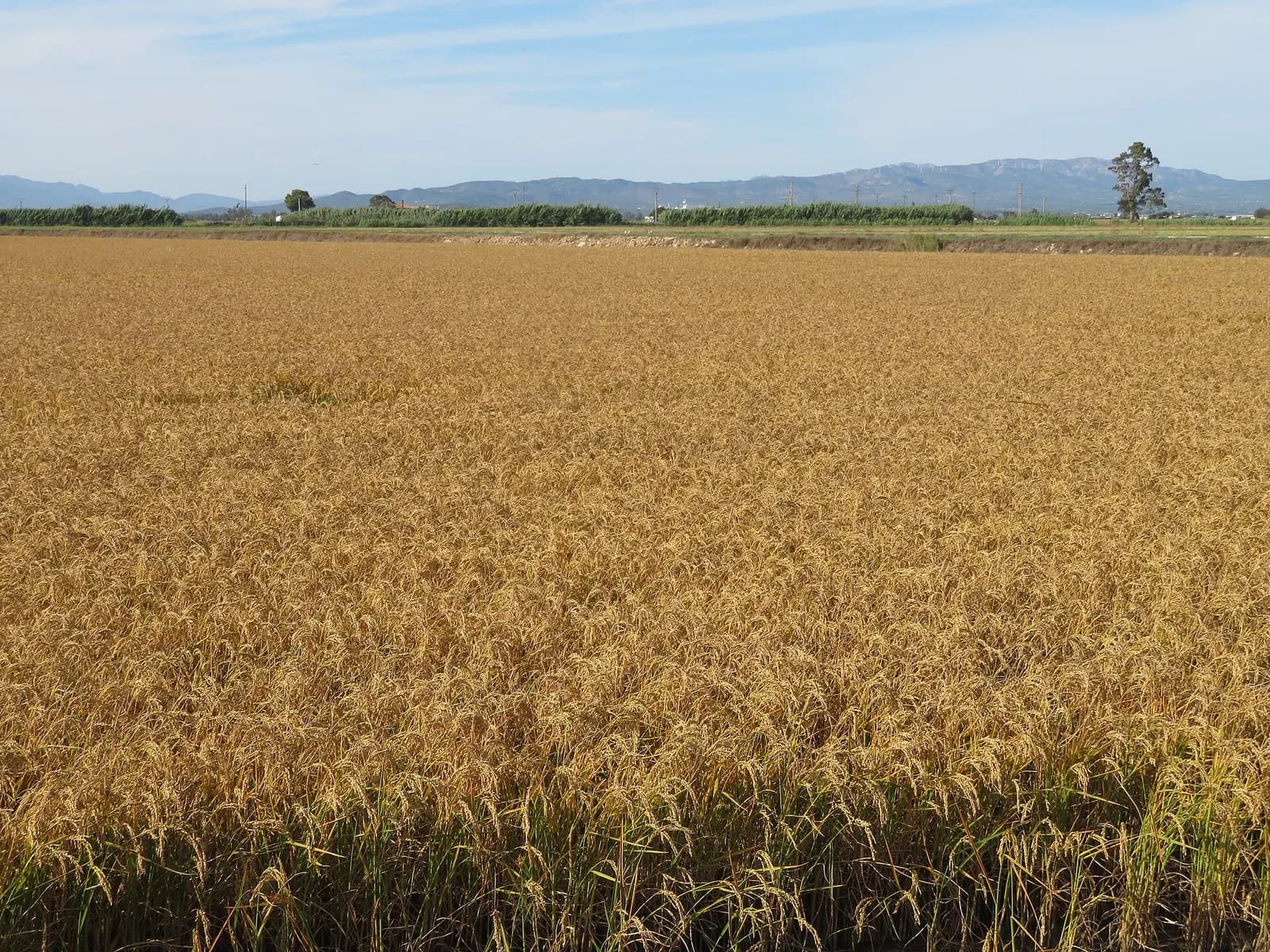
The rice year follows the water. Sowing runs from mid-April to early May, straight into fields flooded under five to ten centimetres of water. The shoots appear after 15 to 20 days. From mid-June to mid-July, as the plants tiller, the water is raised to 15 or 20 centimetres and kept moving. In early September the fields are drained and the harvest begins, ideally when the grain holds 18 to 21% moisture, and it can run into the first ten days of October.
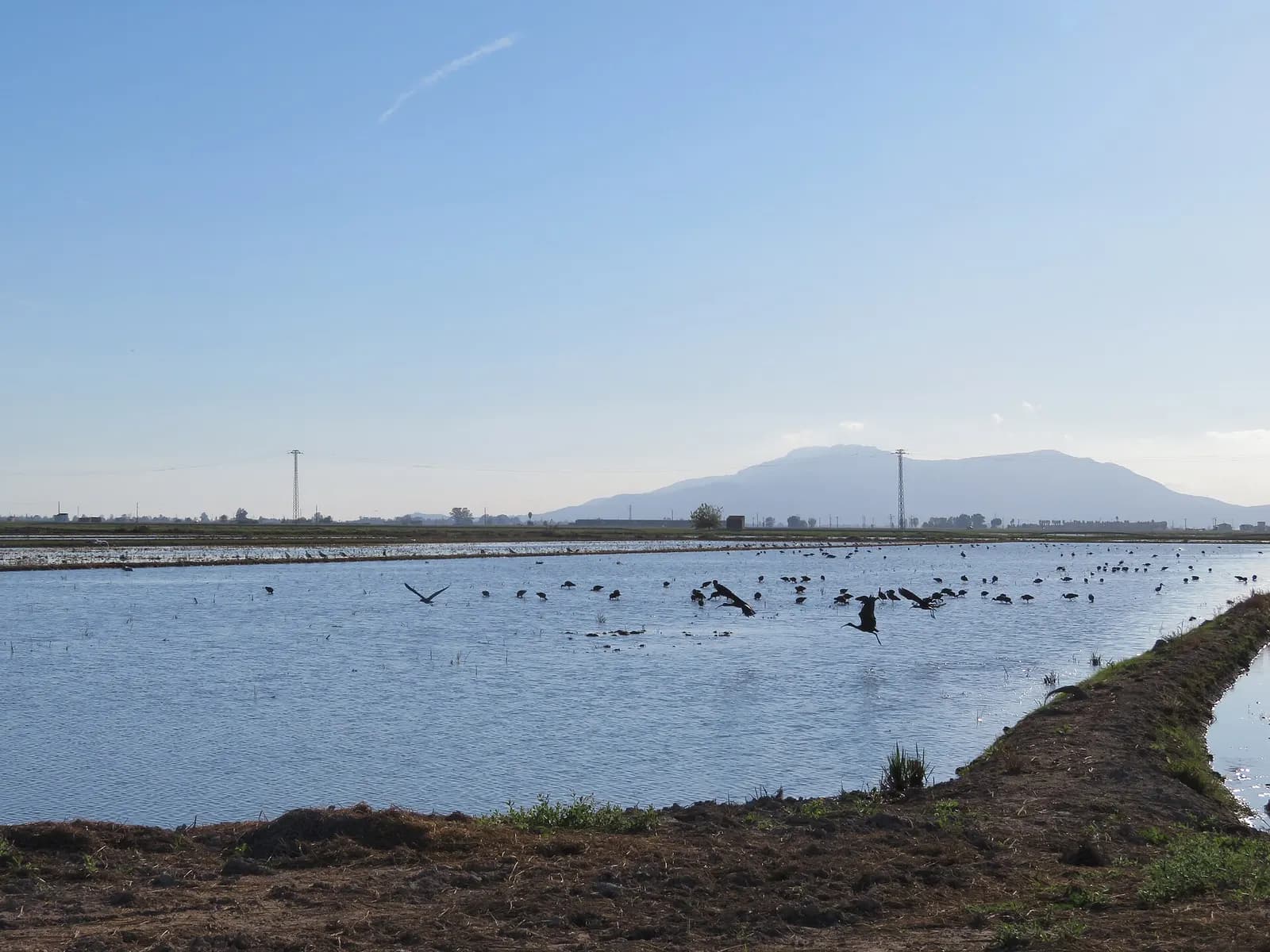
Then the fields fill again. In October and November the stubble stays under water, and the delta becomes a stopover and winter home for ducks, waders, herons and flamingos. The park's own figures give an average of about 53,000 ducks and 13,000 coots in an ordinary autumn, and a winter population that adds up to more than 90% of the ducks wintering in Catalonia and around 10% of those in the whole Iberian Peninsula.
A natural park born from a protest against rice
The delta's protection has an awkward origin story for rice. On 26 June 1983, people from Deltebre occupied the Canal Vell lagoon in protest against drainage works that threatened to dry it out and turn it into more paddies. On 4 August 1983, thirty-nine days later, the Catalan government created the Ebro Delta Natural Park. It was extended to the right bank in 1986 and now covers 7,805.8 hectares, with 343 bird species recorded by 2015. It is a special protection area for birds, a Ramsar wetland and, since 2013, part of a UNESCO Biosphere Reserve.
The park does not hide what rice has cost the lagoons. Since the middle of the 19th century most of them have shrunk and some have vanished, and the paddies have turned their natural cycle upside down: they now run fresh while the fields are flooded and brackish the rest of the year. Yet the same fresh water holds back the salt over most of the delta and feeds the birds, and the 2022 PDO file presents rice as a crop that adds to the value of the place as a nature site.
The coast still surprises. By early August 2025 six loggerhead turtle nests had been found on the delta's beaches, and on 1 October 2026 about a hundred young European sturgeon were released into the Ebro at Xerta, the fourth such release on a river where the species had vanished around the middle of the 20th century.
Is the Ebro Delta sinking?
Yes, slowly, and the sea is rising to meet it. About 60% of the delta lies less than one metre above sea level, 30% between one and two metres and only 10% higher, according to the PDO file. A draft protection plan of the Spanish environment ministry put its subsidence at about three millimetres a year in 2020.
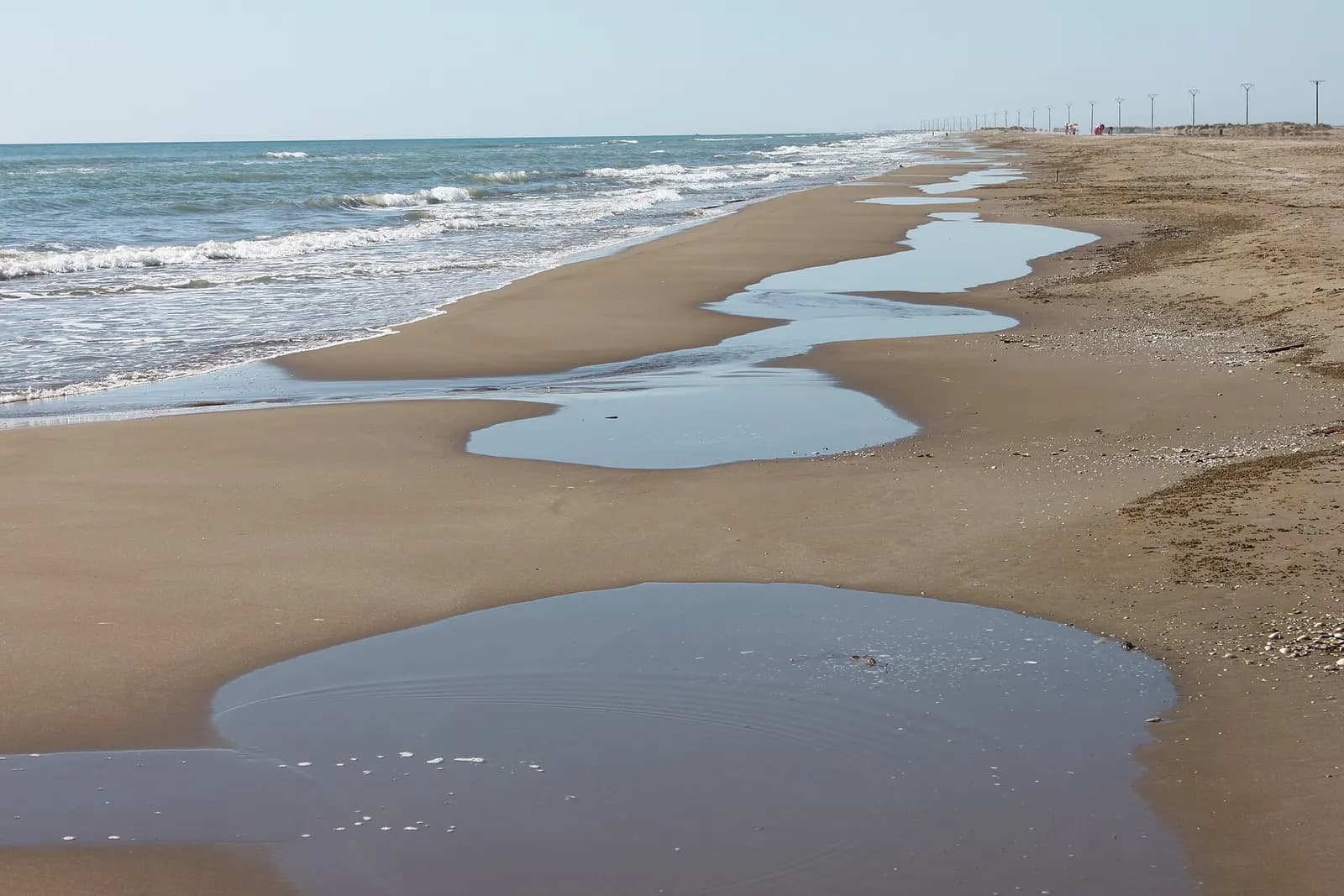
A delta survives by receiving new sediment, and the Ebro hardly delivers any. Some 200 reservoirs were built across the Ebro basin in the 20th century, and the park estimates that together they hold back about 99.9% of the solid load the river carried at the end of the 19th. The two big ones on the lower river, Mequinenza and Riba-roja, trap around 95% of the suspended sediment and practically all the gravel and sand rolled along the bed, and a study by the University of Lleida found that the load reaching Tortosa is now less than 1% of what the river carried at the start of the 20th century. Without that supply the coast retreats: at the Cap de Tortosa, by the old mouth of the river, the shore moved back about 1,500 metres between 1957 and 1989.
Storm Gloria showed what that means. Between 19 and 24 January 2020 the sea pushed about three kilometres inland and left more than 3,000 hectares of paddies under salt water for over a week, according to a report in Público six months later. The Trabucador, the sandbar that closes the bay of Els Alfacs, was nearly submerged and broken, and some 700,000 cubic metres of its sand ended up in the bay.
What is being done is slow and expensive. In May 2025 the Ebro basin authority released a controlled flood from the reservoirs and, for the first time, monitored in public how much sediment it carried. According to an analysis of those data published by the Plataforma en Defensa de l'Ebre, the flood moved about 17,800 tonnes of suspended sediment to the sea, and fewer than 900 tonnes of it entered the irrigation canals that could spread it over the fields, an amount the campaigners called negligible. In March 2026 the Catalan government presented a 15-year plan worth 42 million euros, 40 million of them from the Spanish state, to move up to six million cubic metres of sand onto the most fragile stretches of coast, the Trabucador among them, starting in 2028 after two years of studies and permits.
Hard years for the rice growers
The farmers are having a bad time, and not only because of the sea. In October 2026 the growers' associations and unions of the delta said that the price paid for their rice had fallen 38% in two years, to 0.31 euros a kilo, levels last seen around 2000, with losses of more than 834 euros a hectare. One of the associations put the loss of income for the delta this season at 12 to 14 million euros, according to Diari de Tarragona.
They blame cheap imports from Southeast Asia, the cost of fertiliser and diesel, poor yields from much of this year's seed and the shrinking list of treatments they are allowed to use. They also blame the apple snail, an invasive freshwater snail that eats young rice plants and has spread across the delta. Their demands include emergency aid, full public funding of the saponins used against the snail, and permission to treat fields with drones.
None of this is visible from a bicycle on a September evening. All of it decides whether the paddies are still flooded in ten years.
How to cook Ebro Delta rice
Delta rice belongs in dishes where the grain drinks the stock: arròs a banda, cooked in fish broth with the seafood served separately, black rice with cuttlefish ink, soupy rice and the many versions of paella. Bahía and the varieties like it give a tender grain full of flavour. Bomba, which has the most amylose of the PDO varieties, stays firmer, which makes it the safer choice for a first dry rice.
A few habits help. Toast the grain briefly in the oil and the sofregit before adding hot stock, keep the stock simmering, and stop stirring once a dry rice is under way. Start tasting around the 15-minute mark: the EU figures give about 16 minutes for Bahía, and the last minutes decide everything. For the comparison next door, read about the rice of the Albufera of Valencia. On the packet, look for the PDO label, numbered and issued by the regulatory council.
When to visit the Ebro Delta
Each season has its own delta. In April and May the freshly flooded fields turn the plain into a mirror. In June and July they are bright green. From early September to mid-October the rice turns gold and is cut. In October and November the stubble goes back under water and the ducks arrive in their tens of thousands, and through the winter flamingos stand in the lagoons.
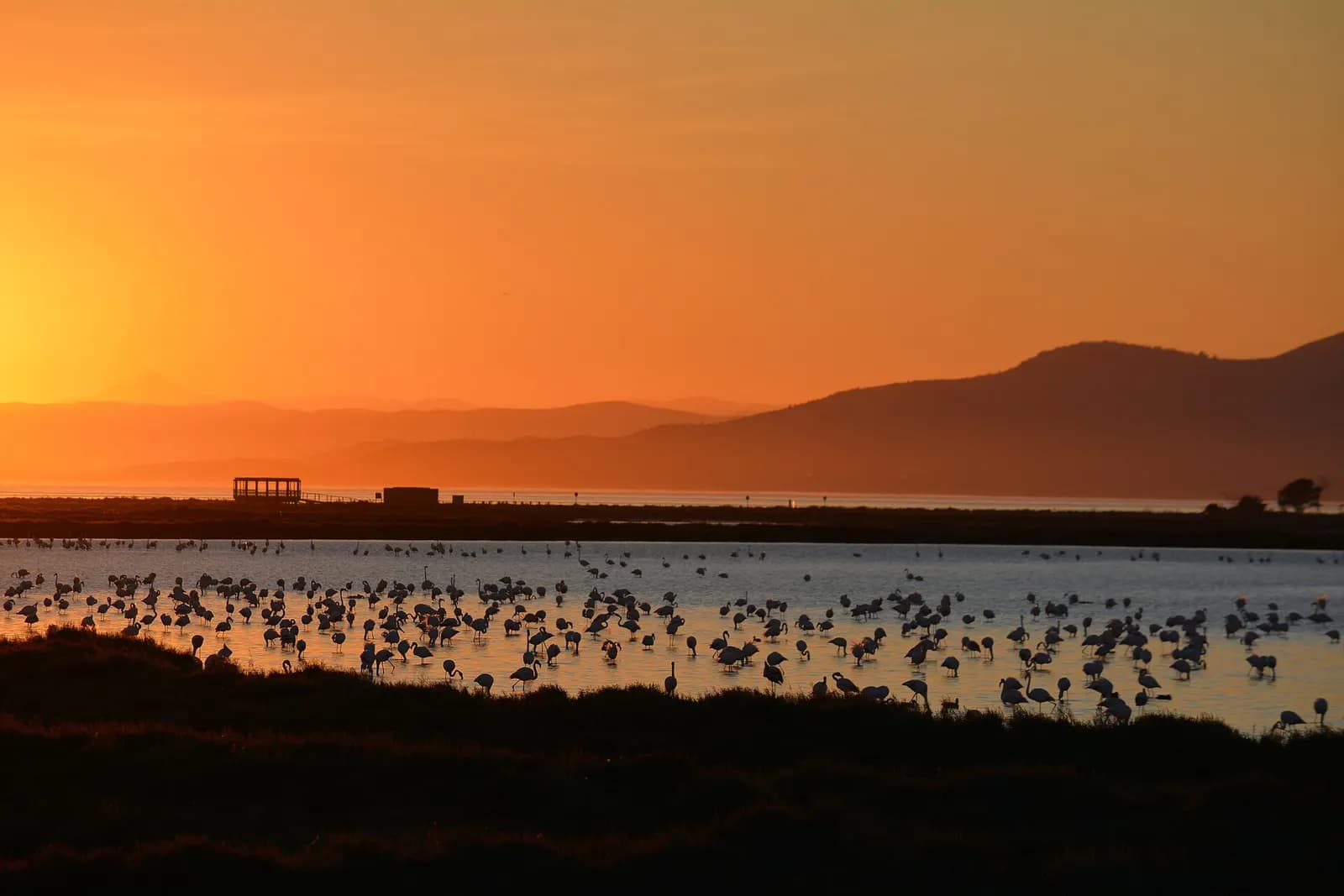
The delta is flat, so a bicycle is the obvious way round, and the park has eleven marked itineraries and an information centre and ecomuseum in Deltebre. Stay on the tracks and off the paddy banks, which are working land, and keep away from the dunes and lagoons closed to protect nesting birds. Which hide or lagoon is best at dusk depends on the season and the wind, and finding it is half the point.
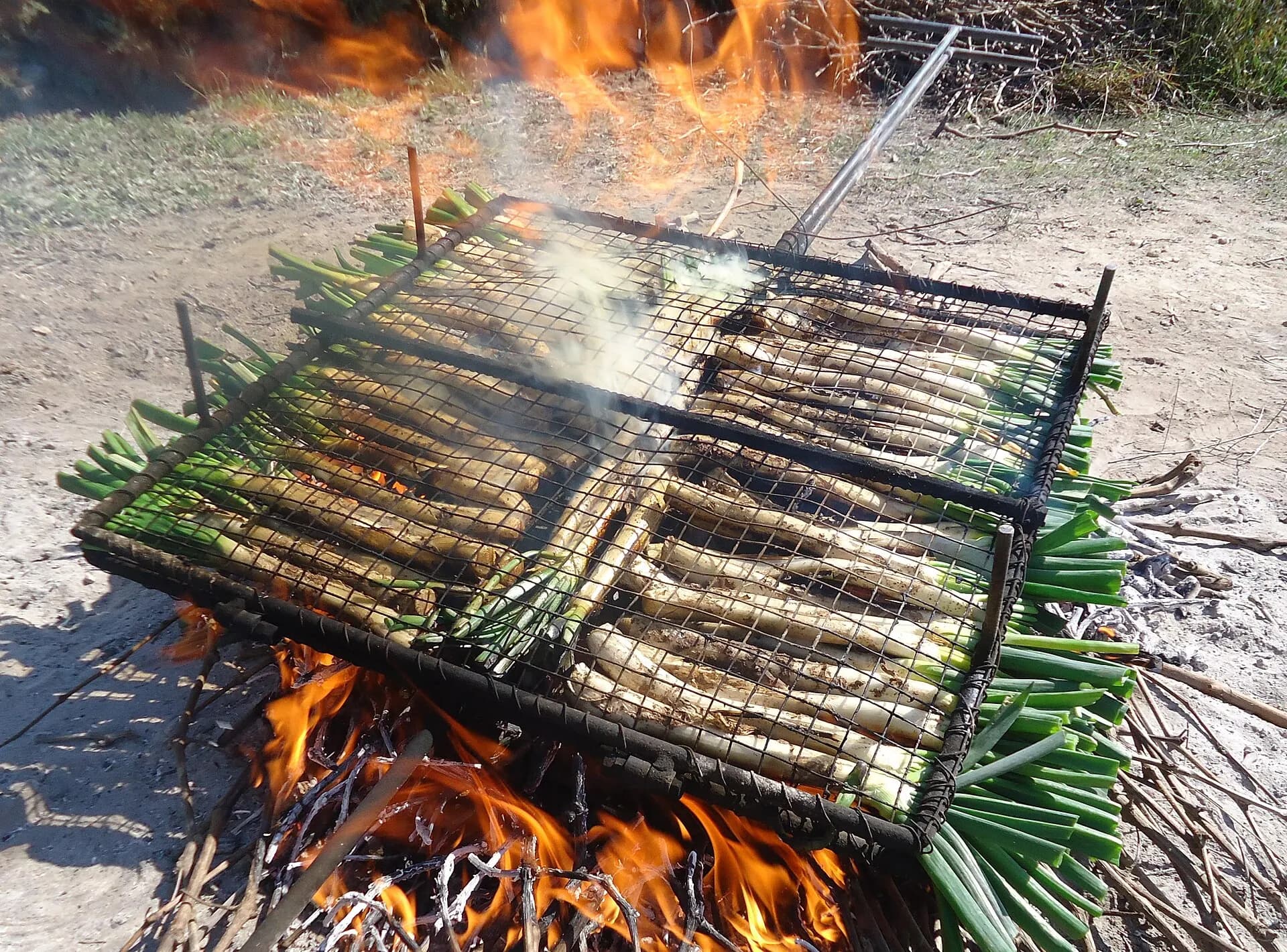
For the wider region, see our pages on Catalonia and the province of Tarragona. In winter, further north, the town of Valls is busy with a very different crop at its calçotada.
Rice nearly cost the delta a lagoon in 1983. Today it is what keeps most of the delta under fresh water for much of the year.
Questions
- What is Ebro Delta rice?
- Ebro Delta rice is medium-grain japonica rice grown and milled in the delta of the Ebro, in the province of Tarragona. Under the PDO Arròs del Delta de l'Ebre it must be white rice of the Extra category or brown rice, from registered fields in seven delta municipalities.
- Which rice varieties are grown under the Ebro Delta PDO?
- The reference variety of the Ebro Delta PDO is Bahía. The PDO also allows Tebre, Gleva, Fonsa, Bomba and Montsianell, and since a 2022 amendment J. Sendra, Guara and Olesa. All are medium grains except Olesa, a long grain from the delta that cooks like Bomba.
- How long does Ebro Delta rice take to cook?
- The PDO file gives about 16 minutes for Bahía, the reference variety of Ebro Delta rice, which absorbs 1.93 grams of water per gram of rice. Other varieties and recipes vary, so start tasting a dry rice around the 15-minute mark.
- When is the rice harvest in the Ebro Delta?
- In the Ebro Delta the fields are drained in early September and the rice harvest runs from then until about the first ten days of October. Sowing takes place from mid-April to early May, straight into flooded fields.
- Is the Ebro Delta sinking?
- Yes. About 60% of the Ebro Delta lies less than one metre above sea level and it subsides by about 3 mm a year, while reservoirs upstream hold back almost all the sediment the river used to bring. Storm Gloria flooded more than 3,000 hectares of paddies with seawater in January 2020.
- When is the best time to visit the Ebro Delta?
- In April and May the newly flooded paddies of the Ebro Delta reflect the sky, in summer they are green, and from September to mid-October the rice turns gold and is harvested. From October the flooded stubble draws tens of thousands of ducks, and flamingos stay through the winter.