Cochineal in Lanzarote: the red insect of Guatiza and Mala
Guatiza and Mala, Lanzarote//Products/9 min read
An insect farmed on the prickly pear cactus was the red gold of the Canary Islands. In the north of Lanzarote it survives, just, after a wild cousin from Mexico killed most of the fields.
 Written with by Eduardo Peire
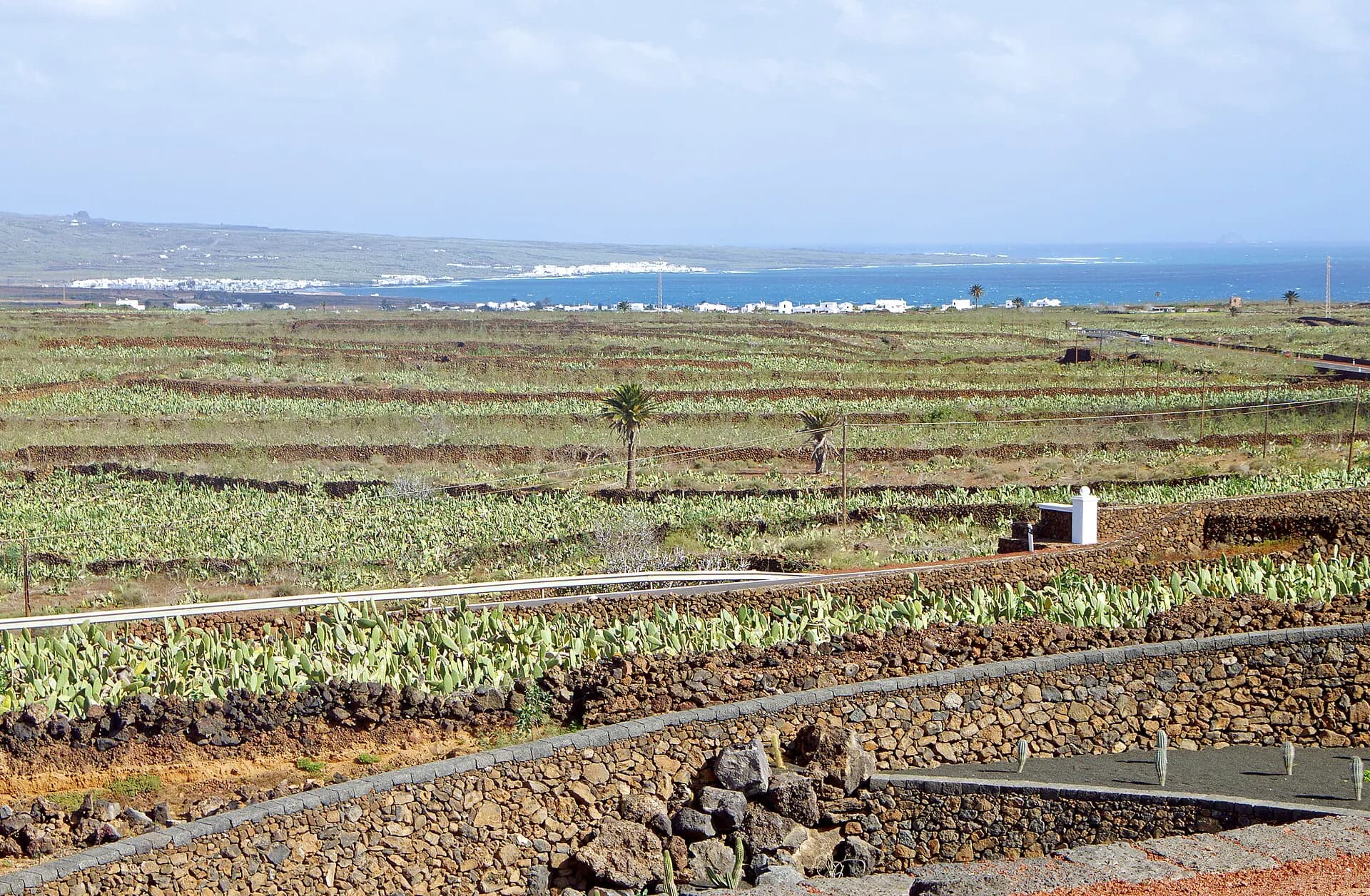
Cochineal in Lanzarote is a small insect, Dactylopius coccus, farmed on the pads of the prickly pear cactus in the fields of Guatiza and Mala, in the north-east of the island. Dried, the females give carminic acid, the base of the red dye carmine, which European food labels call E 120. The Canary Islands have farmed it since the 19th century, and since 2016 it has had a European protected designation of origin, Cochinilla de Canarias. Today, by a local biologist's count, about 95 per cent of the fields of Guatiza and Mala are gone, killed by a wild relative of the insect from Mexico.
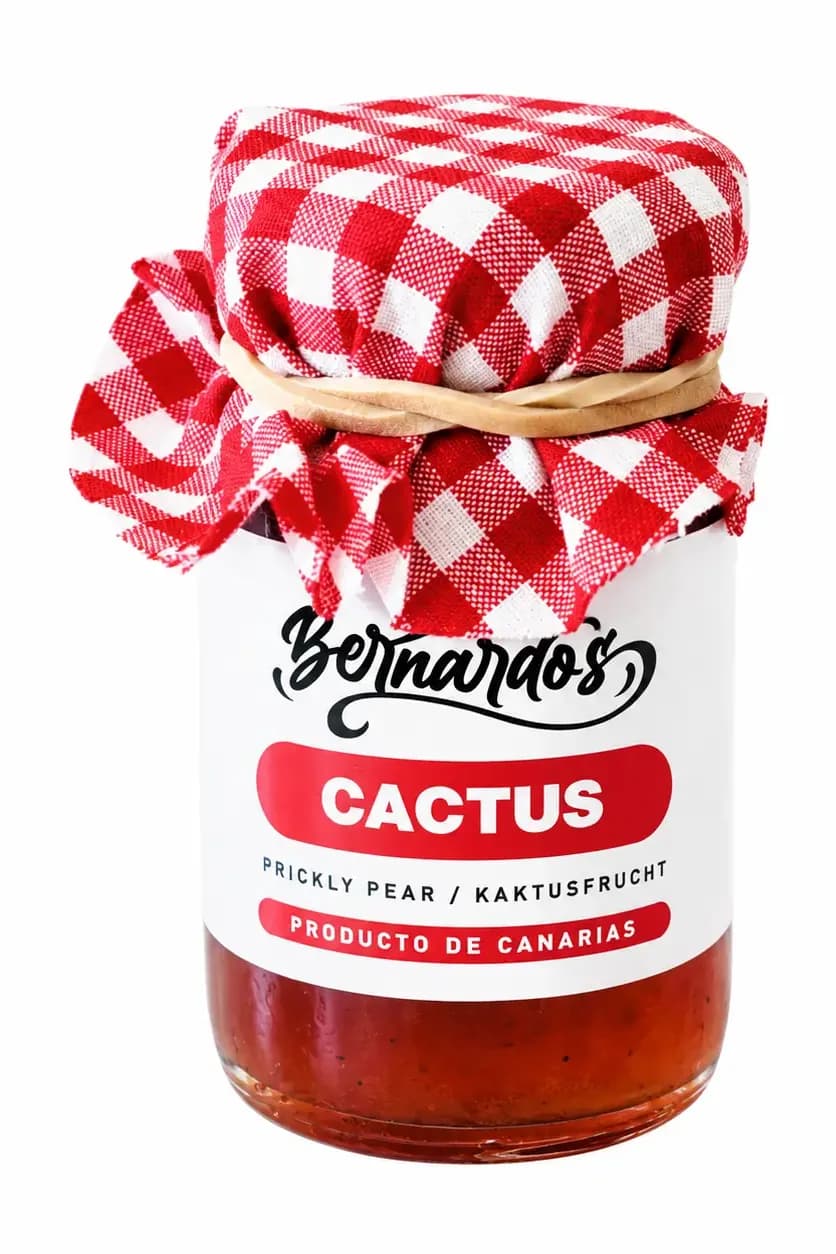
Seen from the road north of Guatiza, the fields are rows of grey-green pads behind walls of volcanic stone, running down towards the sea. They look like a crop of cactus. They are really a farm for an insect, and the cactus is the pasture. The jar of cactus jam on a Lanzarote breakfast table comes from a different cactus altogether, which is part of this story too.
What is cochineal, and why is it red?
Cochineal is a scale insect. Only the female is any use. As a larva she crawls onto a pad of the tunera, the Canarian name for the prickly pear (Opuntia ficus-indica), pushes her mouthparts into it, and stays there for the rest of her life, feeding on the sap and covering herself with a white, cottony wax. When she is full grown, she is picked.
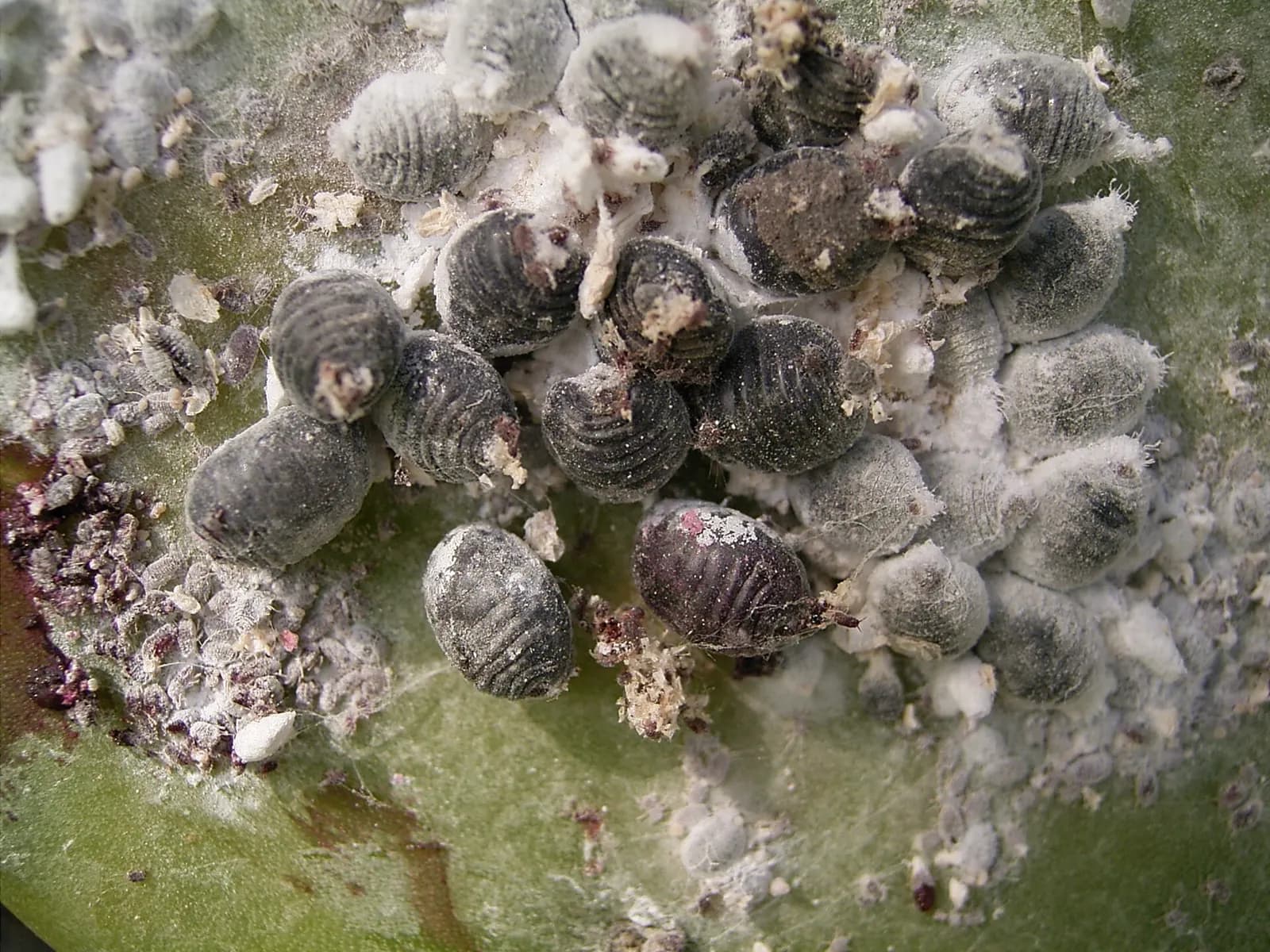
What the market buys is the dried female. The specification of the Cochinilla de Canarias PDO, registered by the European Union in February 2016, describes it as irregular, segmented grains of less than a centimetre, from dark grey to black with reddish and whitish tints, the white being what is left of the wax. To carry the name, the grains must hold at least 19 per cent carminic acid in dry matter and no more than 13 per cent moisture. The red is in the insect, not in the plant.
Carmine colours drinks, food, cosmetics and, on the islands, handmade textiles, according to the Canary Islands tourism board. Because it comes from an insect, it is neither vegetarian nor vegan.
How cochineal came to the Canary Islands
The insect and its cactus are American. According to the PDO specification, cochineal farming arrived in the Canary Islands in the first third of the 19th century, when one of the islands' periodic farming crises made growers look for something to replace sugar and wine, just as the textile mills of Europe were hungry for dyes. The Royal Economic Society of Friends of the Country of Santa Cruz de Tenerife, a canon of La Laguna called José Quintana Estévez and Santiago de la Cruz brought it to Tenerife, and from there it spread to the other islands.
It spread fast. In an essay published in 1846, Manuel de Ossuna Saviñón described landowners and labourers throwing themselves into it "como si fuera un golpe eléctrico", as if hit by an electric shock. The best years ran from 1845 to 1866, and the biggest harvest came in 1869. Britain was the main customer, and later France as well. The specification adds that a bag of cochineal came to be accepted as money, even in shops.
On Lanzarote, the tunera arrived around 1835, according to the biologist Juan Cazorla. Then Europe learned to make synthetic dyes, the boom ended, and bananas and tomatoes became the islands' main exports. Guatiza and Mala kept their tuneras. A century and a half later, the Canary Islands tourism board calls the two villages "almost the last redoubt" of the crop and of the culture around it.
How cochineal is farmed in Guatiza and Mala
Almost everything in a cochineal field is done by hand, and the PDO specification describes it step by step. The tuneras are grown from pads cut from older plants, and no insects go on them until the second year. To seed a field, farmers fill small bags of loose-woven cloth, called rengues, with adult females about to lay their eggs and hang them over the pads like saddlebags for 12 to 48 hours. The eggs hatch, and the tiny larvae walk out through the cloth and fix themselves to the pad. In the Canaries this is done at the end of winter, in March, with bags of about 50 grams, aiming for three or four harvests during the summer.
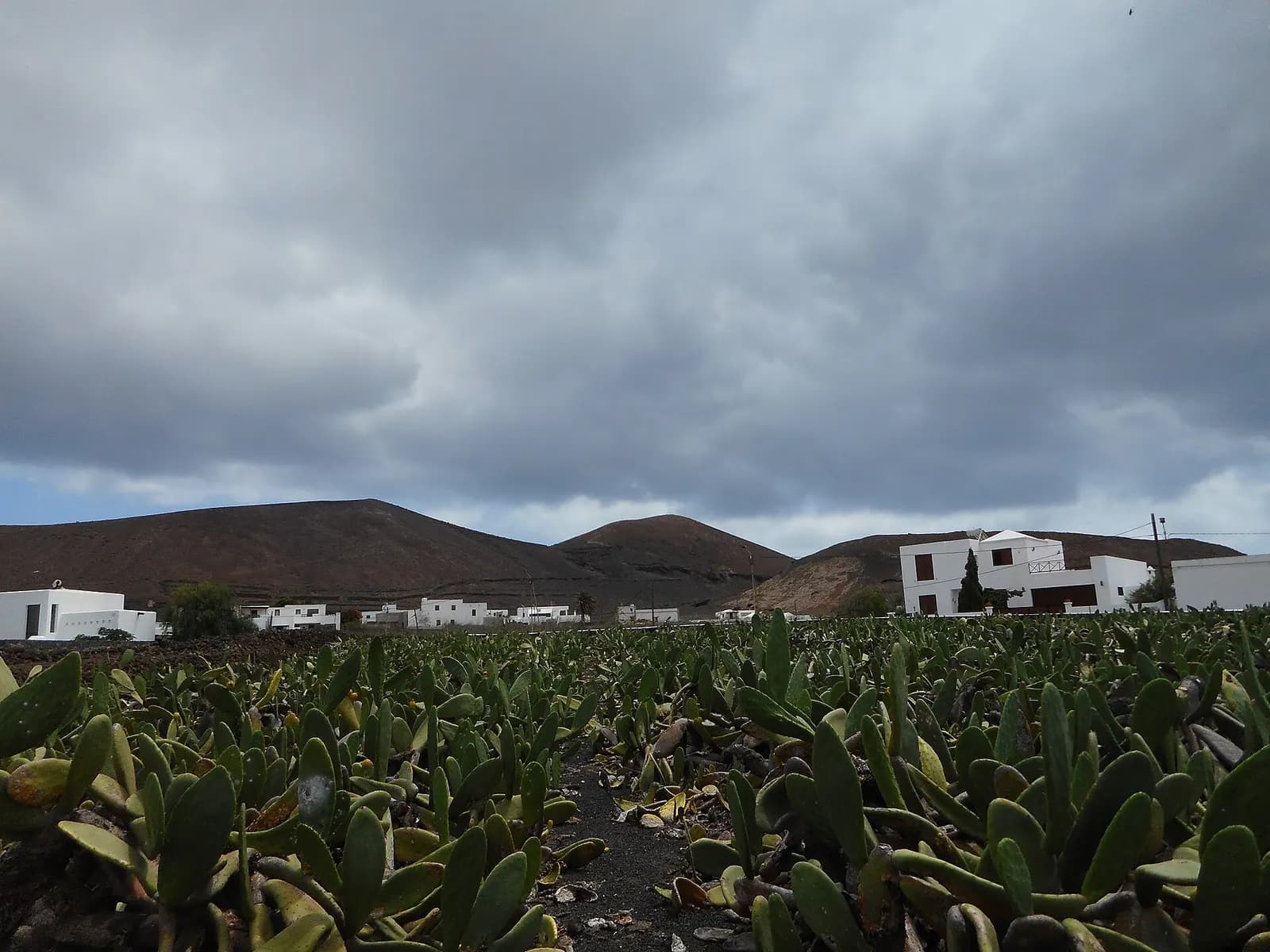
Each insect needs at least sixty days on the pad to grow up. Then the picking starts, by hand, with two tools that have names of their own. The cuchara is a spoon, only larger than the kitchen kind, used to lift the insects off the pad. The milana is a rectangular box or tray that collects the insects that come off the plant and escape the spoon. Pads that are hard to reach or worn out are pruned and brushed clean into the milana, which is called barrido, sweeping. Milana, the association that has taken up the cause of the fields, shares its name with that tray.
The insects are spread on boards in the sun, never more than four centimetres deep, and stirred once a day so they dry evenly. Then they are sieved and stored in jute or other natural sacks that let them breathe. The specification is strict about two things that set Canarian cochineal apart: one species of insect, Dactylopius coccus, and one host plant, Opuntia ficus-indica. On Lanzarote and Fuerteventura, it can come from any farmland below 600 metres. The tourism board calls the Canary Islands the only region in Europe where cochineal is produced commercially.
The Mexican cochineal, and why most of the fields are gone
The trouble came from a relative. Dactylopius opuntiae, called the Mexican cochineal or the wild cochineal, lives on the same tunera but gives no usable dye, as RTVC reported in May 2025. It was first found in Spain in 2007, in Murcia, and in the Canary Islands in 2010, in Fuencaliente on La Palma, where a local man noticed a colony on a roadside tunera that did not look like the cochineal he knew. It reached Tenerife in 2019, Lanzarote in 2020 and Gran Canaria in 2023, and has been found on La Gomera too. It yellows and rots the pads and the fruit, and left alone it dries the whole plant out.
The difference between the two insects is the whole problem. The farmed cochineal shares the plant; the wild one kills it. Leandro Caraballo, who farms cochineal in Guatiza, told RTVC in 2022 that the old cochineal never destroyed the crop, and that the new one made it collapse. In August 2023, thirteen years after the first detection, the Canary Islands government declared it a pest, banned moving tunera plants and pads between the islands and ordered that nothing leave an infected plot except clean fruit.
By then it was already in Guatiza and Mala. Juan Cazorla, a biologist with the Milana association, dates the first insects there to around 2019 or 2020, and says the pandemic, on top of years of neglect, let them spread unchecked. In July 2026 he told La Voz de Lanzarote that about 95 per cent of the tunera fields of the area had disappeared, and, in the same interview, that of the 200 hectares there had been, not even one was left. The two figures do not quite match; either way, what remains are a few plants that some growers treat almost every week. Diatomaceous earth, ash, sulphur and potassium soap have all been tried, and none works completely, because the pest's hairy coat sheds water. The Cabildo's experimental farm is testing varieties and treatments. Some growers have moved to vines and aloe vera.
The pest is not the only reason. The crop was struggling to sell long before it arrived. In 2021 the Haría branch of the Coalición Canaria party said growers were holding about 50,000 kilos of cochineal with no market for it, and that a centre built in Mala to turn the insects into carmine, put out to tender in 2014, had been closed since the pandemic. In 2026 Cazorla put the stock in Mala and Guatiza at 30,000 to 40,000 kilos. The big industrial buyers have not taken it, he said, because the local price is too high, and one buyer from Gran Canaria takes small amounts. In September 2025 the town council of Teguise unanimously backed a motion asking for jobs and money to bring the farms back. The councillor who proposed it blamed the pest and the lack of a younger generation to take them on.
Tuno indio, the other cactus, and the cactus jam
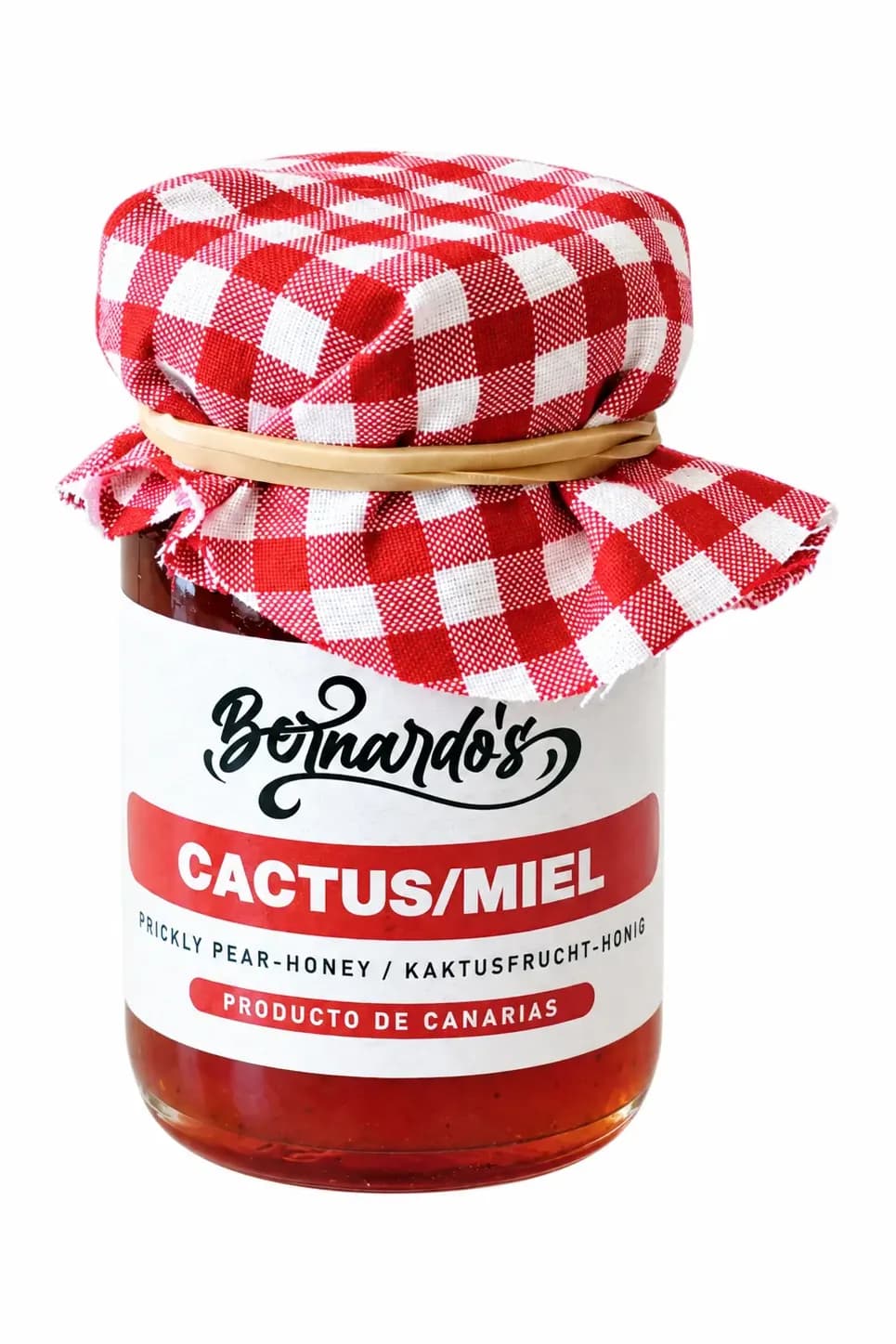
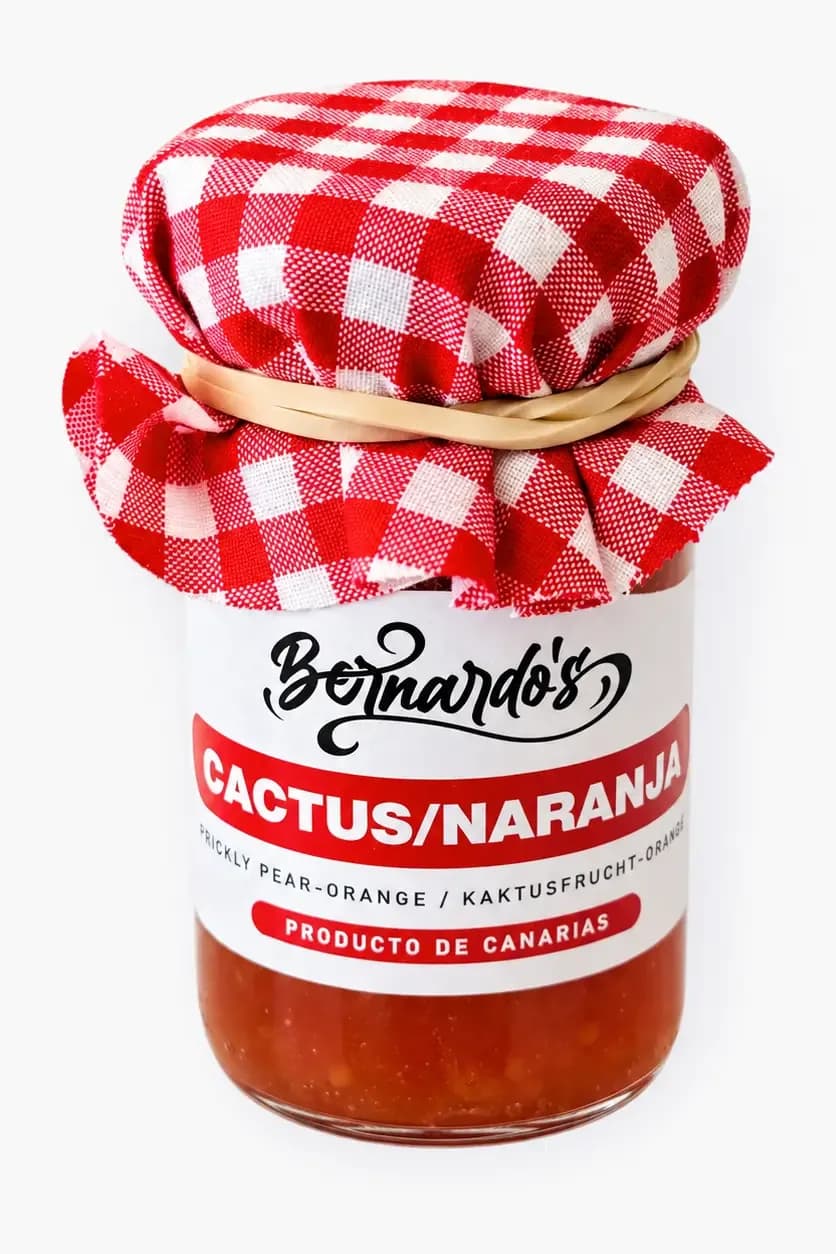
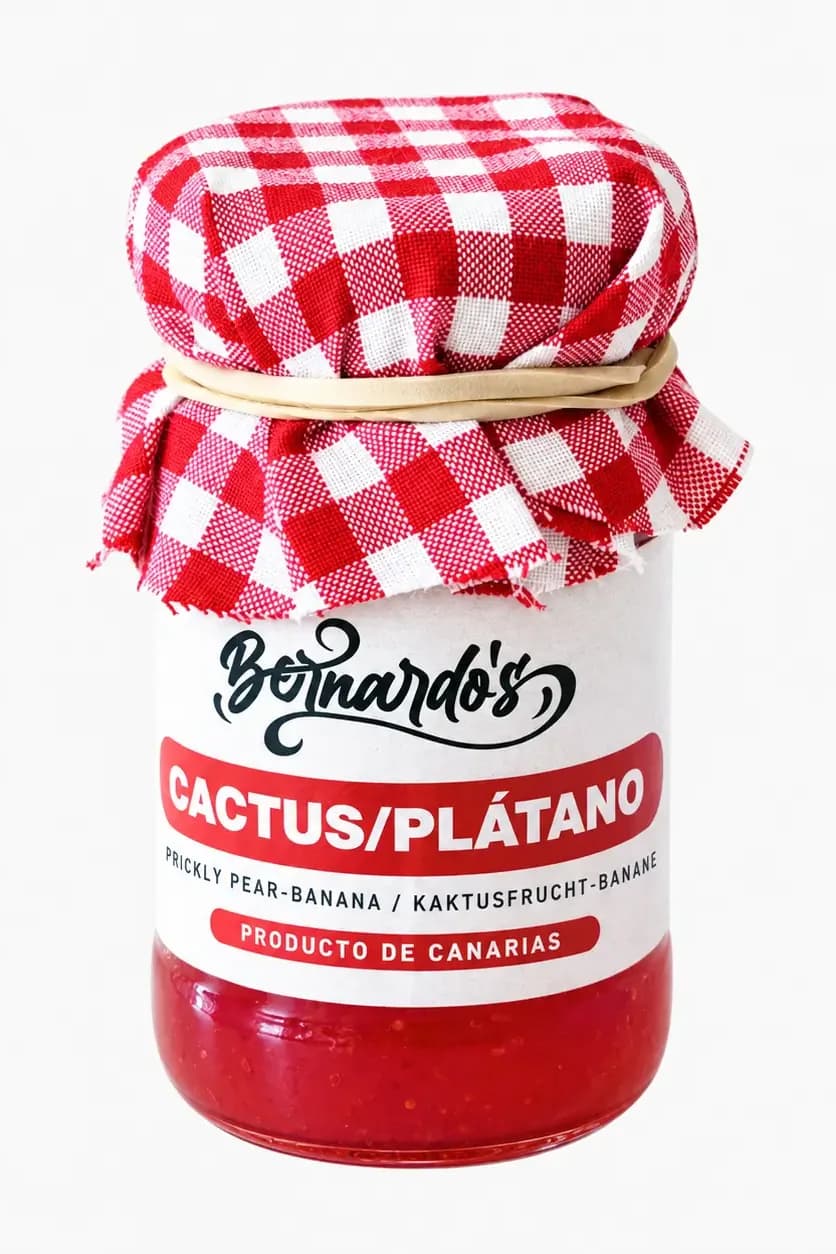
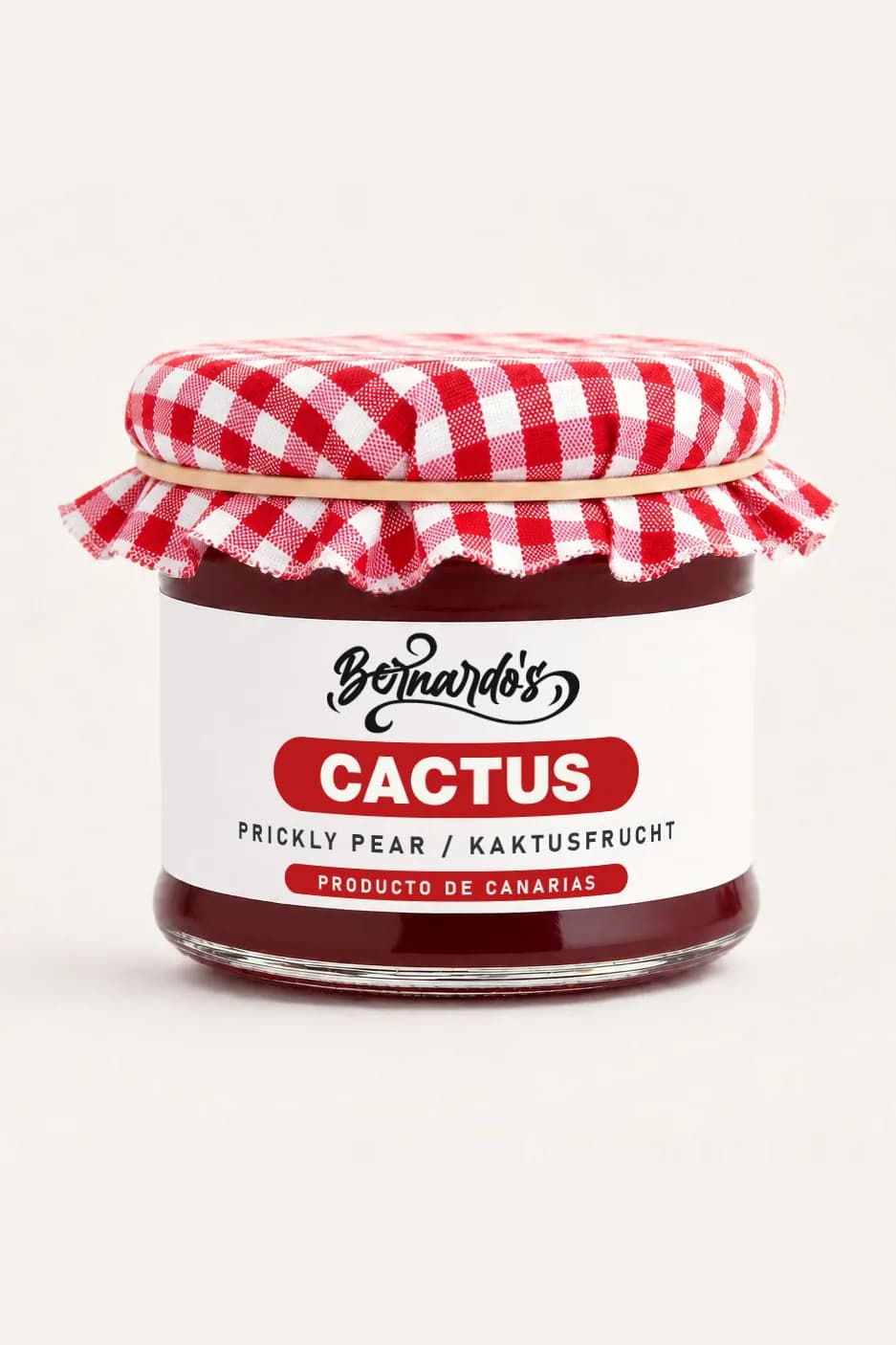
The purple fruit in Bernardo's cactus jam does not come from the cochineal fields. It is the tuno indio, the fruit of Opuntia dillenii, a different tunera that grows wild on dry ground where little else grows. It also came from the Americas, after 1492, and Spain has listed it as an invasive species since 2013.
Bernardo's has made jam from it since 1993, when Bernd Zinhard, Don Bernardo to the company, noticed from the kitchen of his restaurant on Lanzarote a fruit that, as the company puts it, nobody on the island picked. He started cooking it and selling the jars as souvenirs. The fruit is picked wild on Lanzarote, Tenerife and Gran Canaria, with gloves and tongs, and nobody plants, waters or feeds it. There are three harvests a year, each cycle taking 90 to 100 days, and none in August or September. The real enemy, the company warns, is not the long spines but the glochids, tiny barbed hairs that come off at a touch, travel on the wind and only show up in the skin a day or two later.
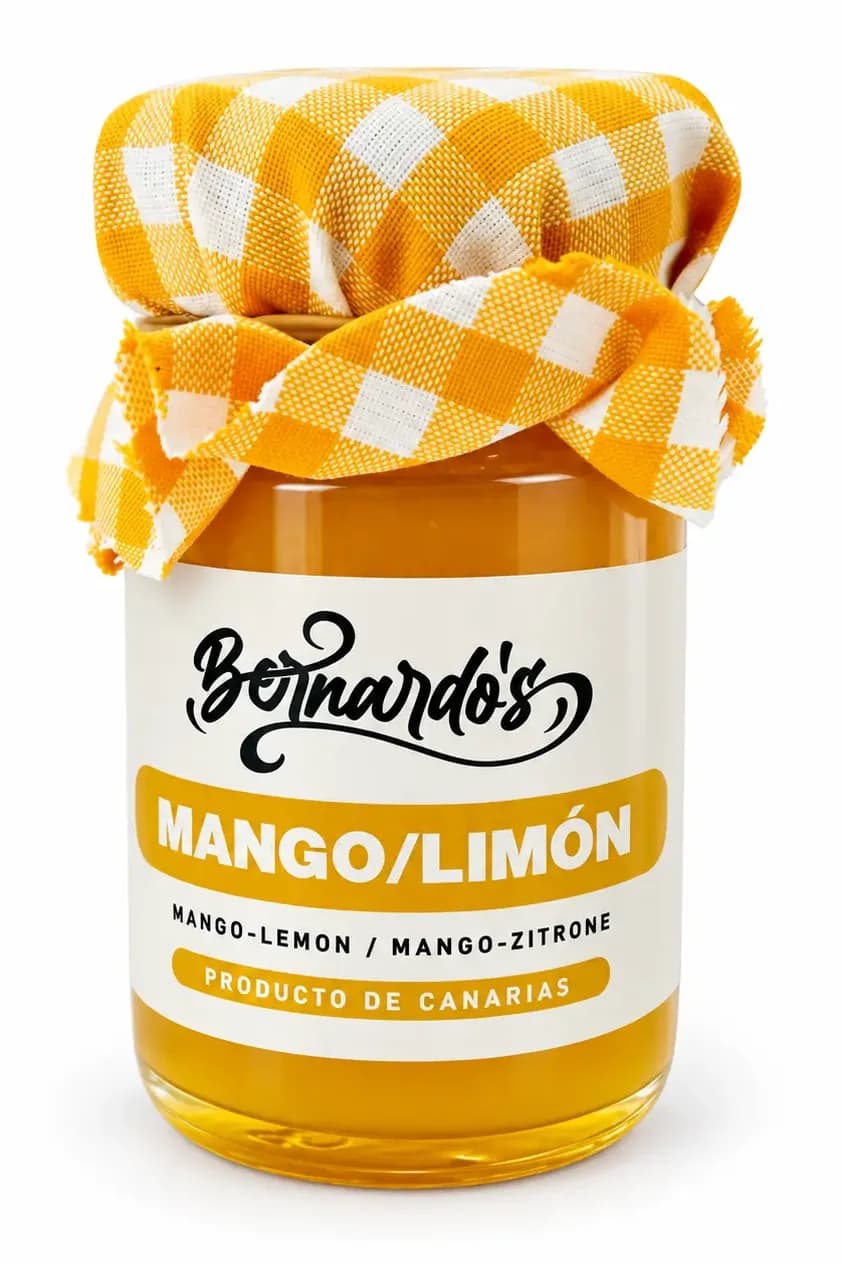
The fruit is frozen whole, pressed, cleared of seeds, and the juice cooked slowly at a low temperature. Its red comes from betalains, the natural pigments of the fruit, with no colour added, which makes it the other red of the Canarian cactus: one from a plant, one from an insect. Bernardo's says it tastes somewhere between melon and fig. We sell their cactus jam in 240 g glass jars.
Visiting the cochineal fields of Guatiza and Mala
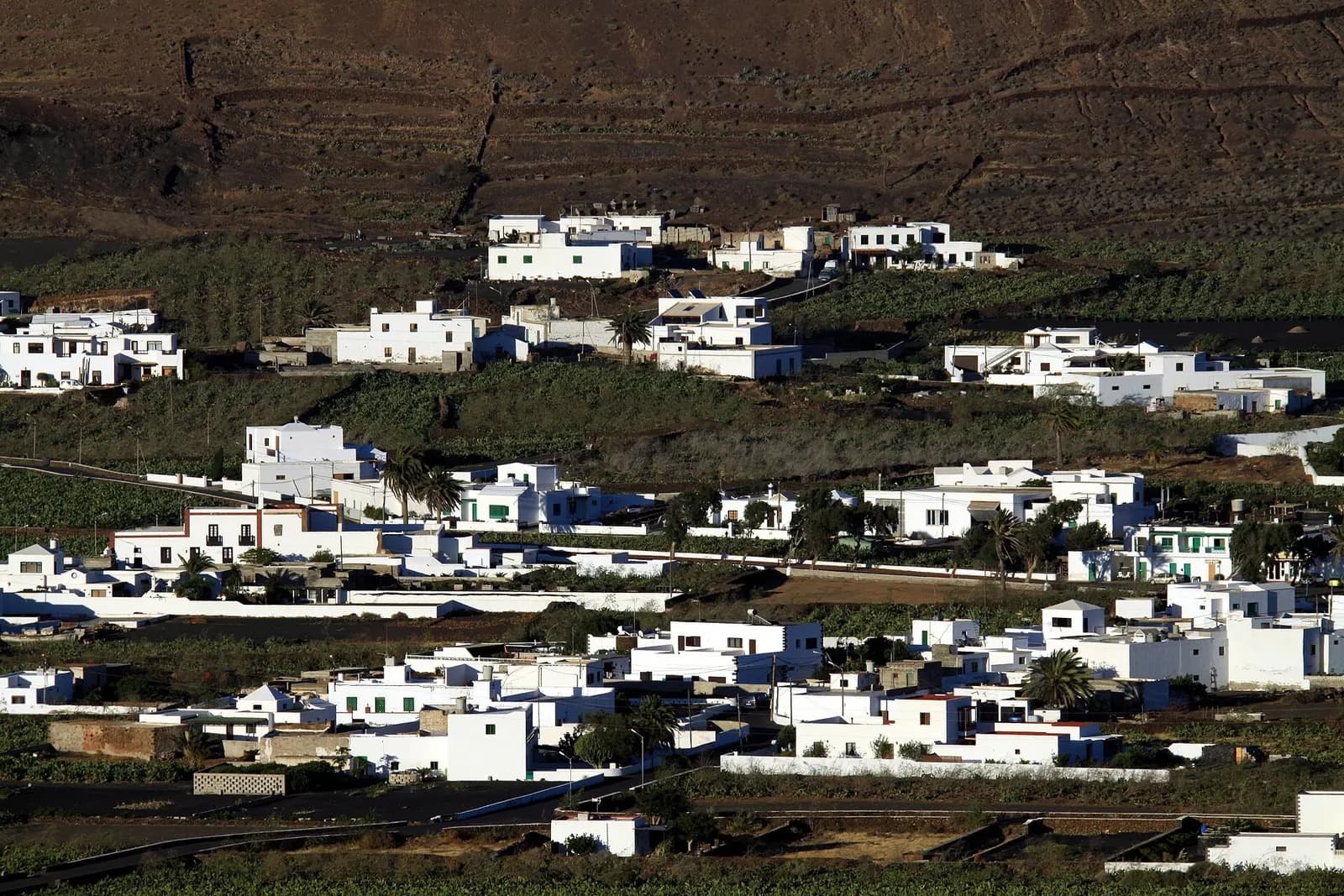
The fields lie on both sides of the road that runs through Guatiza, in the municipality of Teguise, and on to Mala, in Haría, in the north-east of Lanzarote. After the losses of the last few years, many of them are abandoned.
In the middle of the fields is the Jardín de Cactus, which César Manrique made in an old rofera, a quarry of volcanic gravel that had also been used as a dump. The first plant, a Euphorbia candelabrum, went in on 18 January 1989, and the garden now holds thousands of cacti from almost 500 species. At the top stands one of the island's last traditional mills, which shows how grain was ground into gofio, the toasted flour that has its own story.
Two practical things. Do not pick a pad as a souvenir, however healthy it looks: moving tunera plants between the islands is banned, and the pest travels on them. And do not touch the fruit on the wild tuneras along the walls, unless you have tongs and a day to spare.
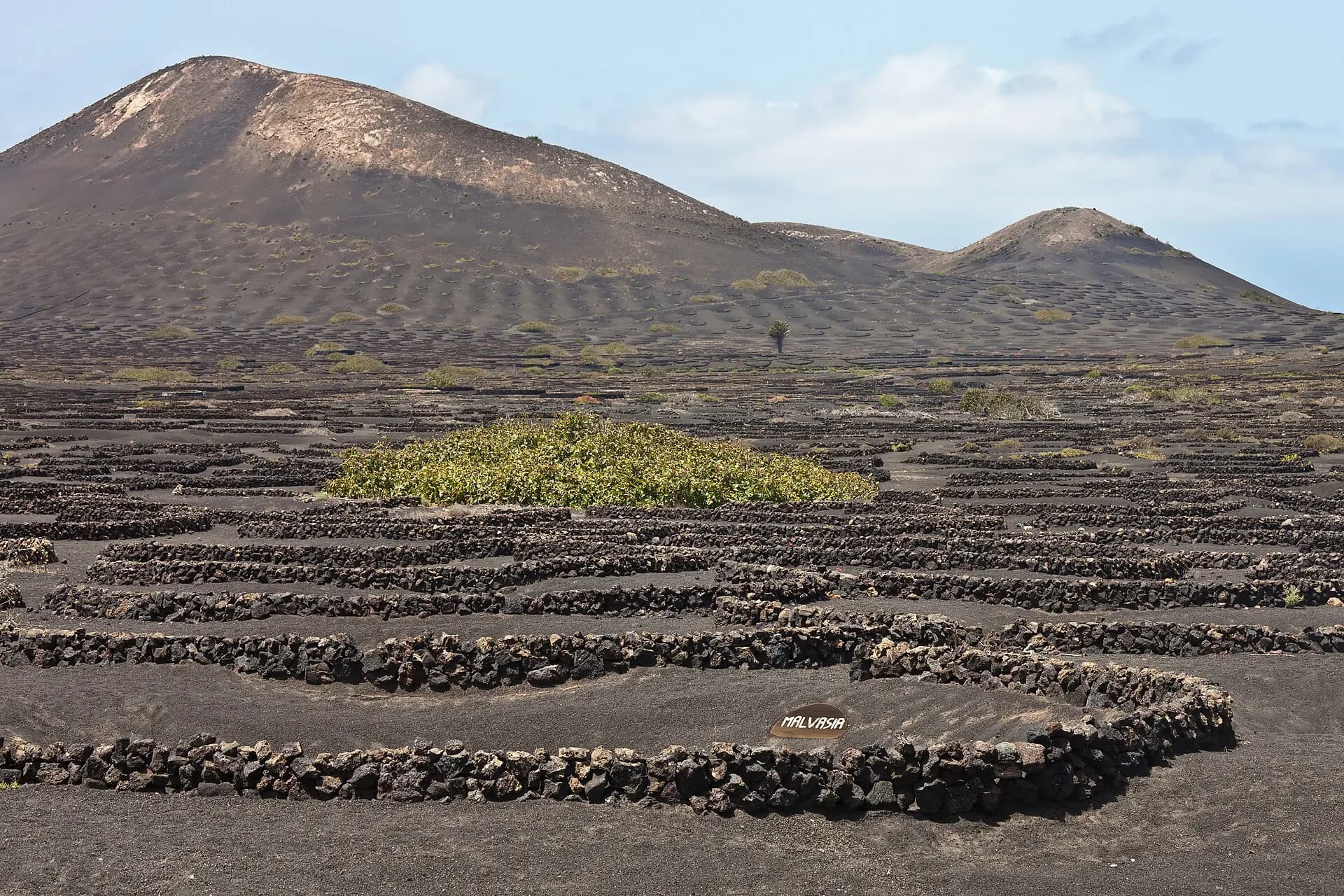
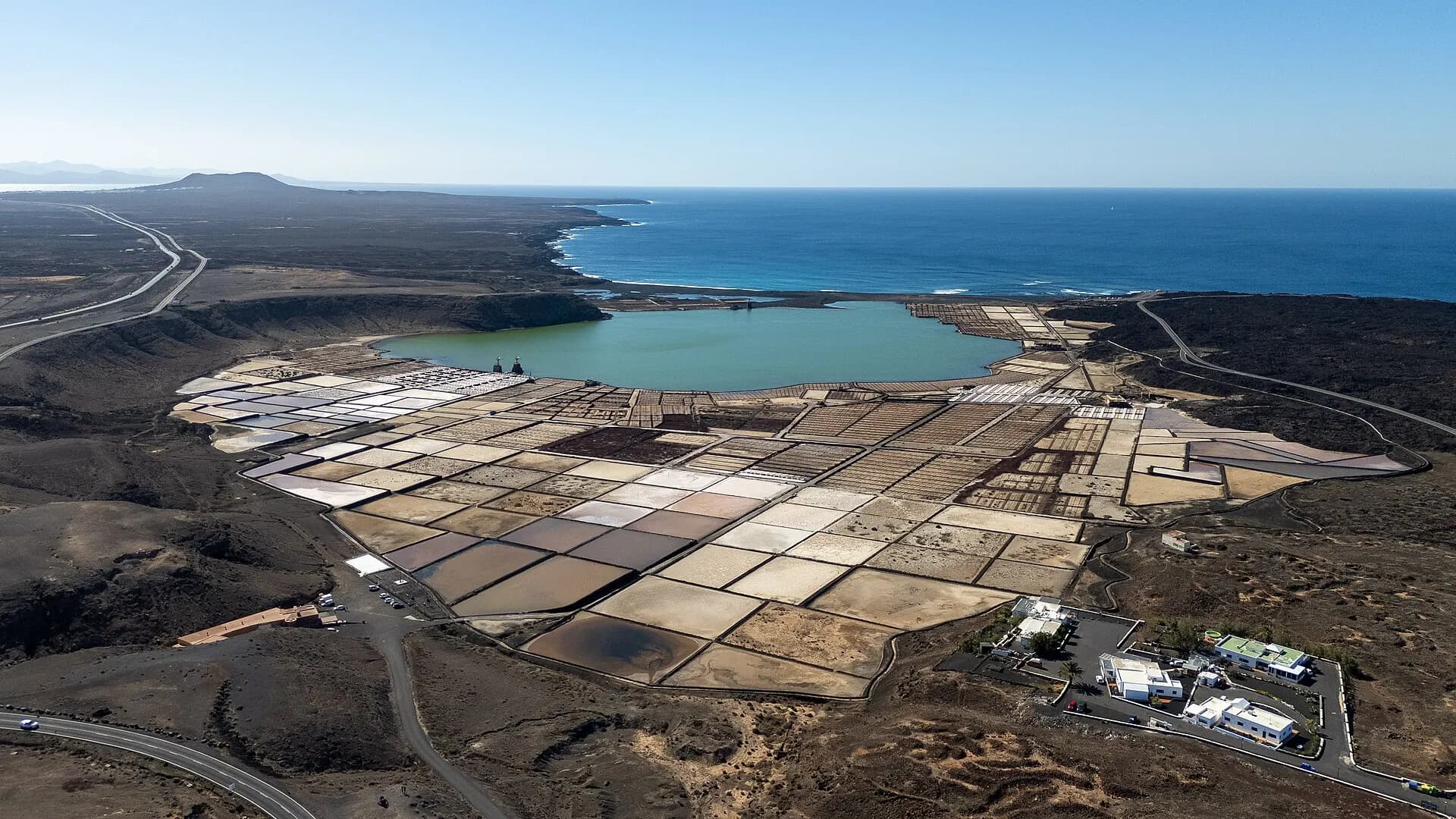
Two other Lanzarote stories read well with this one: the vines of La Geria, planted in volcanic ash, and the salt pans of Janubio. The rest is on the Lanzarote page. In the 19th century cochineal was the islands' main business. In Guatiza and Mala, for now, it is a stock of at least 30,000 kilos waiting for a buyer, and the few fields still farmed.
Questions
- What is cochineal?
- Cochineal is a scale insect, Dactylopius coccus, that lives on the pads of the prickly pear cactus. The dried females contain carminic acid, the base of the red dye carmine, used in drinks, food, cosmetics and textiles and labelled E 120 in European food. In the Canary Islands it is farmed under the PDO Cochinilla de Canarias.
- Where is cochineal farmed in Lanzarote?
- In Lanzarote, cochineal is farmed in the prickly pear fields around Guatiza, in the municipality of Teguise, and Mala, in Haría, in the north-east of the island. The two villages kept the crop after the 19th century boom ended elsewhere in the Canary Islands.
- Is cochineal still produced in Lanzarote?
- Yes, but very little. A pest called the Mexican cochineal, detected on Lanzarote in 2020, has killed about 95 per cent of the prickly pear fields of Guatiza and Mala, according to a local biologist in July 2026. Growers there hold an estimated 30,000 to 40,000 kilos of dried cochineal, which large industrial buyers have not taken because the local price is high.
- What is the Mexican cochineal?
- The Mexican or wild cochineal, Dactylopius opuntiae, is a relative of the carmine insect that lives on the same prickly pear cactus but gives no usable dye and kills the plant. It was first found in the Canary Islands in 2010 and was declared a pest by the Canary Islands government in 2023.
- Is cactus jam made from the cochineal cactus?
- No. Bernardo's cactus jam from Lanzarote is made from tuno indio, the purple fruit of Opuntia dillenii, a wild prickly pear picked on Lanzarote, Tenerife and Gran Canaria. Cochineal is farmed on a different cactus, Opuntia ficus-indica. The red of the jam comes from betalains, natural pigments of the fruit.
- Is carmine vegan?
- No. Carmine, the red colour E 120, is made from the dried bodies of the female cochineal insect, so it is neither vegetarian nor vegan.