Sarrión black truffle: how Teruel became the world's truffle farm
Sarrión, Gúdar-Javalambre, Teruel//Products/9 min read
A cold village in southern Aragon sits in the largest planted black truffle area in the world. Most of the harvest is exported, and France and Italy buy four fifths of it.
 Written with by Eduardo Peire
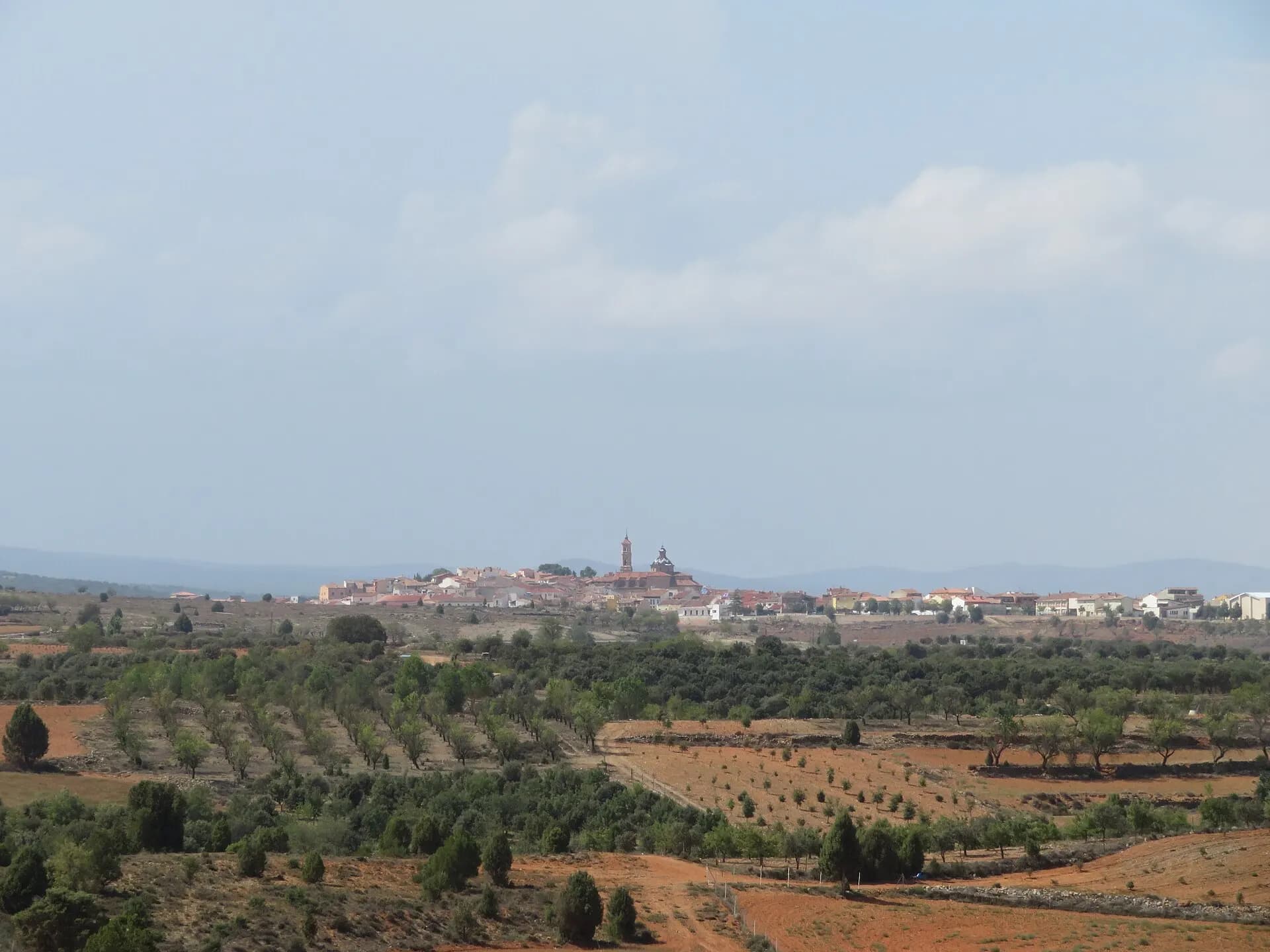
The Sarrión black truffle is Tuber melanosporum, the winter black truffle, dug from planted oak orchards around Sarrión, a village of about 1,260 people at almost 1,000 metres in the Gúdar-Javalambre district of Teruel, in Aragon. Teruel has more land planted for black truffle than anywhere else in the world, and since June 2026 its harvest is protected across the European Union as the PGI Trufa negra de Teruel. Most of it is sold abroad.
France and Italy buy about four fifths of what the province exports. The new seal is Teruel's attempt to be paid for its own name.
What is the Sarrión black truffle?
A truffle is the fruit of a fungus that lives underground, tied to the roots of a tree. The fungus passes the tree water and minerals; the tree pays it in sugar. Once a year, if the summer brings enough storms and the winter enough frost, the fungus produces a knobbly black lump a few centimetres under the surface. That lump is what people pay for.
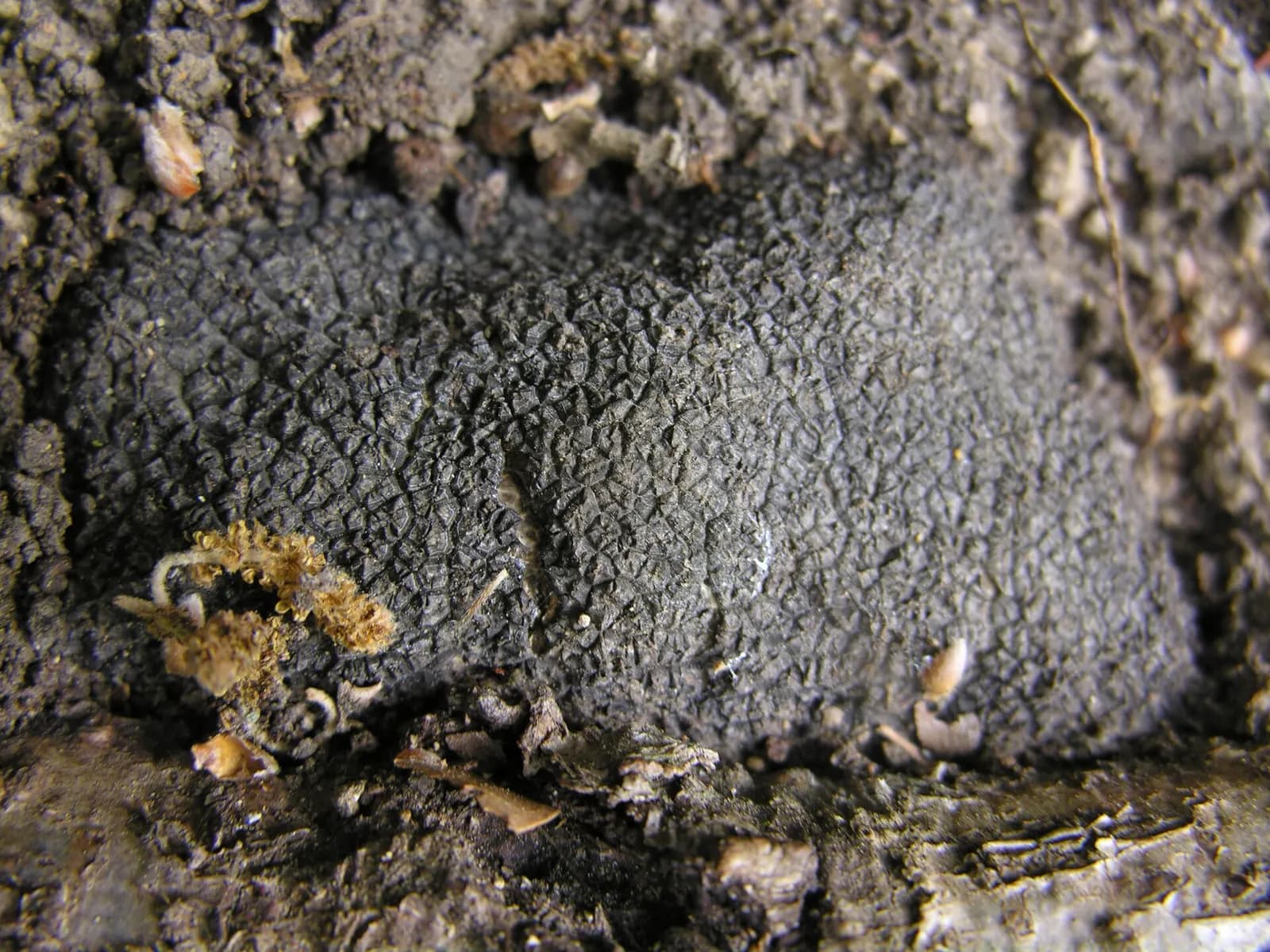
The official description in the PGI specification is unusually precise. The skin, or peridio, is matt black and covered in small pyramid-shaped warts, sometimes with a reddish-brown tone. The flesh, or gleba, is dark brownish black and crossed by fine, well-defined white veins. The main smells are sulphur, black olive and blue cheese, with mushroom, leather, boiled potato, butter, nuts and hay behind them. A truffle that smells more of mushroom or nuts than of the main notes counts as defective.
The host trees are holm oak (encina, called carrasca in Teruel), Portuguese oak (quejigo), kermes oak and hazel. Around a productive tree the grass dies back in a rough circle, because the fungus suppresses other plants. Growers in Teruel call that bare ring the quemado, the burnt patch, and they talk of the chapa, the look of the soil surface that gives away a truffle underneath.
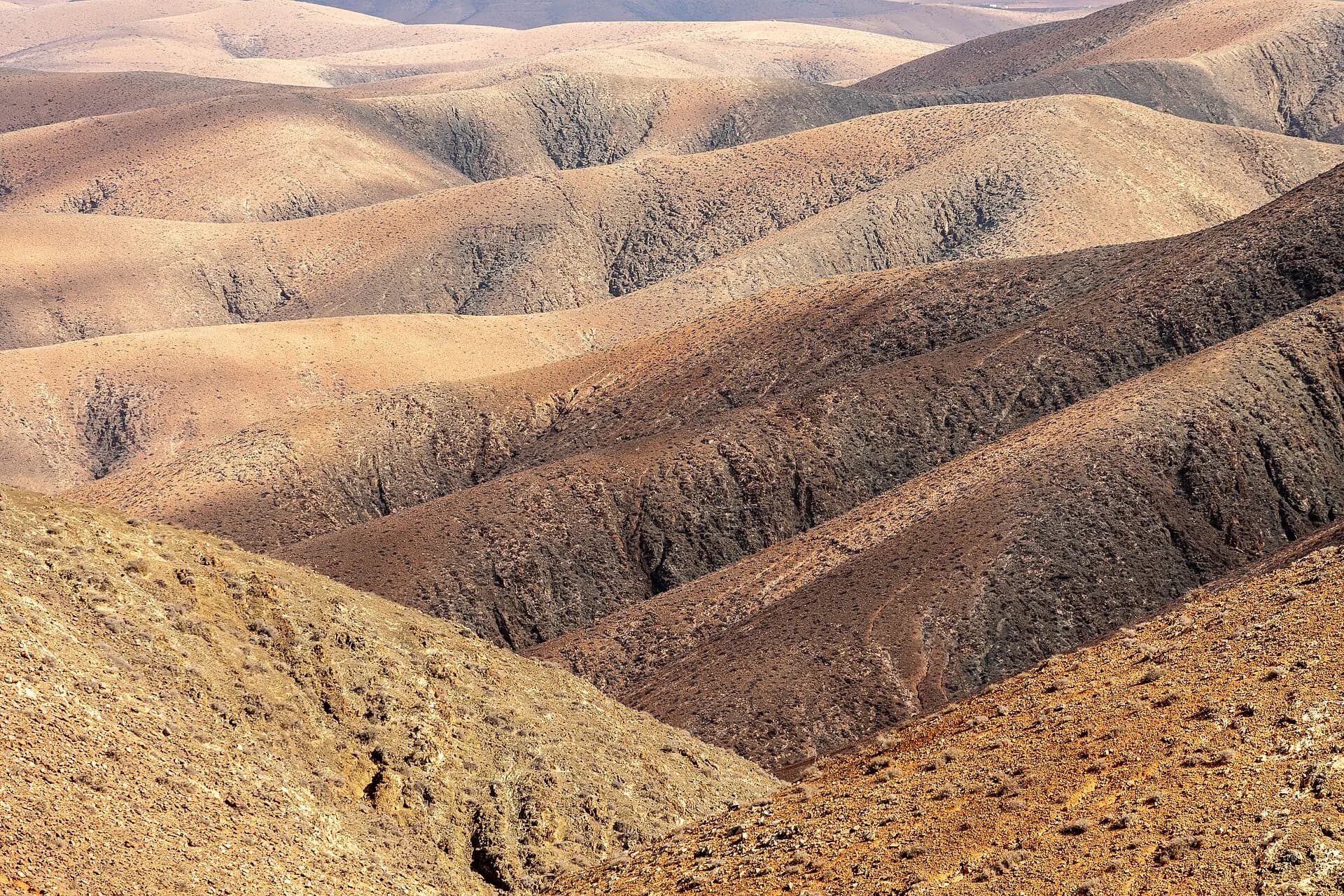
Teruel's case for its truffle is geology and weather. More than half of the province lies above 1,000 metres. The soils are limestone, stony and slightly alkaline, and they drain fast. Summers are short and dry, winters bring frost and frequent snow, and the PGI file argues that the cold is what concentrates the aroma: the truffle only reaches its full smell in the winter months.
From wild truffles to planted oaks
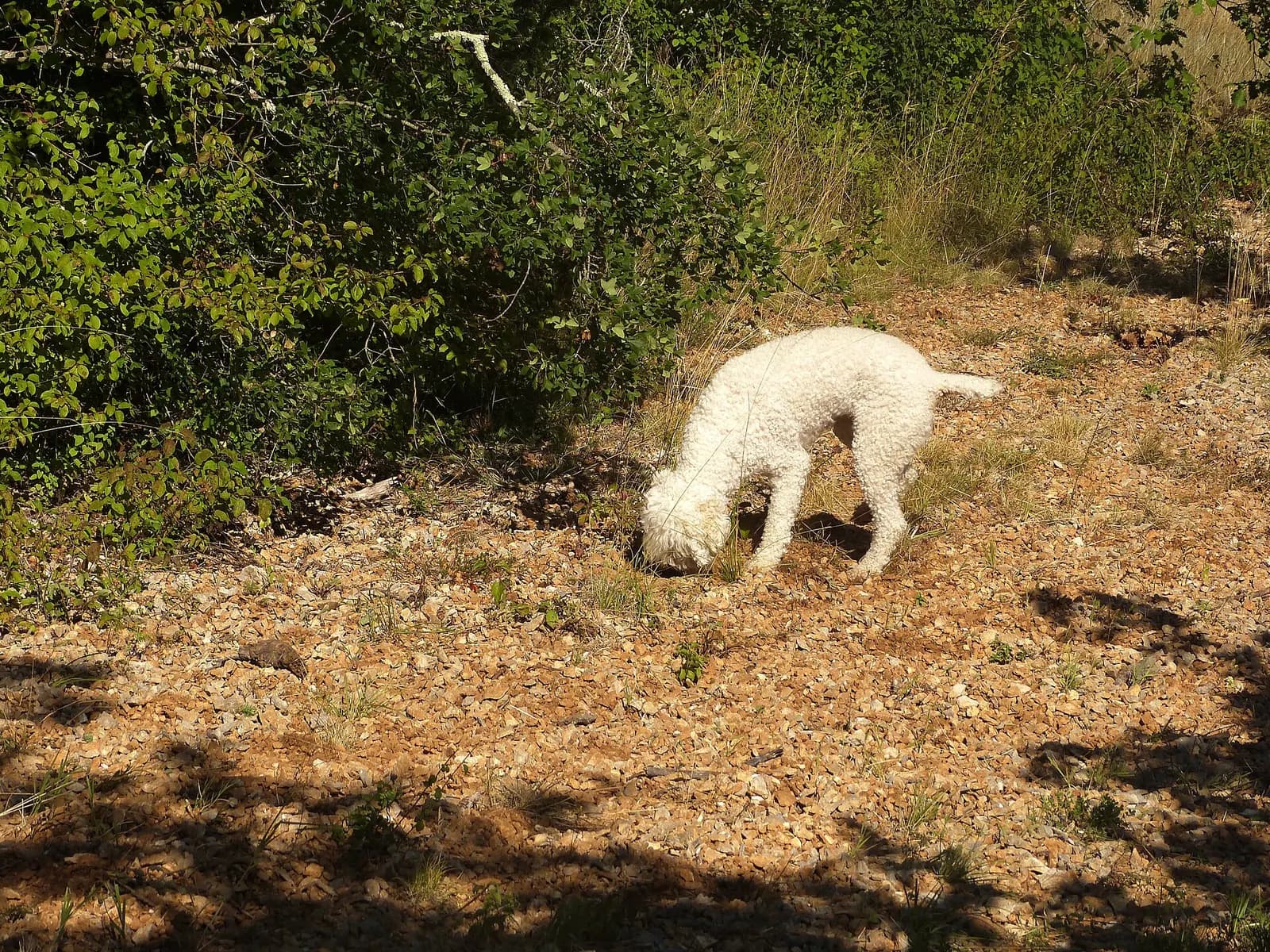
Nobody in Teruel set out to grow truffles. Between the 1960s and the 1980s, wild truffles under the oaks of Gúdar-Javalambre, the Maestrazgo, the Sierra de Albarracín and the Matarraña drew hunters from France, Catalonia and Huesca. Local farmers noticed that a wild "black potato" was growing on hillsides too poor for wheat, copied the visitors and trained their own dogs.
Town halls followed the money. In 1975 Cabra de Mora auctioned the truffle rights on its municipal hillsides for three years, at a base price of 12,000 pesetas. The first truffle market in the province opened in the 1962 to 1963 season, in a bar at Venta del Aire, in the municipality of Albentosa. By the 1974 to 1975 season it handled eight to nine tonnes in a single week, and one hunter could dig 20 to 30 kilos in a day. Numbers like that do not last.
As the wild truffles thinned out, a Sarrión man who had studied agricultural engineering, Francisco Edo Navarrete, wrote a study on truffle farming in 1986 and began teaching local hunters how to grow them. The provincial council paid its first grants in 1988: up to half the cost of oak or hazel seedlings already inoculated with the fungus, for a maximum of 350 trees per hectare. In the early 1990s growers opened the province's first specialised nurseries, most of them in Sarrión. They formed their association, ATRUTER, in 1998, and Sarrión held its first international truffle fair in 2001.
How much truffle does Teruel produce?
In 2025 the Hidrotuber research project mapped every truffle plantation in the province from aerial photographs and then checked them on the ground. It counted 10,404 hectares of truffle oaks, spread over 167 of Teruel's 236 municipalities, as Diario de Teruel reported in December 2025. Gúdar-Javalambre alone holds 64% of them. Sarrión has 2,213 hectares, more than any other municipality and more than one and a half hectares of truffle orchard for every person who lives there. The highest plantations grow at 1,500 metres in Mosqueruela, the lowest at 300 metres near Alcañiz, and the ideal band is between 900 and 1,200 metres.
The harvest is harder to count than the trees. A hectare can give anything from nothing to 80 kilos in a season, and the PGI file estimates about 52 tonnes a year for the whole province. The clearest numbers come from customs. In 2022 Teruel exported 40.5 tonnes of truffle worth 17.4 million euros, an average of about 430 euros a kilo. In 2023 it sold only 25.1 tonnes, but at more than 640 euros a kilo. In 2024, on provisional figures, it was 26.1 tonnes at about 450 euros.
France bought 46% of the 2024 exports by value and Italy a third. Germany, Belgium and Denmark came next. Denmark spent 454,000 euros on Teruel truffle that year, and in each year from 2022 to 2024 it spent more than the United Kingdom and the United States put together.
Money has followed the fungus. Researchers on the mapping project say that land in the heart of the truffle area can sell for more than 20,000 euros a hectare, against 2,000 to 3,000 euros for ordinary dry farmland in the province.
Drought, ageing oaks and the new PGI
A truffle orchard is a bet on rain. The growers' association blamed the drought of 2023 and 2024 for the fall in sales. Sarrión now has a large irrigation network, and its mayor, Estefanía Doñate, told Diario de Teruel in December 2025 that it works but is still being tuned. Water will mean more truffles for the orchards connected to it, she said, but natural rain is still decisive.
The second problem is age. Between 1996 and 1998, between 650 and 1,000 hectares of Teruel farmland were planted with truffle oaks under a European scheme that paid farmers to turn poor fields into forest. Nobody then knew that a truffle oak stops being useful after about three decades. Those trees are now legally forest and cannot simply be pulled up and replanted, and the regional authorities are working on a legal route to allow it. Doñate put the local view in one line: "aquí vivimos de la trufa, no del árbol", we live from the truffle, not the tree.
The third problem is reputation, and that is where the PGI comes in. The application reached the European Commission in February 2024, Aragon granted temporary national protection in December 2024, and the Commission entered Trufa negra de Teruel in the EU register with Implementing Regulation (EU) 2026/1250 in June 2026. Spanish press reported it as the first truffle in Europe with such a seal. The rules are strict:
- harvest only between 15 November and 15 March, with trained dogs, and the hole filled in again afterwards;
- truffles kept at 2 to 8 °C, for no more than seven days with the grower;
- no more than five days between the grower handing them over and the packer shipping them;
- grading, cleaning and packing only inside the province, with a numbered label on every pack.
How do you buy a good fresh black truffle?
Buy in deep winter. The legal season runs from mid-November to mid-March, and the aroma builds with the cold. A black truffle offered in May or June is almost certainly the summer truffle, Tuber aestivum, a different and cheaper species with pale flesh and a much milder smell.
A good black truffle is firm all over, heavy for its size and smells strongly through the paper it is wrapped in. Under the PGI it comes in three whole grades. Extra is round, unbroken and at least 20 grams. Primera may have damaged skin on less than a third of its surface and weighs at least 10 grams. Pequeña is unbroken and weighs between 5 and 10 grams. Truffles with more than a third of the skin damaged are cut clean and sold as trozos, pieces of at least 10 grams.
Teruel buyers check every truffle with a small cut called the canifado, from the French canifage, to see the flesh. You want dark, almost black flesh with crisp white veins. Pale or grey flesh means an unripe truffle.
Be suspicious of anything that says "truffled". When Aragon's agricultural research centre, CITA, analysed 51 truffle products sold in Spain in 2023, 73% contained bis(methylthio)methane, a molecule used as truffle flavouring, and some did not contain the truffle species named on the label. ATRUTER's president, Daniel Brito, wants labels that say "aroma" when there is aroma and "truffle" when there is truffle. Since 2025 Sarrión's fair has asked every exhibitor to show at least one product made with truffle and no added aroma.
How to keep and cook a fresh truffle
A fresh truffle loses aroma every day it is out of the ground, which is why the PGI rules count days. At home, wrap it in kitchen paper, put it in a closed jar in the fridge, change the paper daily and eat it within a week. Put a few eggs in their shells in the same jar overnight: the shells are porous and the eggs take the smell.
Heat and fat carry the aroma; long cooking kills it. Shave or grate the truffle raw over something hot and simple at the last moment: fried eggs, mashed or roasted potatoes, a risotto, fresh pasta with butter. A few grams per person is enough.
When to go to Sarrión for the truffle season
The season has three public moments. The international truffle fair, FITRUF, takes over Sarrión every December around the Spanish holidays of 6 and 8 December; the 2025 edition, the 24th, ran from Saturday 6 to Monday 8 December. There are truffle dog contests for adults and for children, a contest for the heaviest and best truffle, and an auction of the winners whose money went to the Spanish cancer association, AECC. Every year restaurants in the province also join the Jornadas Gastronómicas de la Trufa Negra de Teruel, held since 2013. And the Tuber Universum interpretation centre, opened in Sarrión in March 2024, explains the fungus all year to people who arrived too late to eat it.
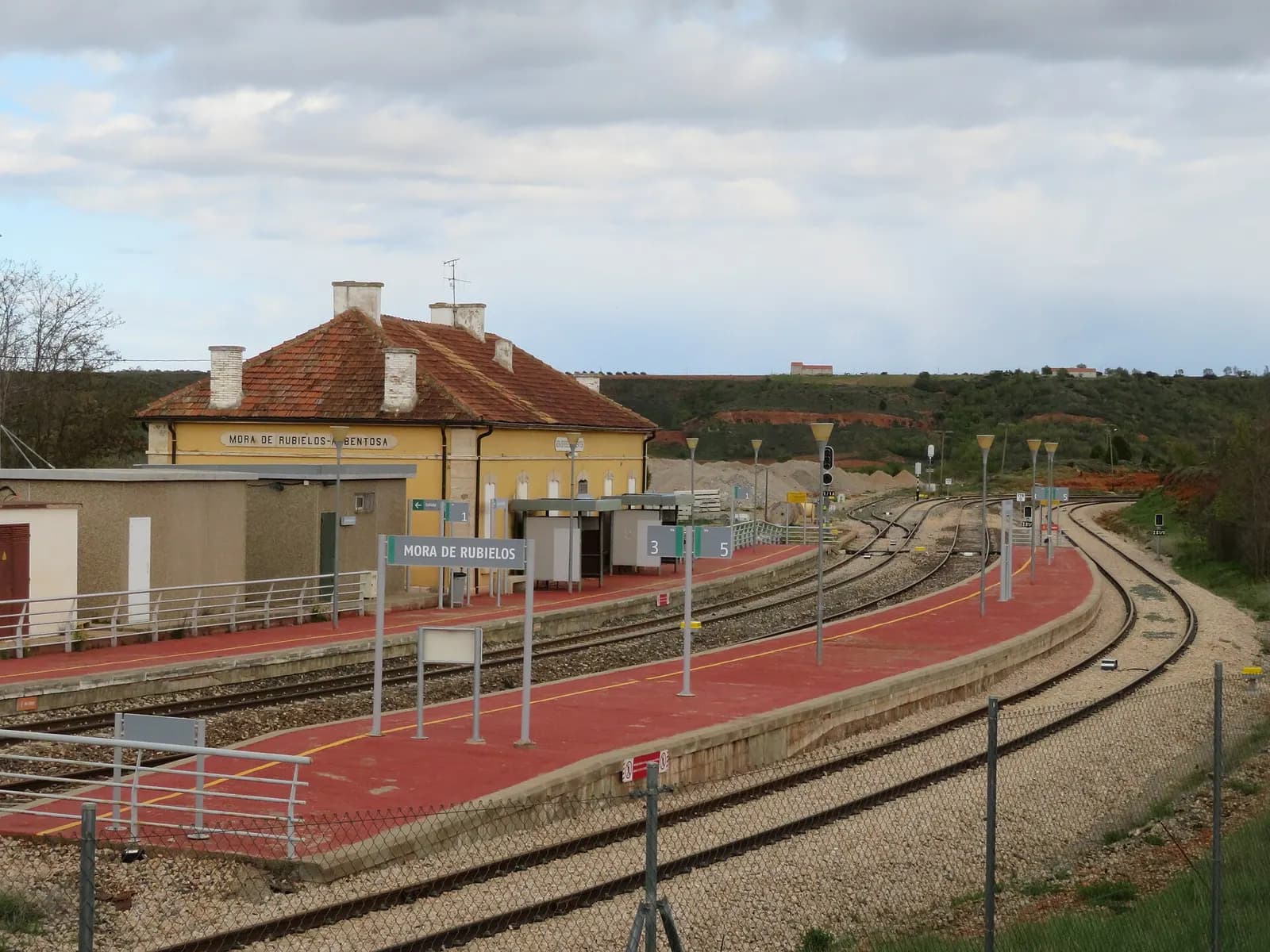
The fourth moment is not a show. Since the 1976 to 1977 season the wholesale truffle market has met on Saturday evenings through the season at a restaurant beside the railway station of Mora de Rubielos, in Albentosa. It is where growers sell to buyers, not a fair laid on for visitors.
Truffle tourism, trufiturismo, is a small new trade in the district, and some growers take visitors into the orchards with their dogs. Watching a dog work a row of oaks explains the price better than any chart; finding the right grower is part of the trip. The stone villages of Mora de Rubielos and Rubielos de Mora are close by, and the rest of Aragon rewards a longer stay: in spring, the drums of Holy Week in Calanda; in spring or autumn, the old railway that crosses the olive terraces of the Matarraña, now the Vía Verde Val de Zafán.
In Sarrión the oak is only the landlord.
Questions
- What is the Sarrión black truffle?
- The Sarrión black truffle is Tuber melanosporum, the winter black truffle, grown in planted orchards of holm oak and other oaks around Sarrión, in the province of Teruel, Aragon. Since June 2026 it is sold under the EU protected geographical indication Trufa negra de Teruel, which requires it to be found, graded and packed in the province.
- When is the black truffle season in Teruel?
- Under the rules of the Trufa negra de Teruel PGI, black truffles can only be harvested between 15 November and 15 March, always with trained dogs. The truffle reaches its full aroma in the coldest winter months.
- How much black truffle does Teruel produce?
- A 2025 mapping by the Hidrotuber project counted 10,404 hectares of truffle oaks in Teruel, in 167 of its 236 municipalities. The PGI file estimates about 52 tonnes of truffle a year, and in 2024 the province exported 26.1 tonnes, mostly to France and Italy.
- How much does Teruel black truffle cost?
- Prices change with every harvest. Customs figures for Teruel's truffle exports give an average of about 430 euros a kilo in 2022, more than 640 euros in the dry year of 2023 and about 450 euros in 2024.
- How do you store a fresh black truffle?
- Wrap a fresh black truffle in kitchen paper, keep it in a closed jar in the fridge, change the paper every day and eat it within a week. Eggs left in the same jar overnight take on its smell.
- When is the truffle fair in Sarrión?
- FITRUF, the international black truffle fair of Sarrión, is held every December around the Spanish holidays of 6 and 8 December; in 2025 it ran from 6 to 8 December. The dates for each year are published on fitruf.es.