El Hierro renewable energy: how close Gorona del Viento gets to 100 per cent
Gorona del Viento, El Hierro//History/8 min read
A wind farm and a crater full of water have run the smallest Canary Island on renewables alone for weeks at a time. Over a whole year, the share is a little under half.
 Written with by Eduardo Peire
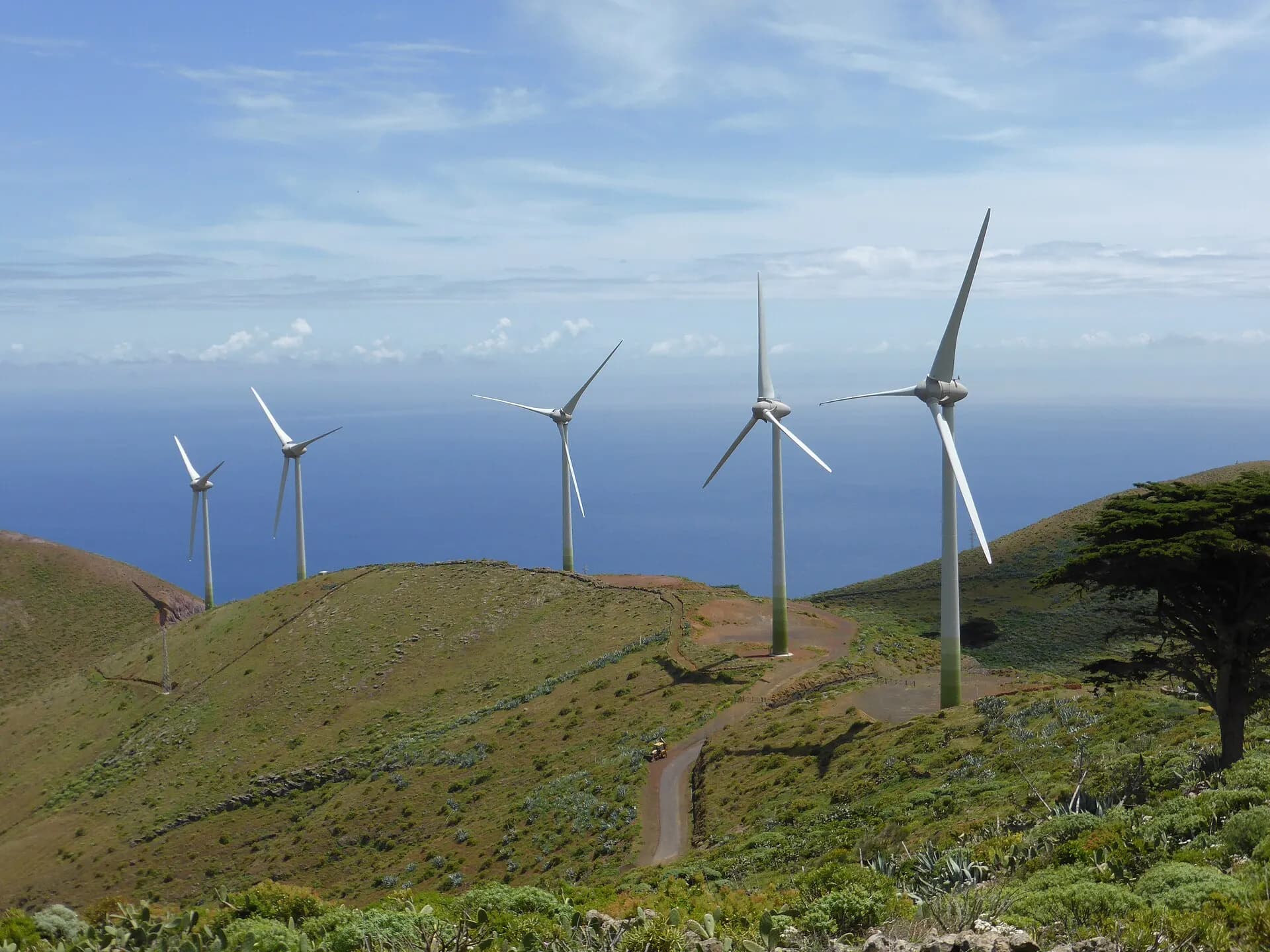
El Hierro renewable energy comes from Gorona del Viento, a wind farm joined to a pumped-storage hydro plant that uses an old volcanic crater as its upper reservoir. Since it started in 2014 it has run the whole island on wind and water alone for weeks at a time, and for 1,049 hours in 2025. Over a full year it covers a little under half of the island's electricity, which is far more than any other Canary island manages and far less than the slogans say. That gap is the most interesting thing about it.
How Gorona del Viento works
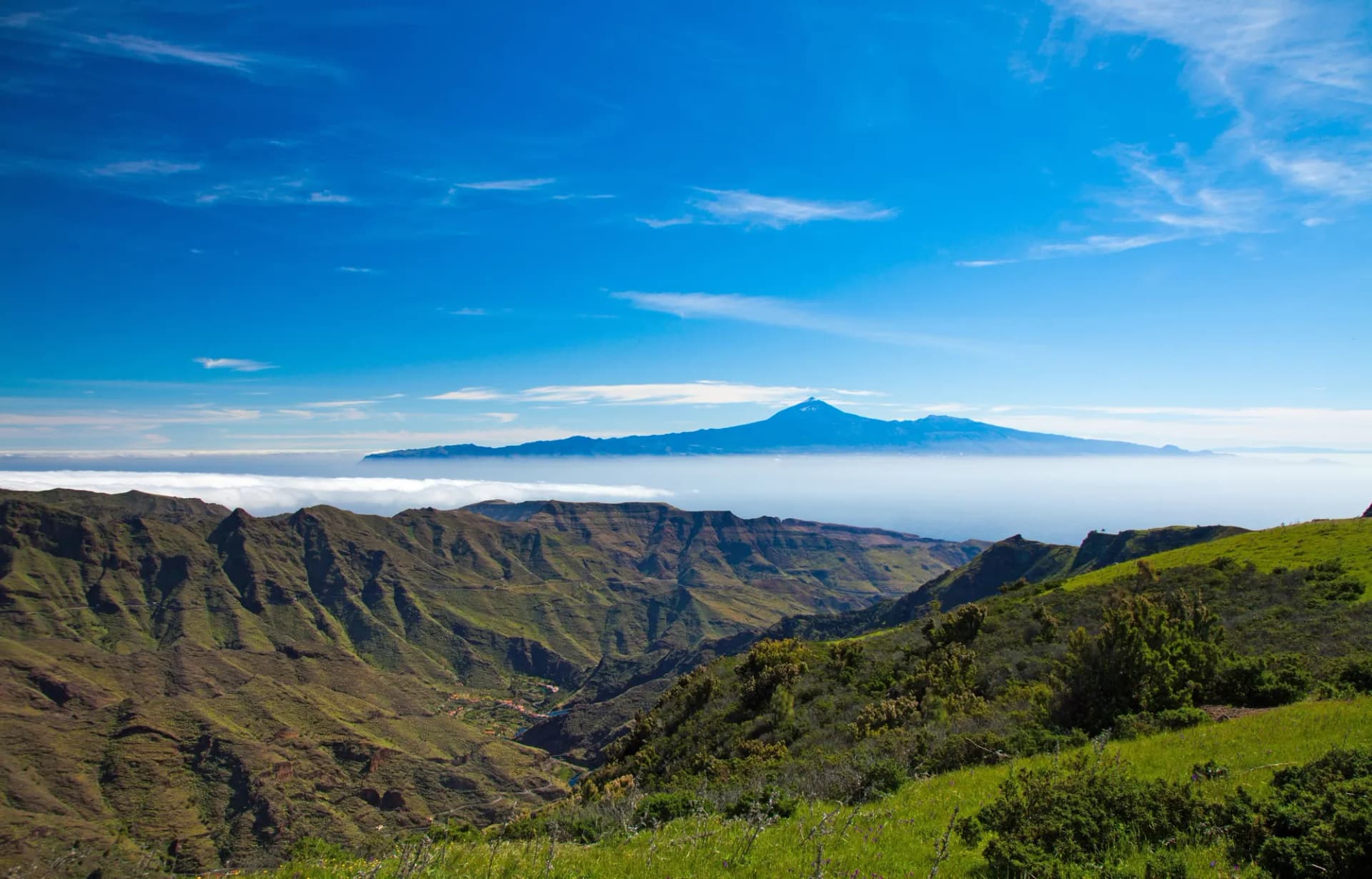
El Hierro is the smallest and most south-westerly of the seven main Canary Islands: about 268 square kilometres and 12,040 inhabitants on 1 January 2025, according to Spain's official population figures. It has no power cable to any other island. Until 2014 its electricity came from the diesel engines of the Llanos Blancos power station, burning fuel brought in by ship.
Gorona del Viento changed the arithmetic with a simple idea. Five wind turbines, 11.5 megawatts in all, supply the island when the trade winds blow. When they produce more than the island needs, the surplus drives pumps that push water from a lower reservoir 50 metres above the sea up to an upper one inside La Caldera, a volcanic crater at about 700 metres. When the wind drops, the water runs back down through four turbines and makes electricity again. According to the plant's own figures, the upper reservoir holds 380,000 cubic metres, the lower one 150,000, and the drop between them is 655 metres. The diesel engines stay in reserve for the moments when there is neither enough wind nor enough water stored.
In other words, El Hierro charges a battery made of a crater and a pond. The company that runs it is 65.82 per cent owned by the Cabildo, the island government, with Endesa, the Canary Islands Institute of Technology and the Canary government holding the rest. It turned ten in 2024, when Spain's minister for the ecological transition, Teresa Ribera, visited and called it a world reference.
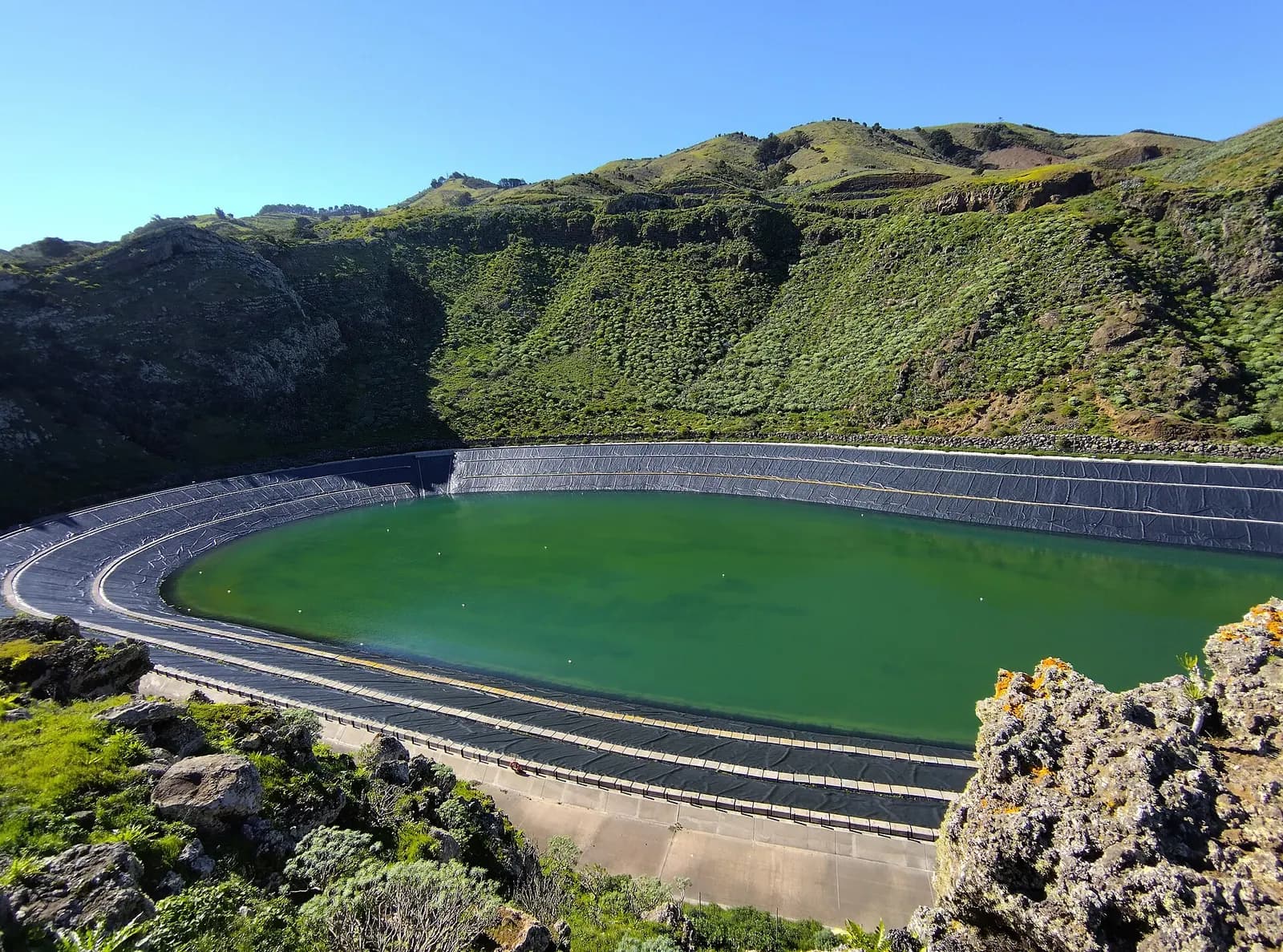
El Hierro renewable energy, year by year
The island's tourism website says the energy El Hierro uses is 100 per cent renewable, and the plant's own home page still greets visitors with "una isla 100% energías renovables". The figures tell a more useful story. In 2014 renewables covered 2.3 per cent of demand. In 2015, with the plant fully working only from July, the share was 19.2 per cent; in 2016, its first full year, 40.7 per cent; and in 2017, 46.5 per cent. From there the plant's annual production reports take over: 56 per cent in 2018, still the best year, 54 in 2019, 42 in 2020, 48 in 2021 and 2022, a poor 35 in 2023, 45 in 2024 and 44 in 2025. For comparison, the Canary Islands statistics institute put La Palma, the next island on the list, at 9 per cent in 2024.
The months tell you where the problem lies. In June 2025, with the summer trade winds at full strength, Gorona covered 71 per cent of the island's electricity; in November it managed 23. July 2019 reached 97 per cent. Winter, when the wind is weaker and less steady, is when the diesel station at Llanos Blancos does most of the work.
The milestones are real too. The first time the whole island ran on wind and water alone was on 9 August 2015, for a little over two hours. From 25 January to 12 February 2018 it did so for 18 days in a row, a record that Spain's ecological transition ministry still cites, and in the summer of 2019, according to the company, for almost 25. The count of hours at 100 per cent renewable has been climbing lately: 413 in 2023, 859 in 2024 and 1,049 in 2025, about 12 per cent of the hours in a year.
So the honest answer is that El Hierro is a half-renewable island that sometimes manages to be a fully renewable one. The limit is storage. When a calm spell lasts longer than the water in the crater, the diesel engines start again. Even so, the plant reckons it saved 5,591 tonnes of diesel in 2025 and kept 21,551 tonnes of greenhouse gases out of the air, which on an island of twelve thousand people is a lot of fuel that never had to be shipped in.
Sun, batteries and a quarrel over where to put them
The next step is solar panels and batteries, and the hard part, on a small island where much of the land is protected, is finding the site. In December 2025 the island council rejected a motion that proposed putting the solar expansion at Los Dares rather than on a farm at La Frontera, and the groups agreed to ask for a new, independent study of where it could go, because the old studies were out of date. At the end of 2025 the panels were still on paper.
The problem is not only El Hierro's. In October 2026 the regional broadcaster RTVC reported that more than 15 per cent of the renewable electricity produced in the Canary Islands never reaches the grid, largely for lack of storage, and the Canary minister for the ecological transition and energy, Mariano Hernández Zapata, held up Gorona del Viento as the example of pumped storage. A crater full of water, it turns out, was ahead of its time.
A biosphere reserve, a geopark and a tree that drank clouds
The plant fits an island that has been planning its own way for a while. El Hierro has had a long-term development plan of its own since 1996, became a UNESCO Biosphere Reserve in 2000 and a UNESCO Global Geopark in 2014, according to the island's tourism office, which dates the island's first eruptions to about 1.2 million years ago.
Its geology is not finished. On 10 October 2011 a submarine eruption began about five kilometres off the south coast, below La Restinga, the fishing village at the southern tip. It was declared over on 5 March 2012 and left a new underwater volcano, later named Tagoro.
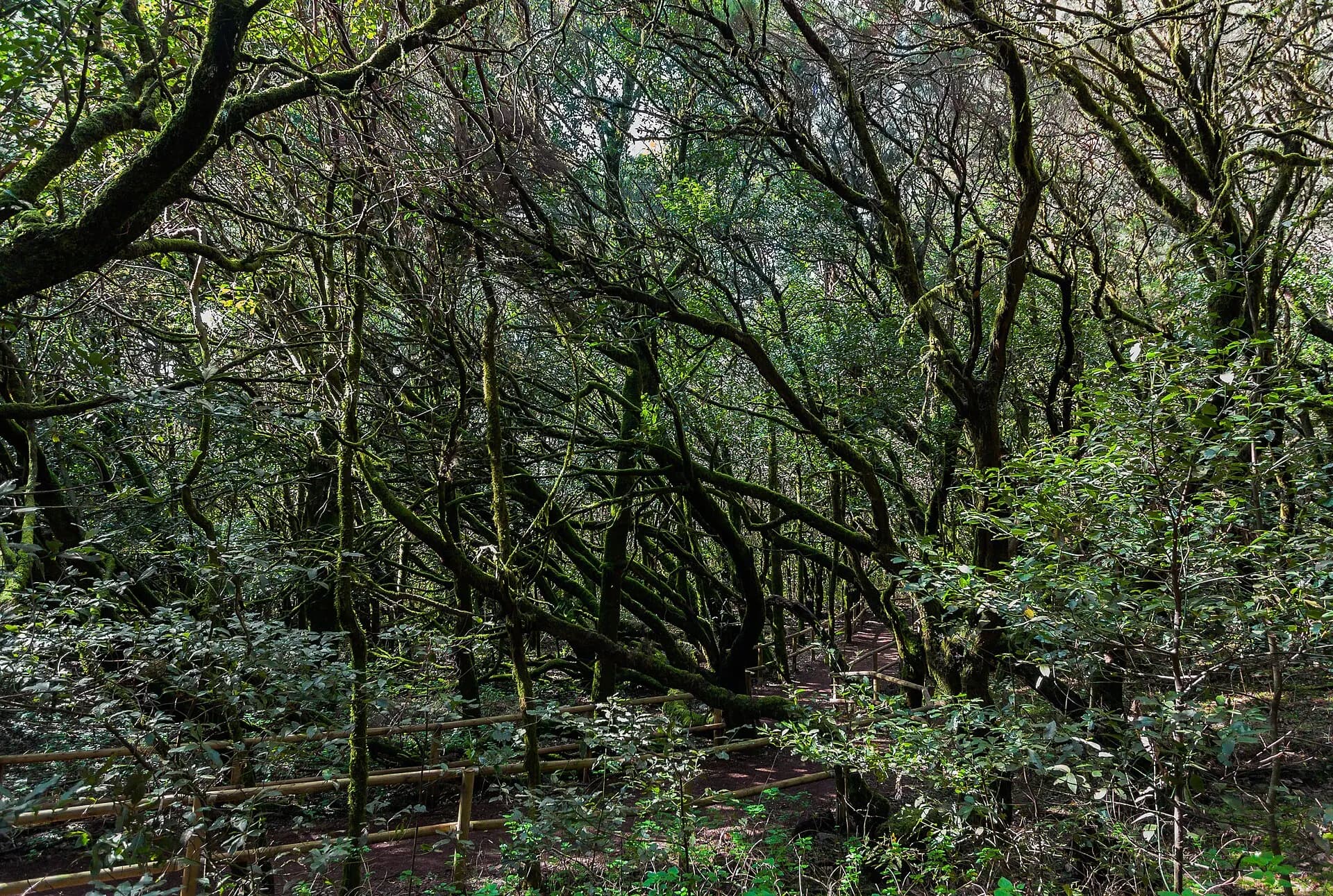
Water has always been the island's other problem. Before pumps and desalination, the people of El Hierro collected it from fog. The most famous of their sources was the Garoé, a sacred tree whose leaves condensed the damp air of the trade winds, so that water dripped into a pit dug at its foot. Its name is thought to come from a Berber word for damp. El Museo Canario, the archaeology museum of Las Palmas, says the original tree was most likely a til, a laurel of the cloud forest, and that it was destroyed in 1610, probably because the waterlogged ground at its foot gave way, not in the storm of later legend.
The edge of the old world
For a long time El Hierro was where the map began. In 1634 France, under Louis XIII, decided that its maps would count longitude from El Hierro, then thought to be the western edge of the Old World. The zero meridian stayed at the Punta de Orchilla, as the island's tourism office puts it, until it was moved to Greenwich in 1884. A lighthouse stands there now, with nothing west of it but the Atlantic.
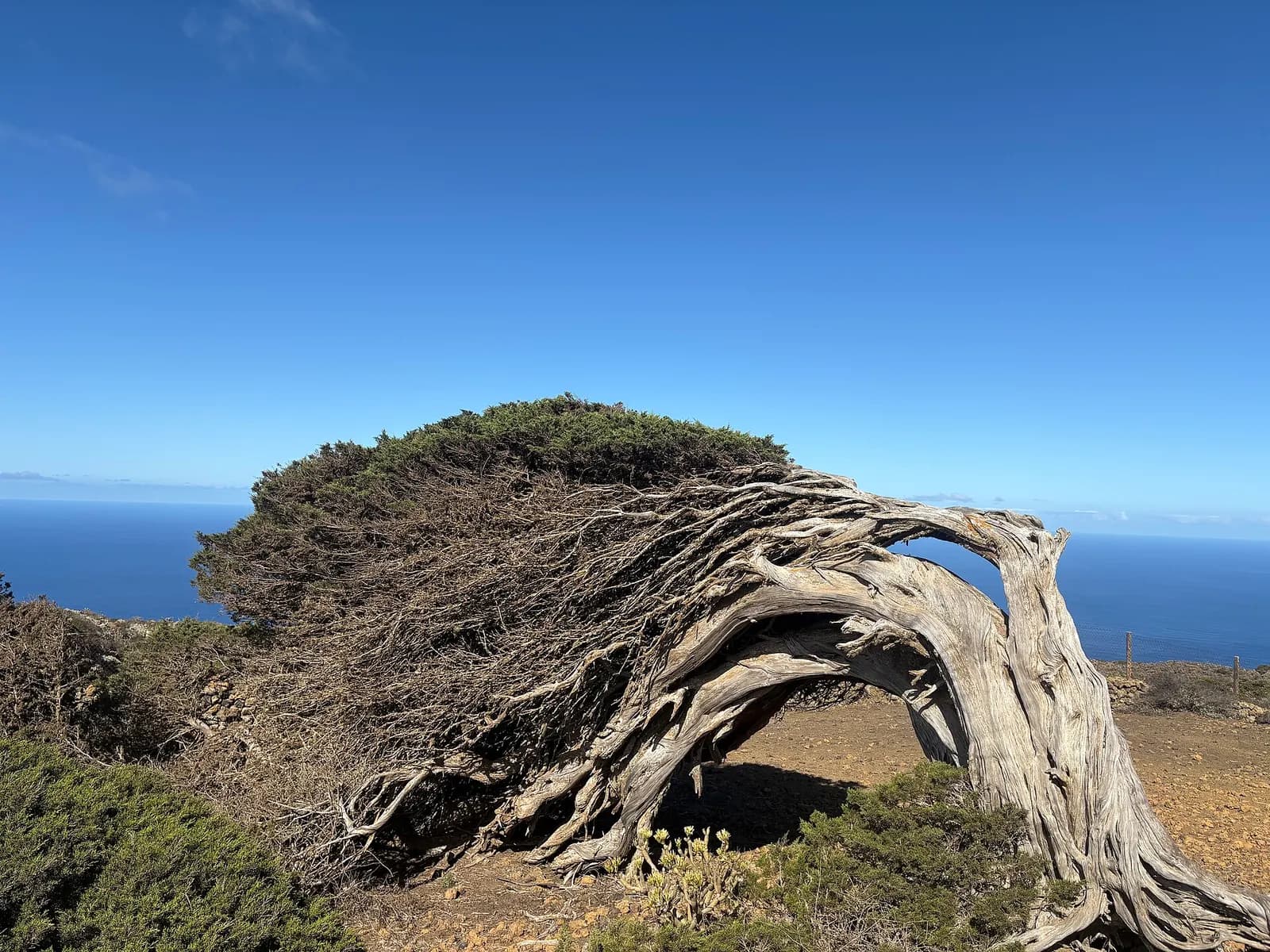
In the west of the island, on the high pastures of La Dehesa, grow the junipers of El Sabinar, called sabinas, twisted by the trade winds into shapes that look staged. Nearby is the sanctuary of the Virgen de los Reyes, the island's patron. Every four years since 1741, the year of a great drought, her figure has been carried 27.3 kilometres along the Camino de la Virgen to Valverde in the Bajada, the island's great festival. The 2025 Bajada, held in July, brought more than 40,000 visitors, the most ever, and the president of the Cabildo has since proposed returning the celebration to May and setting up a body to organise the next one, in 2029. Check the date before planning around it.
La Restinga, the calm sea and the boats
The south coast is sheltered from the trade winds, which is why the sea off La Restinga is called the Mar de las Calmas. Since 1996, 1,180 hectares of it have been a marine reserve, one of three in the Canary Islands, and the island counts more than 40 dive sites with visibility of up to 30 metres.
La Restinga is also, these years, where much of the Atlantic migration route ends. In 2024, a record year, more than 46,000 people reached the Canary Islands by boat, and most of them came ashore on El Hierro, according to reporting from the island by The World. In a single night and morning in November 2026, Spain's maritime rescue service brought in 854 people from seven boats; 350 went on to Tenerife on the morning ferry and as many again were due to follow that afternoon, to ease the pressure on the island's reception centre. It is worth knowing before you arrive. It is part of what living at the edge of Spain means now.
How to visit El Hierro
El Hierro has no direct flights from the rest of Europe. You fly to Tenerife or Gran Canaria and change, or take the ferry from Los Cristianos, in the south of Tenerife, to La Estaca, near Valverde, a crossing of about two hours and twenty minutes. The wind that powers the island also makes the ferry lively, so plan a quiet first evening.
Gorona del Viento runs visits to the plant on request, the easiest way to see how the crater and the turbines work together. For walking, the old Camino de Jinama, just over 3 kilometres, links the plateau above Valverde with the El Golfo valley. Look for the island's cheese and its wine. Many of El Hierro's good things are like its electricity: made here, in small quantities, and not always available.
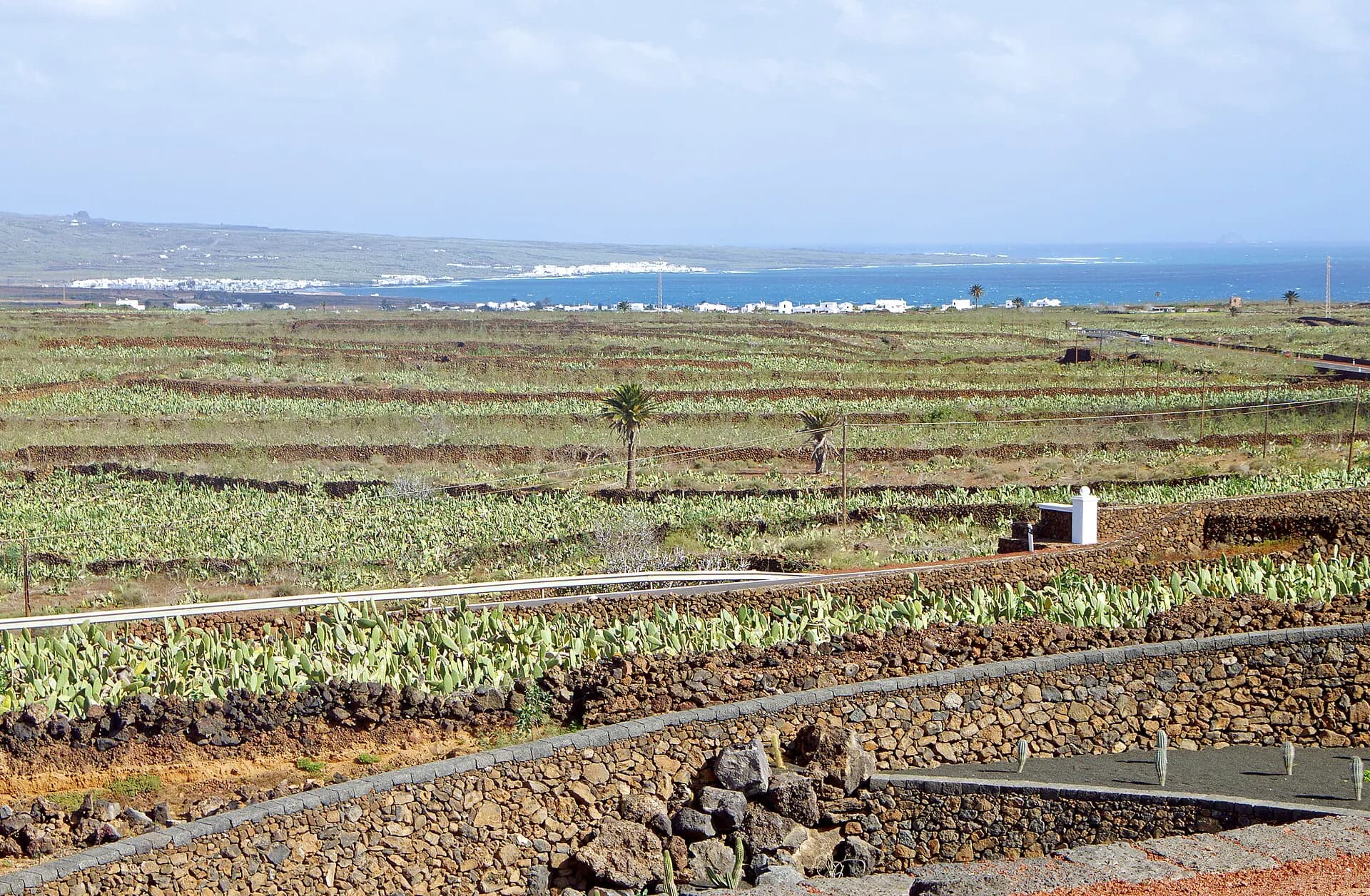
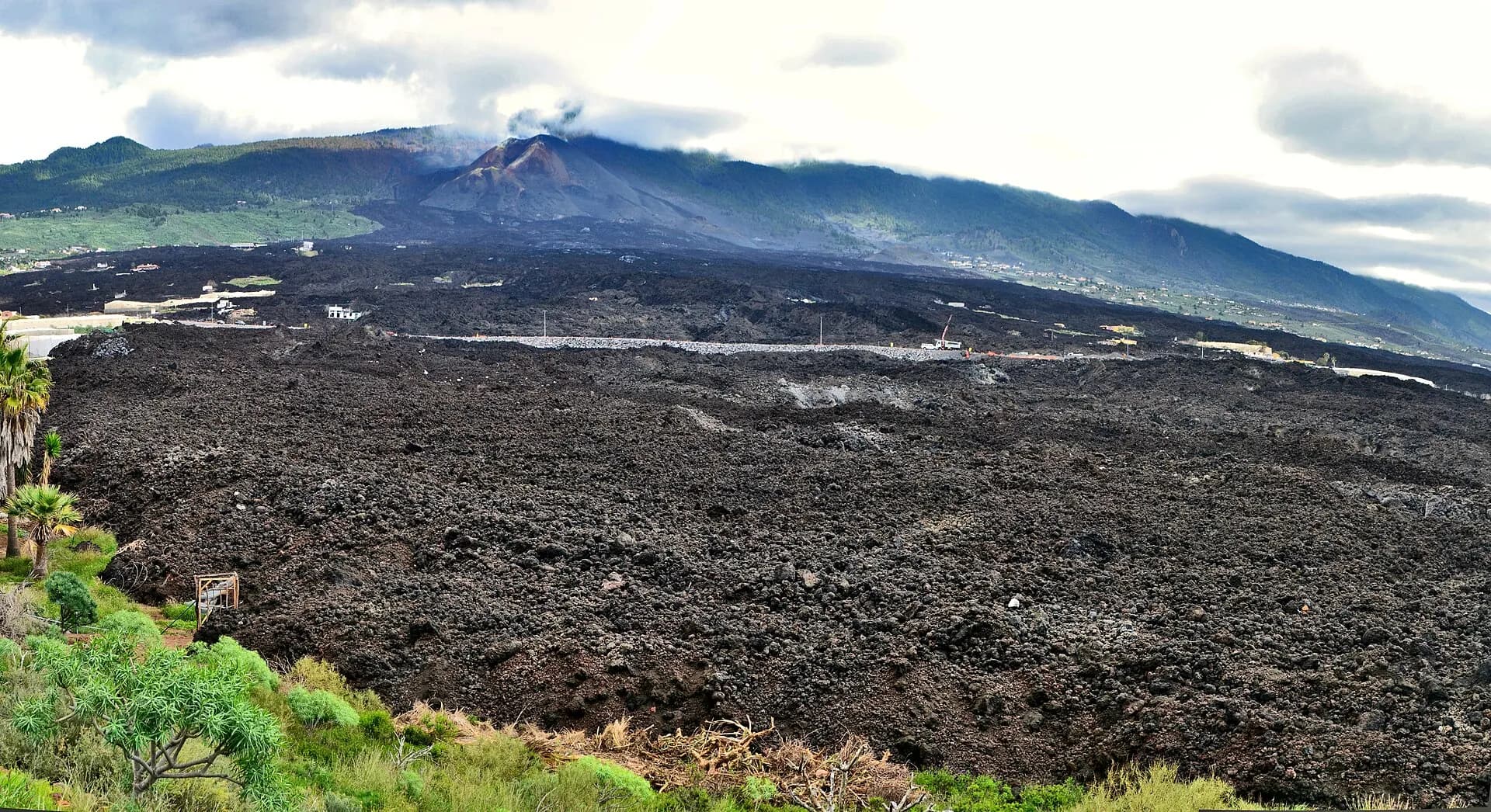
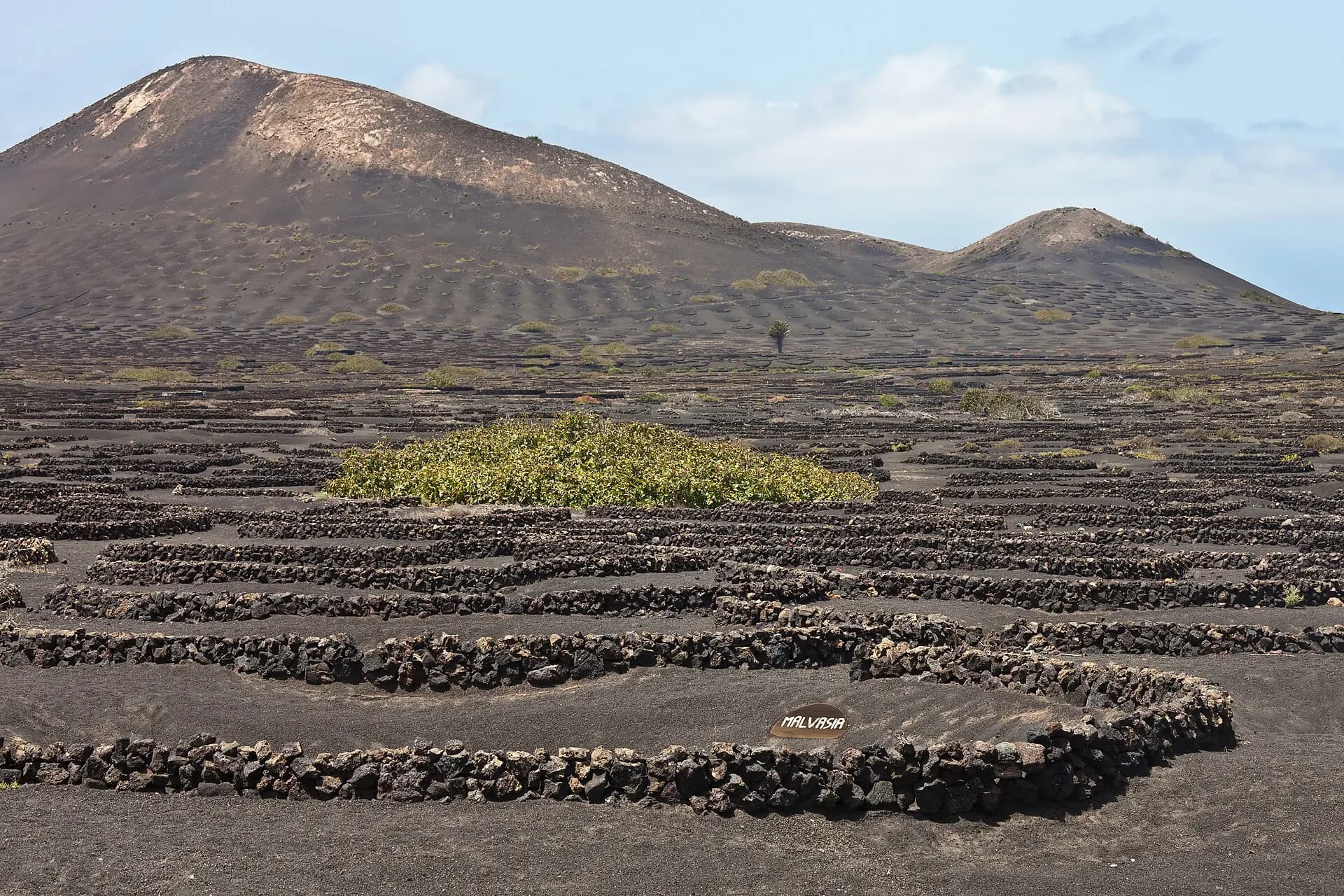
For more of the Canary Islands at their wildest, read about La Palma after the volcano, the island just to the north, and about the volcanic vineyards of La Geria, on Lanzarote, where vines grow in pits dug through the ash.
Questions
- Is El Hierro 100 per cent renewable?
- Not over a whole year. El Hierro has run on renewables alone for stretches, including 18 days in a row in 2018 and 1,049 hours in total in 2025, but Gorona del Viento's annual report puts its share of the island's electricity at 44 per cent in 2025; diesel supplied the rest. That is still far above any other Canary island: the regional statistics institute put La Palma, next on the list, at 9 per cent in 2024.
- How does Gorona del Viento work?
- Five wind turbines with 11.5 megawatts supply El Hierro when the wind blows. Surplus power pumps water from a reservoir near the coast up to a second one inside the volcanic crater of La Caldera, 655 metres higher. When the wind drops, the water runs back down through four turbines and makes electricity again. The diesel engines of the Llanos Blancos power station stay in reserve for long calm spells.
- When did El Hierro first run only on renewable energy?
- El Hierro first ran only on renewable energy on 9 August 2015, for a little over two hours. The plant then covered the whole island for 18 days in a row from 25 January to 12 February 2018 and, according to the company, for almost 25 days in summer 2019. Hours at 100 per cent renewable were 413 in 2023, 859 in 2024 and 1,049 in 2025, according to Gorona del Viento.
- Can you visit Gorona del Viento?
- Yes. Gorona del Viento runs visits to the plant on request through its website, with an explanation of how the wind farm, the upper reservoir in the crater and the hydro turbines work together. It is the clearest way to understand how El Hierro produces its renewable energy.
- How do you get to El Hierro?
- There are no direct flights to El Hierro from the rest of Europe. You fly to Tenerife or Gran Canaria and change for El Hierro, or take the ferry from Los Cristianos, in the south of Tenerife, to La Estaca, near Valverde, a crossing of about two hours and twenty minutes, according to the island's tourism office.
- When is the next Bajada de la Virgen de los Reyes on El Hierro?
- The Bajada has been held every four years since 1741, when the figure of the island's patron is carried 27.3 kilometres from her sanctuary at La Dehesa to Valverde. The 2025 edition, in July, drew more than 40,000 visitors, a record. The next is due in 2029, and the president of the Cabildo has proposed returning it to May, so check the date on the island's official channels.