Asturian cider: why it is poured from above the head, and where the apples grow
Comarca de la Sidra and Gijón, Asturias//Products/10 min read
Sidra natural is dry, sharp and almost still, so Asturians pour it from a height to wake it up. UNESCO listed the culture around it in 2024, and in 2026 the DOP took in ice cider.
 Written with by Eduardo Peire
Asturian cider is sidra natural: a dry, sharp, almost still cider made from apples grown in Asturias, on the green north coast of Spain, and fermented by the yeasts that come in on the fruit. Because it has so little fizz in the bottle, it is poured from above the head into a wide, thin glass, which wakes it up for a few seconds. The Asturias tourism board says the region makes 80% of the cider produced in Spain, and in December 2024 UNESCO added Asturian cider culture to its list of the intangible cultural heritage of humanity.
What is Asturian cider?
Sidra natural is apple juice that has fermented in big barrels of chestnut, oak or steel until almost all its sugar has turned into alcohol. It is not filtered, and the little gas it has is its own, left over from the fermentation. The Asturias tourism board says the fermentation lasts at least three months. The regulatory council of the designation of origin recommends serving it at about 13 °C, cool rather than cold, and in hot weather standing the bottle upright in fresh water, with the cork kept dry, instead of putting it in the fridge.
That is not the cider most northern Europeans know. There is no syrup, no added gas and no apple flavouring. A first glass of sidra natural is closer to the still cider of the Basque cider houses than to the sweet, fizzy drink sold in cans, with a sour edge that some people love at once and others take a summer to understand.
Asturias makes other kinds too. Sidra natural espumosa is a sparkling cider that gets a second fermentation. Filtered cider, sold as sidra natural filtrada or de nueva expresión, is clarified before bottling, so it needs no pouring from a height and goes into a wine glass at 8 to 10 °C. For a few weeks in October and November there is sidra dulce, sweet must that has barely started to ferment, drunk with roast chestnuts.
Why is Asturian cider poured from above the head?
The pour is called escanciar. The waiter holds the bottle high above the head with one arm and the glass low and tilted with the other, and lets a thin stream fall so that it breaks against the inside edge of the glass. According to the regulatory council of the DOP Sidra de Asturias, the point is to wake up the cider's own carbon dioxide and to let part of its acetic acid evaporate. The cider foams, comes alive for a moment and starts to go flat almost at once.
Asturians judge that moment with two words of their own. Espalme is how the foam behaves on the surface: it should vanish quickly and completely. Aguante is how long the fine bubbles last inside the cider before they fade. A good sidra natural, poured well, has both.
What lands in the glass is a culín, about two fingers of cider, never a full glass. The tourism board sets out the rest of the ritual. You pour for the others, never starting with yourself. The cider is drunk soon after the pour, while it is still lively, and the last drop goes on the floor, which rinses the glass for the next person. The bottle is shared and whoever holds it does the pouring. Spilling is part of the deal.
The pour looks ancient but is fairly recent. The tourism board dates it to some point in the 19th century. The council traces it to the espicha, the party in a cider house where the cider shoots in a thin jet from the barrel straight into the glass.
The pomarada: small orchards and 76 apple varieties
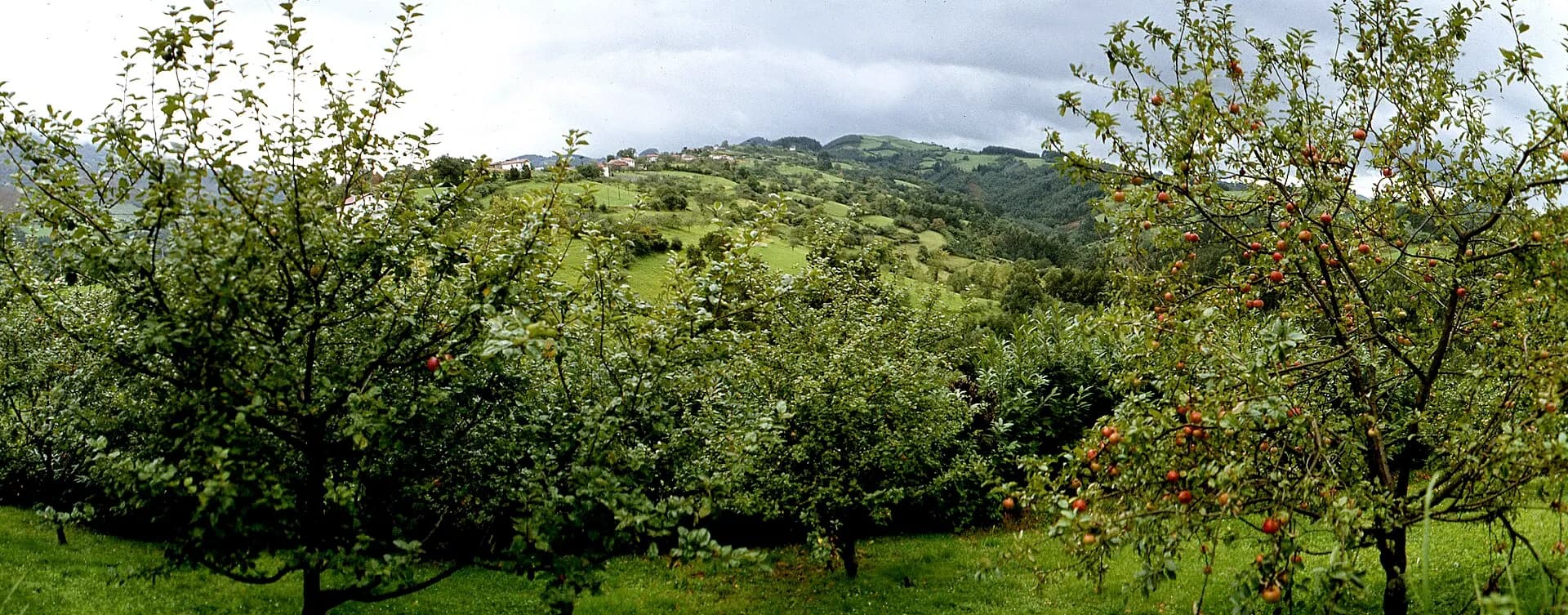
Asturian cider starts in the pomarada (pumarada in Asturian), an apple orchard that is often little more than a sloping meadow with trees in it. The tourism board counts close to 500 apple varieties in Asturias. The protected designation accepts 76 of them, which the council sorts by acidity and bitterness into nine groups, from sweet to bitter-acid, with names like Regona, Raxao, Blanquina, Xuanina and Durona de Tresali. Its variety sheets note that cider orchards are normally planted with several varieties at once, and the cider maker's job is to balance the acid, the sweet and the bitter.
The orchards are small. In its 2025 annual report, the council counts 914 registered plots with an average of about 1.3 hectares, and two thirds of them are smaller than one hectare. It puts this down to the terrain and to how farming has worked here, and uses the Spanish word for it, minifundismo. That is part of the appeal for a visitor and part of the problem for a grower: small, steep plots picked by hand do not compete on price with apples grown on flat land elsewhere in Europe.
The trees blossom in spring, at their best in early May. The council says the harvest begins in the first half of October, depending on the variety and the year, and is still done almost entirely by hand. Its sheets stretch the season further: the earliest variety, Martina, ripens in the last ten days of September, and the latest, Durón d'Arroes, in mid December.
How Asturian cider is made in the llagar
The cider house where apples are pressed is the llagar. The old ones pressed the crushed apples under a huge wooden beam, like the one now kept at the Museo del Pueblo de Asturias in Gijón. Most use modern presses today, but the order of the work has hardly changed.
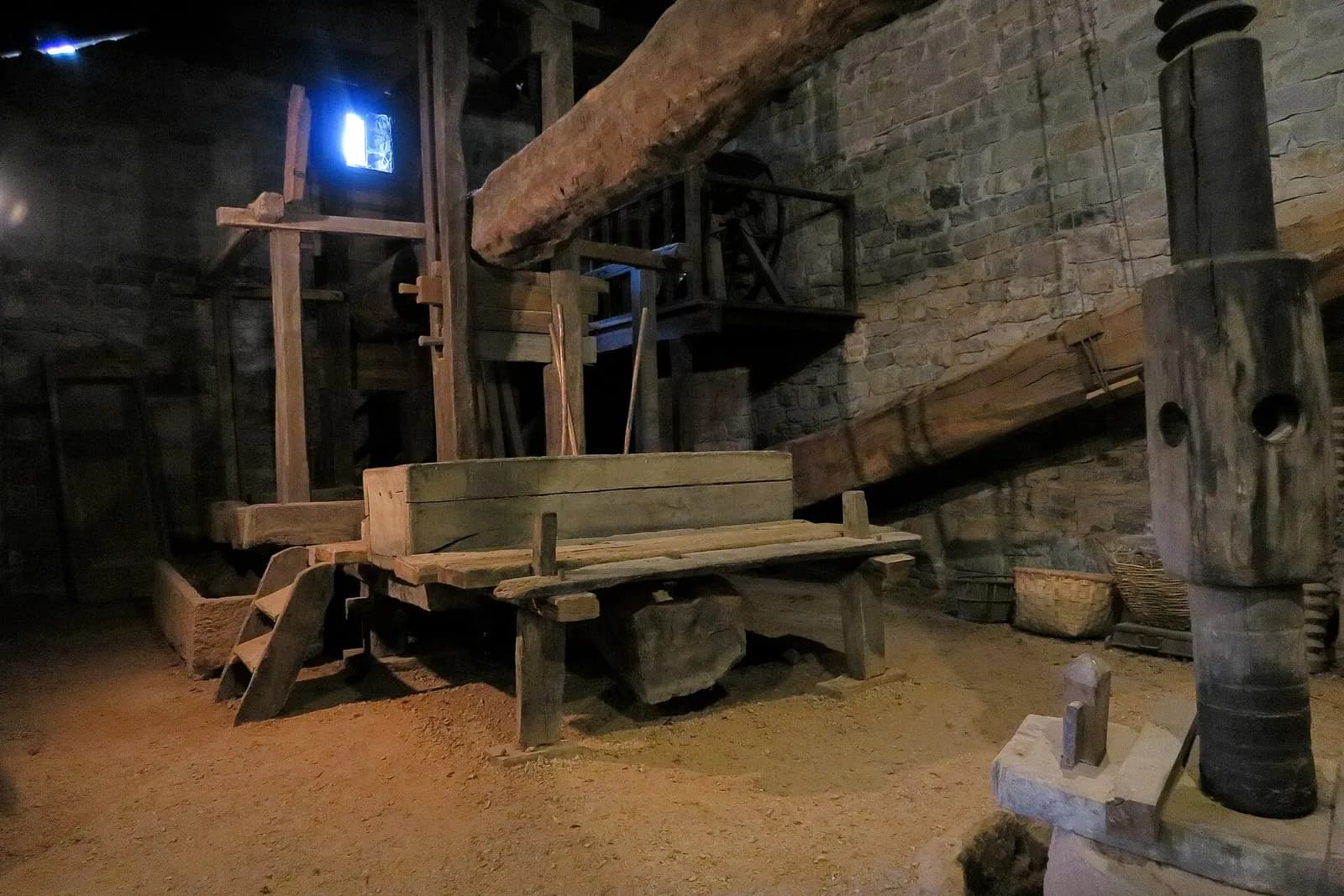
The council describes the steps. The apples are washed, sorted by hand, crushed and pressed. The juice goes into barrels, where the yeasts and bacteria of the place do the fermenting. In January and February the cider is racked off its sediment into clean barrels, and by tradition this is done while the moon is waning. From spring onwards it is ready to bottle.
The espicha is the party that goes with all this: cider drunk straight from the barrel in the llagar, with food and music. UNESCO names espichas among the customs it protects, along with the amagüestos, the autumn chestnut feasts that go with the sweet new must.
What the DOP Sidra de Asturias label tells you
The Asturian government approved the rules of the DOP Sidra de Asturias in 2002, Spain ratified them in 2003 and the EU registered the name in 2005. Here the label matters more than in most places. The regulatory council states that the apples for DOP cider can only come from orchards entered in its register of plots, all in Asturias. A cider house has to notify the council 24 hours before it receives apples for DOP cider, inspectors check the varieties as the fruit is unloaded, and at the end of the season the sales declared by growers and the purchases declared by cider houses are checked against each other. The council adds that no other natural cider may refer to Asturias on its label.
The numbers explain why this matters. In 2025 the DOP had 34 cider houses, 395 growers and about 1,170 hectares of orchards, a record, and it issued close to five million numbered back labels, 8% more than the year before. The tourism board puts the output of traditional sidra natural at 35 to 40 million bottles a year, of which about 4.5 million are DOP. Roughly one bottle in eight, then, carries the label. The rest is cider made in Asturias, much of it good, but nothing on the bottle says where the apples grew.
The council's president, Jorge García, does not hide the problem. In the 2025 report he writes that without the DOP there would be no Asturian apples today, that orchards have to become profitable and new ones have to be planted, and that the designation is the only protection for the landscape and for people staying in the villages. He hopes most of the cider made in the region will one day be DOP cider from Asturian apples.
Ice cider, the newest Asturian cider
The latest change came in the autumn of 2026. The Asturian agriculture department approved the new rules on 14 October, in a resolution published in the Spanish official gazette, and on 5 November the council presented in Villaviciosa the official addition of sidra de hielo, ice cider, to the DOP. The tourism board describes ice cider as cider made from must concentrated by freezing, drunk in small amounts with cheese or dessert.
The request came from seven cider makers who already made it, and eight cider houses are interested. Changing the rules took about ten months. The first certified bottles are expected in June and July 2027, with a new upright label in an amber copper colour. In its 2025 report the council had already listed ice cider among its strategic goals, as a product that could sell outside Asturias.
Chigres, espichas and a record on the beach
When UNESCO inscribed Asturian cider culture in December 2024, it did not list a drink. It listed the know-how and the places around it: how natural cider is made, served and enjoyed, the pouring and tasting learned by watching and copying, and the places where cider is shared, from private homes and pilgrimages to pouring contests and the chigres.
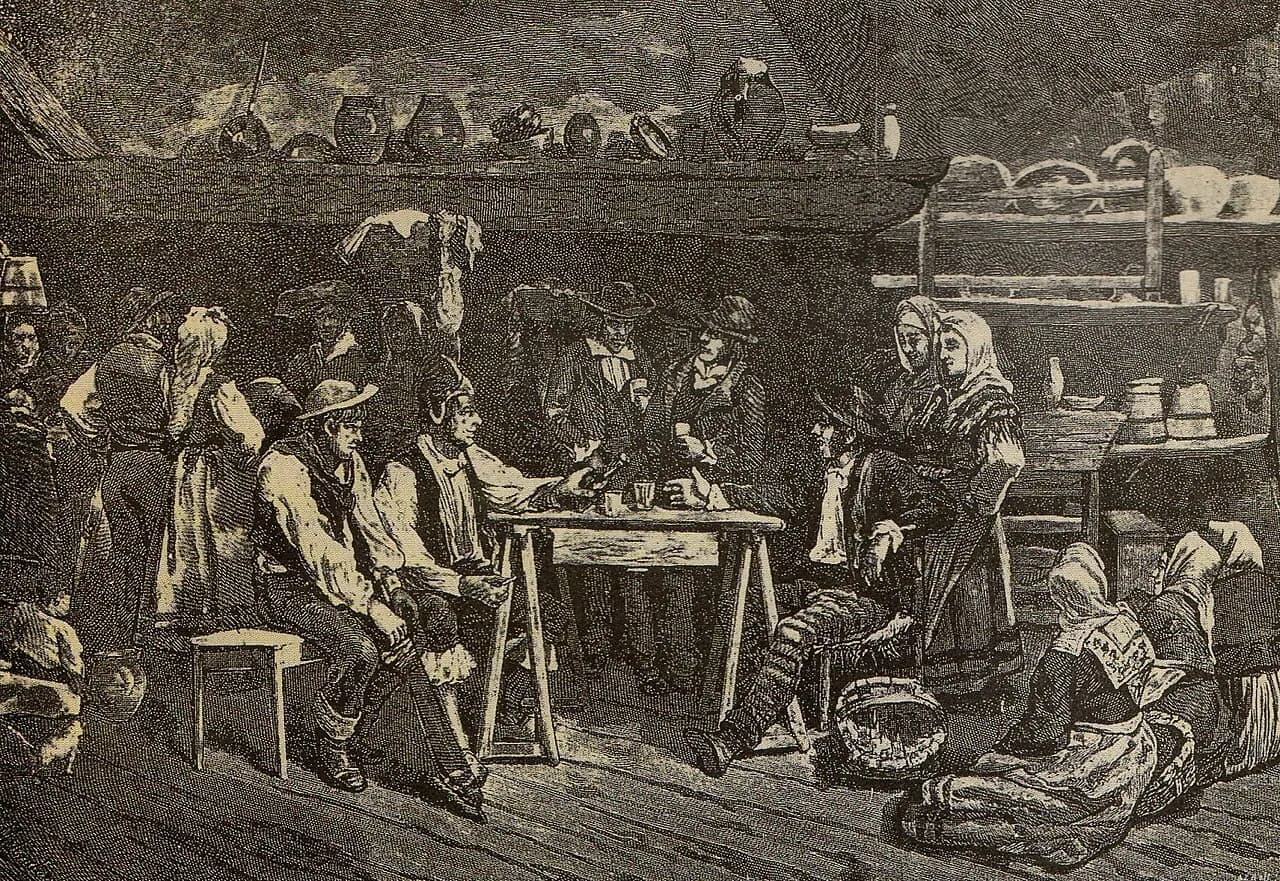
Chigre is the Asturian word for a cider bar. The tourism board says it takes its name from an enormous old corkscrew used to open bottles quickly, that the word covers any tavern or bar, and that chigres were places for working people, as they still are. It also credits them with a part in the rise of the workers' movement in Asturias, in mining towns such as Mieres where cider drinking took hold.
Gijón has turned the pour into a mass event. Every year in late August, during its Fiesta de la Sidra Natural, thousands of people try to pour at the same moment on Poniente beach. In August 2026, at the 35th edition, the council counted 10,853 people pouring together, a new record.
When to go for Asturian cider, and how to drink it
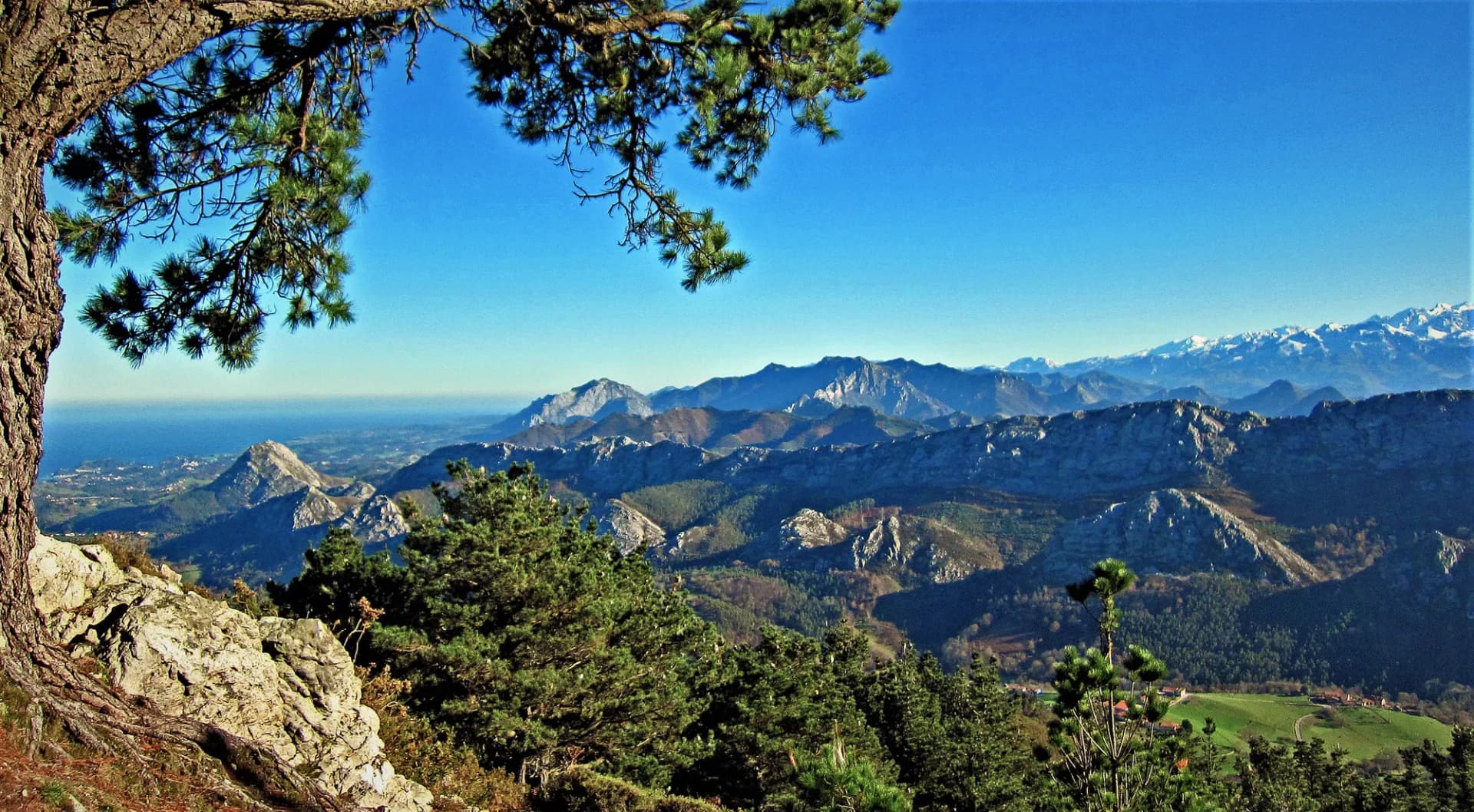
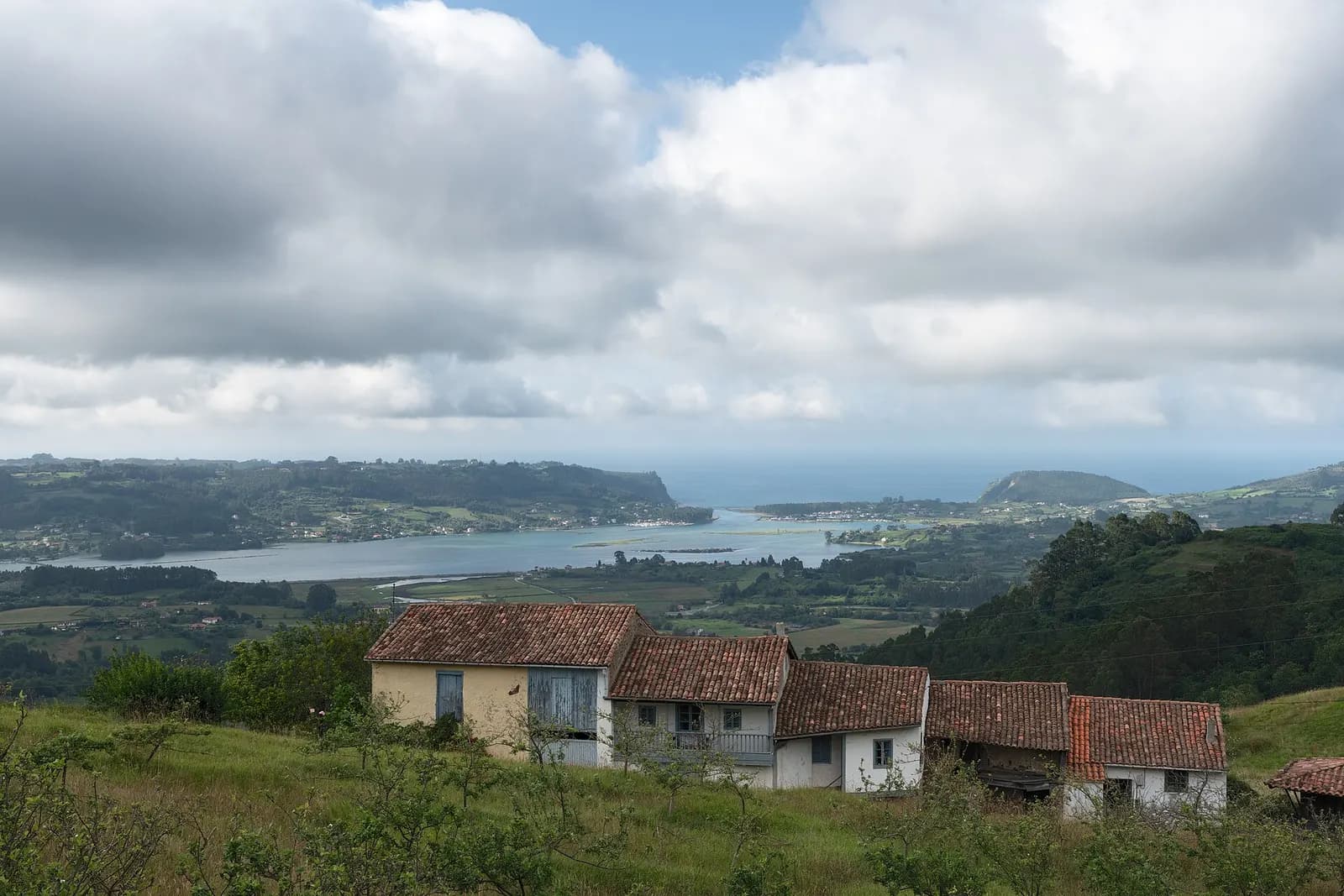
The cider country proper is the Comarca de la Sidra, six municipalities east of Gijón and Oviedo: Bimenes, Cabranes, Colunga, Nava, Sariego and Villaviciosa. The tourism board says it leads Asturias in hectares of apple trees and in number of growers. Villaviciosa sits at the head of an estuary of about ten square kilometres that is a nature reserve; Nava, inland, has the cider museum.
The year has its moments. Early May is blossom time. In July, Nava holds its Festival de la Sidra Natural, first held in 1969, which the tourism board describes as the oldest of the cider festivals and which has the status of a festival of national tourist interest, with cider and pouring contests. Late August is Gijón's turn. Villaviciosa's Festival de la Manzana, the apple festival, dates from 1960 and is held every other October, in odd years; in July 2026 the Spanish tourism ministry declared it of national tourist interest, and the next one is due in October 2027. October and November bring the harvest, the sweet must and the chestnuts. Dates move a little each year, so check the town halls or the Asturias tourism board before booking.
In a sidrería, order a bottle and let the waiter pour. Drink the culín in one go rather than sipping, leave a drop to rinse the glass and wait for the next pour instead of reaching for the bottle. If the theatre is too much, ask for filtered cider, which goes into a normal glass. If you want Asturian apples, look for the numbered DOP back label, and expect to be told that the best cider of the year is in some llagar up a lane nobody can quite give directions to.
Cider goes with almost everything on an Asturian table, including the blue cheese ripened in the caves of the Picos de Europa, which has its own story. On 31 August 2025, at the cheese festival in Arenas de Cabrales, the cider and the Cabrales councils twinned their designations. For the other great cider tradition of the Cantabrian coast, where the cider comes straight from the barrel, see the Basque cider houses and the txotx season. More on the region, its villages and its mountains is on the Asturias page.
The cider in a Gijón glass has spent the winter in a barrel, been racked under a waning moon and fallen from above a waiter's head. It is gone in one swallow.
Questions
- What is Asturian cider?
- Asturian cider is sidra natural: apple juice fermented in barrels for at least three months, with the yeasts that come in on the fruit, until it is dry. It is not filtered and has very little gas of its own, which is why it is poured from a height. Asturias also makes sparkling cider, filtered cider that needs no pouring, sweet autumn must and, since 2026, a protected ice cider.
- Why is Asturian cider poured from so high?
- The pour, called escanciar, makes the cider break against the edge of the glass. According to the regulatory council of the DOP Sidra de Asturias, this wakes up the cider's own carbon dioxide and lets part of its acetic acid evaporate. The effect lasts a few seconds, so each pour is a short one of about two fingers, the culín, drunk straight away.
- What does the DOP Sidra de Asturias label mean?
- It means the cider was made only from apples grown in orchards registered with the regulatory council, all in Asturias, from the 76 varieties it accepts. Cider houses notify the council before receiving the apples, inspectors check the varieties at unloading and the declarations of growers and cider houses are checked against each other. Each bottle carries a numbered back label.
- Is all cider made in Asturias DOP cider?
- No. The Asturias tourism board puts the output of traditional sidra natural at 35 to 40 million bottles a year, of which about 4.5 million are DOP Sidra de Asturias, so roughly one bottle in eight. The rest is made in Asturias, but its label cannot refer to Asturias or say where the apples came from.
- What is Asturian ice cider?
- Asturian ice cider, sidra de hielo, is made from apple must concentrated by freezing and is drunk in small glasses, often with cheese or dessert. The Asturian government approved its addition to the DOP Sidra de Asturias in October 2026, at the request of seven cider makers who already made it. The first certified bottles are expected in June and July 2027.
- When is the best time to visit Asturias for cider?
- Early May for the apple blossom, July for the Festival de la Sidra Natural in Nava, late August for the Fiesta de la Sidra Natural in Gijón, with its mass pour on Poniente beach, and October and November for the harvest, the sweet must and the chestnut feasts. Villaviciosa holds its apple festival every other October, next in 2027. Check the dates with the town halls each year.