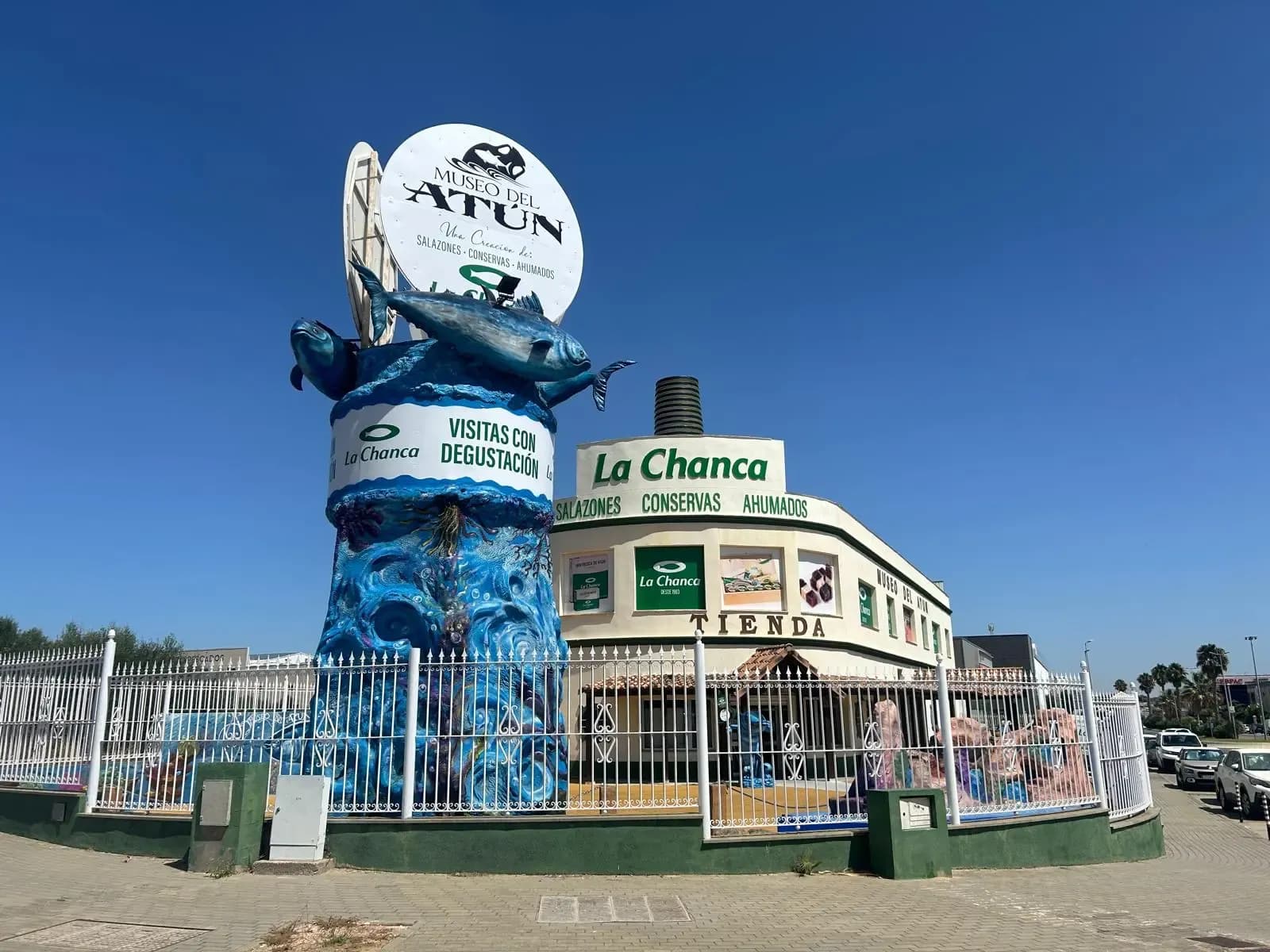
At its Museo del Atún in Barbate, La Chanca cuts up a tuna by hand in front of visitors. During this ronqueo it explains where cuts such as the ventresca come from.
La Chanca Ventresca de atún cocida
Barbate, La Janda · Andalusia
Vacuum pack of about 280 g, no fridge needed until opened
A piece of tuna ventresca, the belly, cooked with sea salt and vacuum-packed. La Chanca's catalogue lists it among its vacuum-packed conservas that need no fridge.
The label lists only tuna and sea salt.
From the producer
La Chanca, Barbate
La Chanca says the cooked ventresca is gelatinous, which makes it easy to separate into layers. Of ventresca in general it writes that the texture is very soft and juicy and the flavour intense.
Tuna ventresca: the label says only tuna and does not name the species. The ventresca is the belly, the lower part of the fish nearest the head. La Chanca credits a fat the rest of the tuna lacks for the character of the cut.
La Chanca suggests separating it into layers and topping it with tomato jam or a little guacamole, or adding it to salads and tostas.
- Ingredients
- Tuna and sea salt.
- Allergens
- Fish
- Origin
- Made in Barbate, Cádiz
- Energy
- 479.6 kJ / 113 kcal
- Fat
- 0.51 g
- of which saturates
- 0.13 g
- Carbohydrate
- 0.1 g
- of which sugars
- 0.1 g
- Protein
- 27.1 g
- Salt
- 1.7 g
- Storage
- Keep away from sunlight; it needs no fridge until opened. Once opened, take it out of the plastic, wrap it in aluminium foil, keep it in the fridge and eat within 4 to 5 days.
- Best before
- Nine months, according to La Chanca.
- Format
- Vacuum pack of about 280 g, no fridge needed until opened