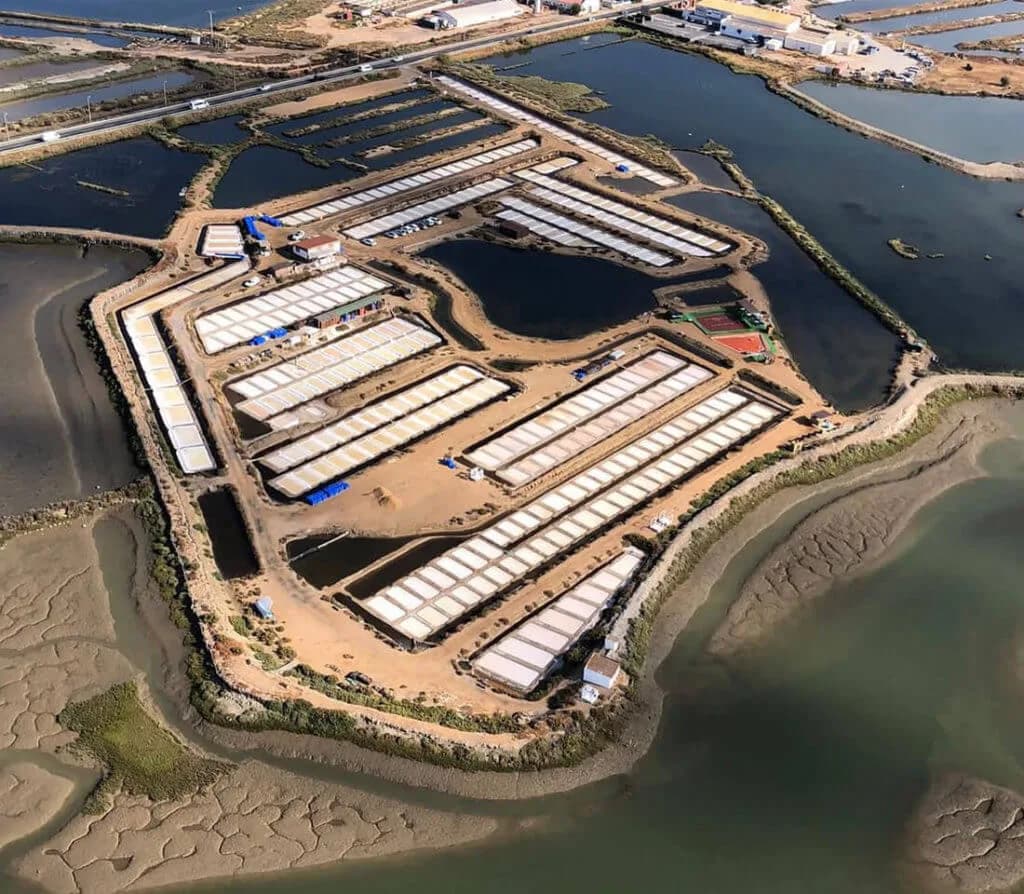
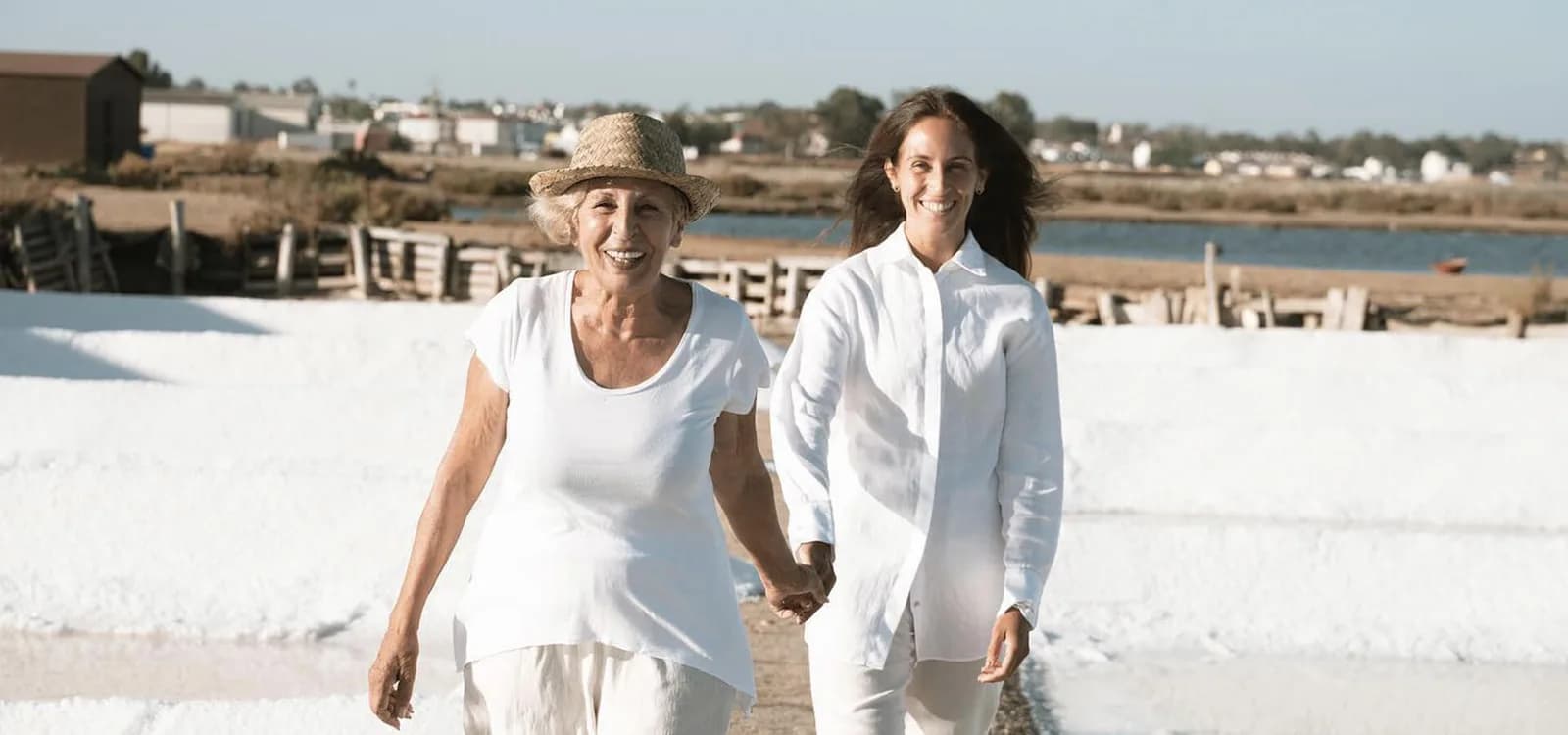
Manuela Gómez began harvesting flor de sal at Isla Cristina in 2003, after a French visitor told her how prized it was in France. Her family gathers it by hand from the crystallisers, in the salt pans her father Manuel ran from 1954.
Flor de Sal Ecológica
Isla Cristina, Costa Occidental de Huelva · Andalusia
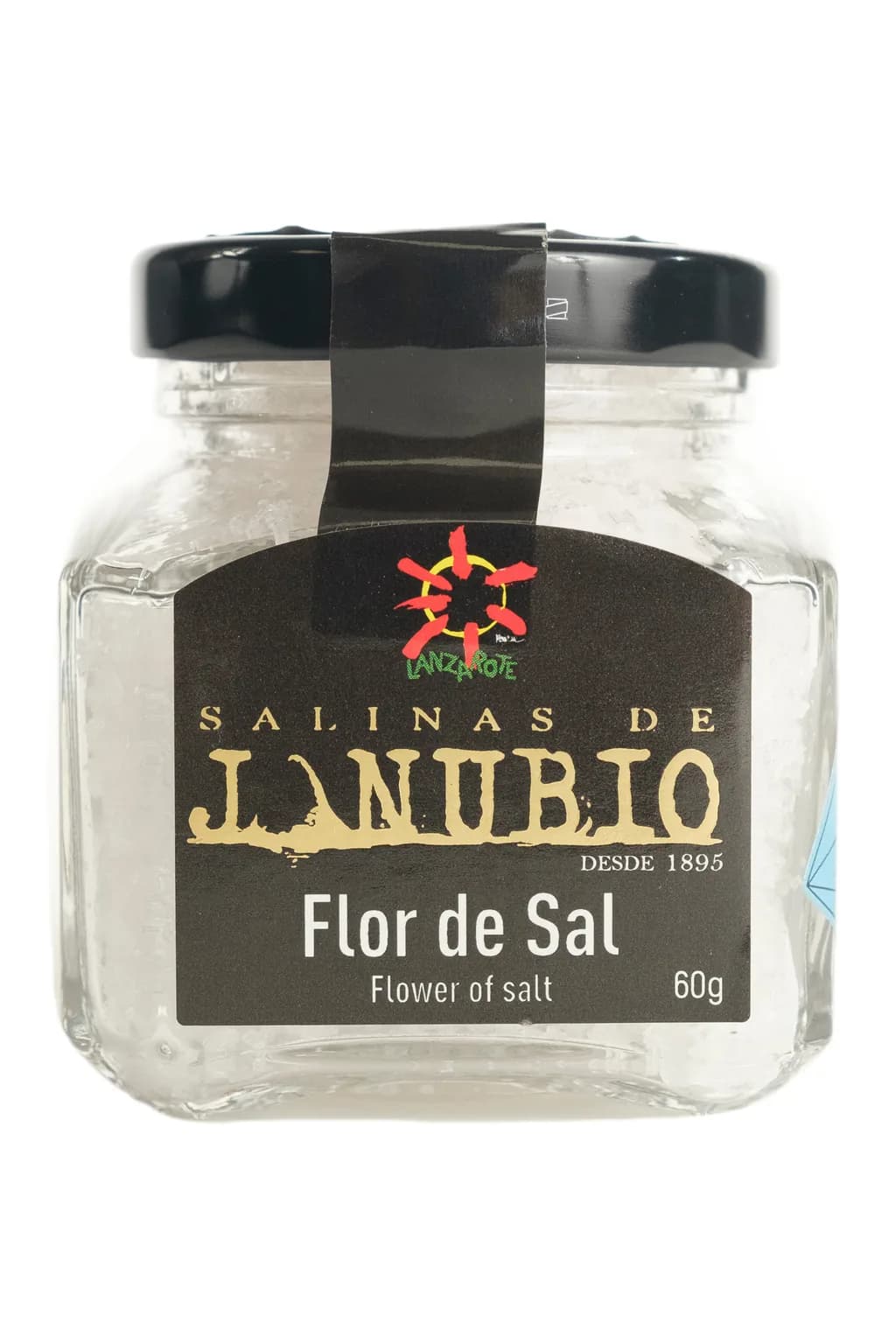
30 g round tub with a black lid
Organic flor de sal from the Marismas de Isla Cristina, on the Atlantic coast of Huelva: the thin crust of crystals that the salt workers of Salinas del Alemán gather by hand from the surface of the crystallisers. Nothing is added to it.
The Gómez family has worked these salt pans since 1954, and Manuela Gómez began harvesting flor de sal here in 2003.
From the producer
Salinas del Alemán, Isla Cristina
Salinas del Alemán describes a soft, very white flor de sal that tastes less salty than ordinary salt but fuller, because it holds less sodium chloride, and that dissolves at once on food. Foods & Wines from Spain also singles out its soft texture and how easily it dissolves.
Flor de sal is the thin layer of crystals that forms on the surface of the brine while the grain is still loose; left alone, it sinks and turns into coarse salt. At Isla Cristina it comes from Atlantic water that the tides bring in by the mouth of the río Carreras, evaporated by the sun and the wind. The label gives 96.5 g of salt per 100 g, a little less than the 97.4 g of the house's coarse sea salt, and 0.71% magnesium.
Salinas del Alemán uses it to finish a dish just before serving: on salads, grilled meat, fish and seafood, and on chocolate desserts.
- Ingredients
- Flor de sal (100%).
- Origin
- Paraje Natural Marismas de Isla Cristina
- Storage
- Keep in a cool, dry place.