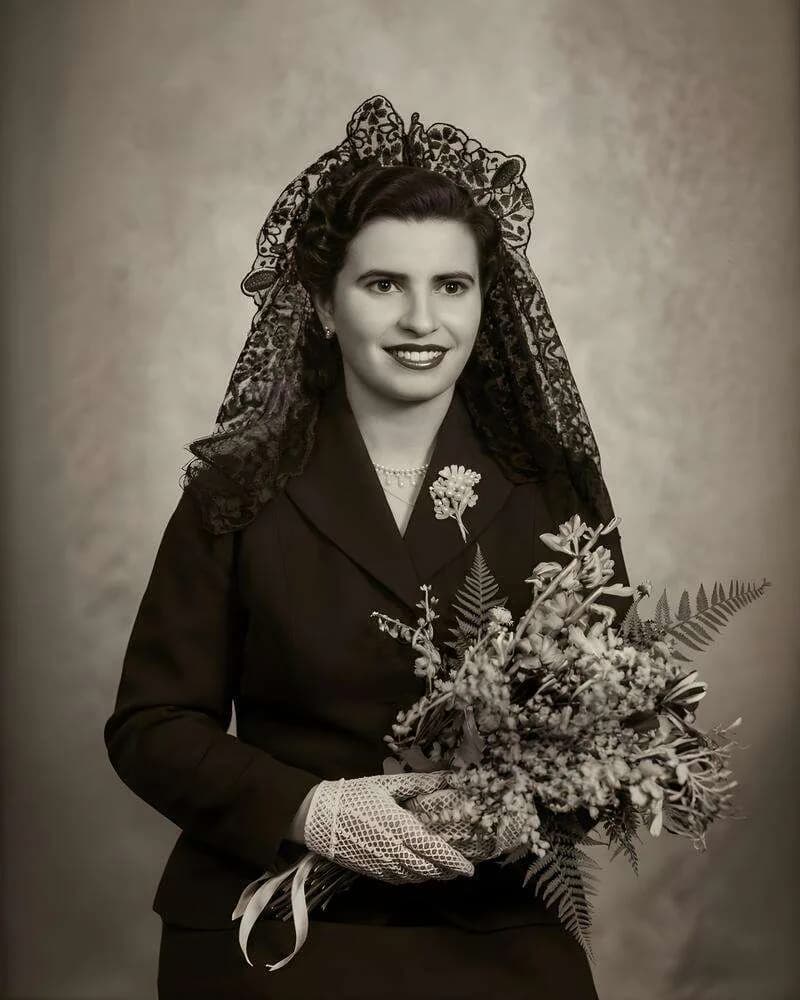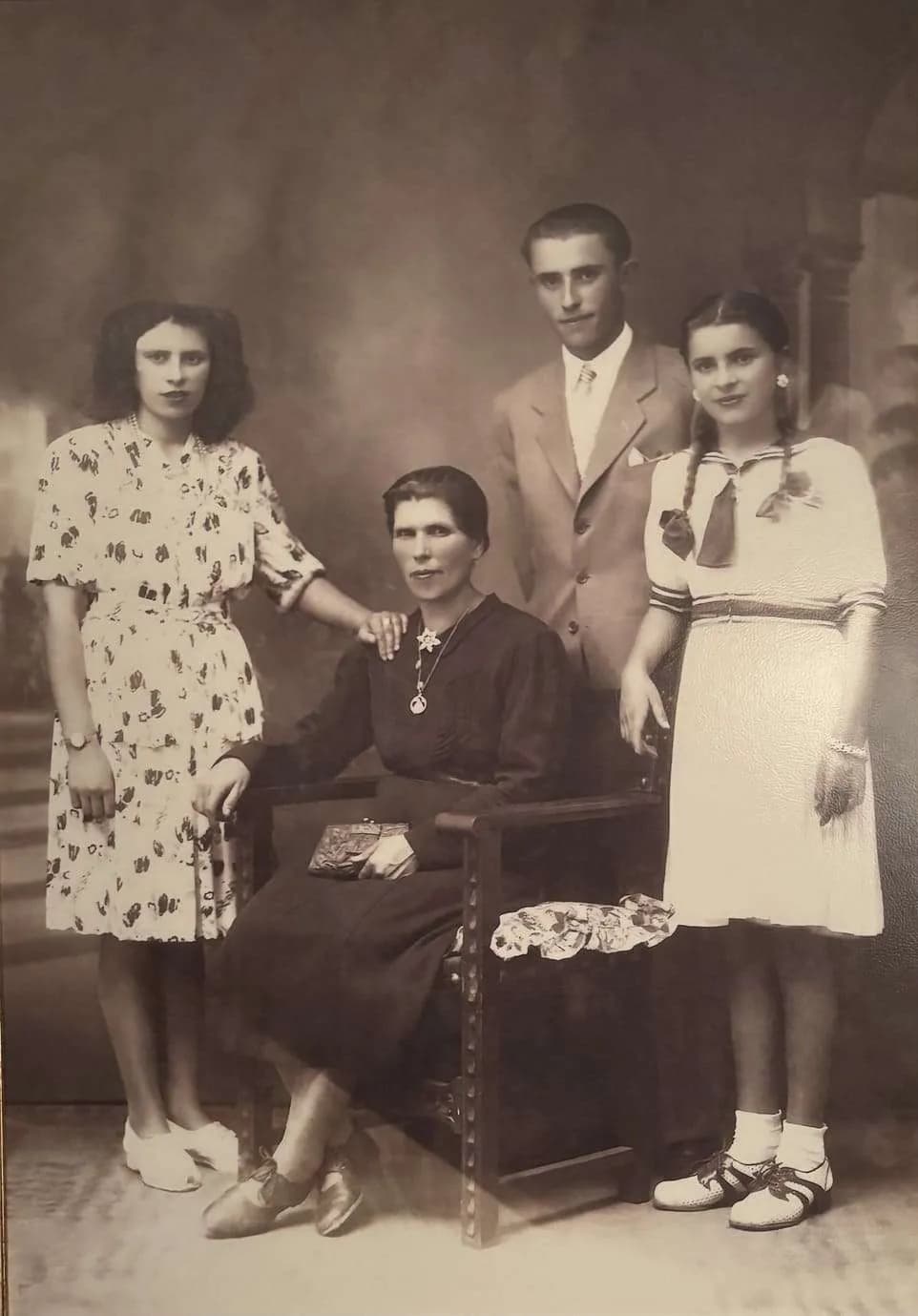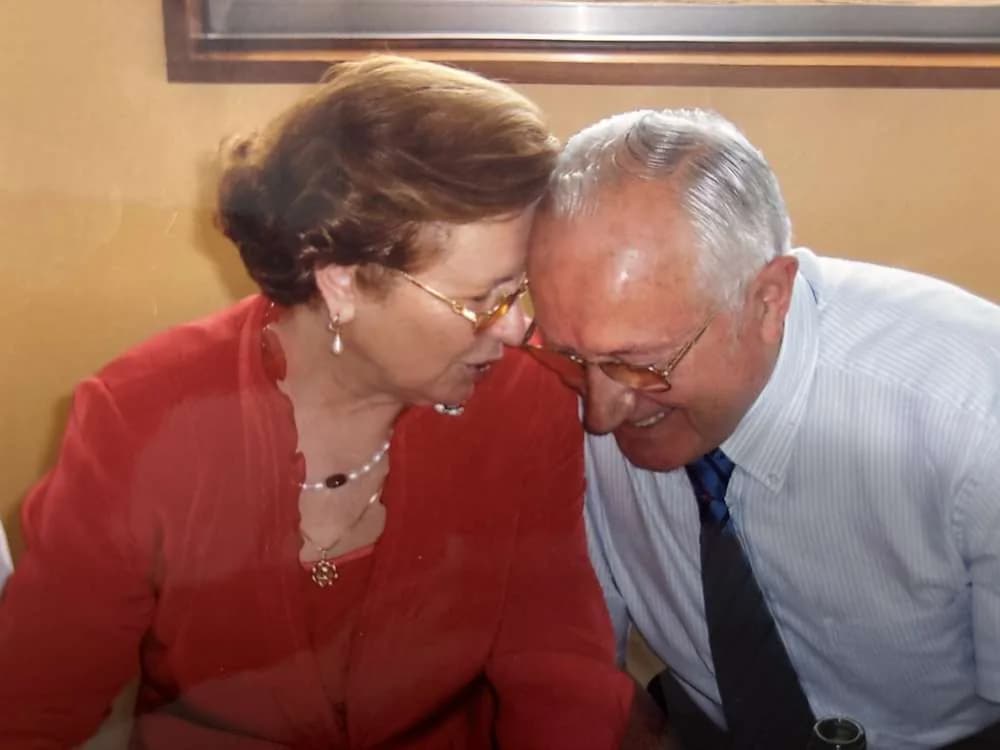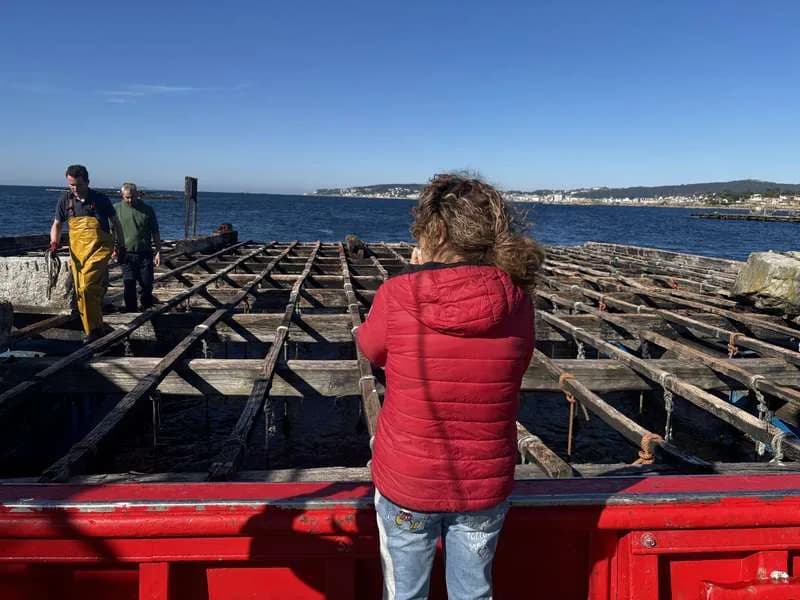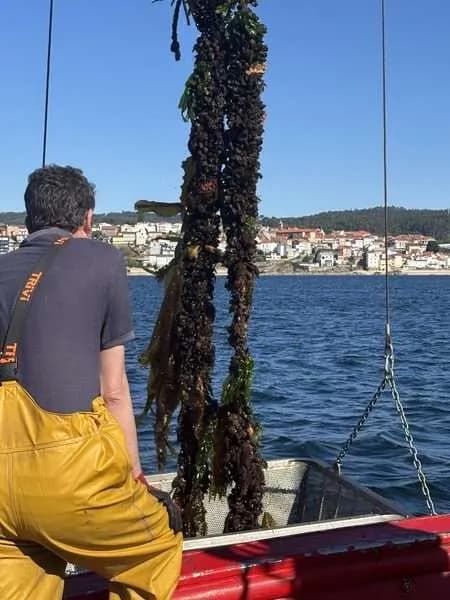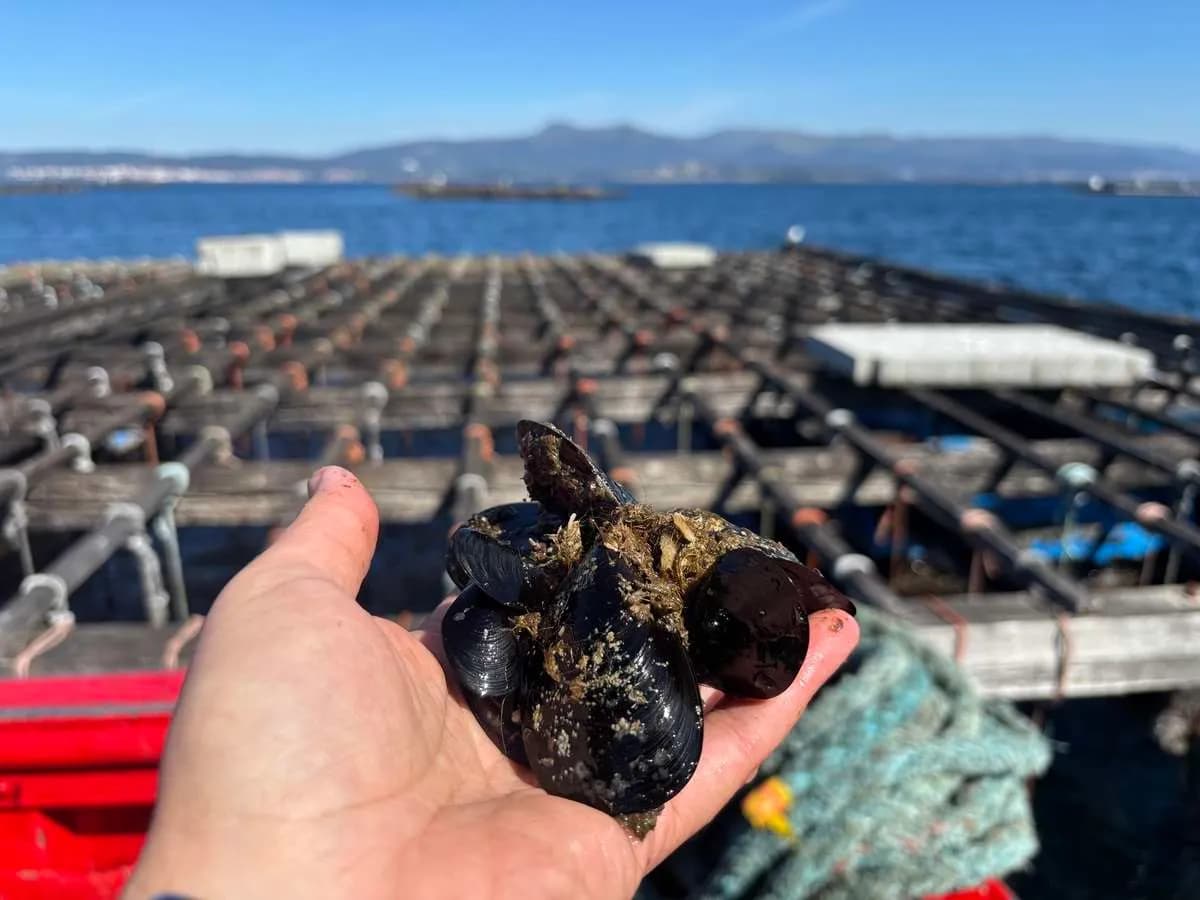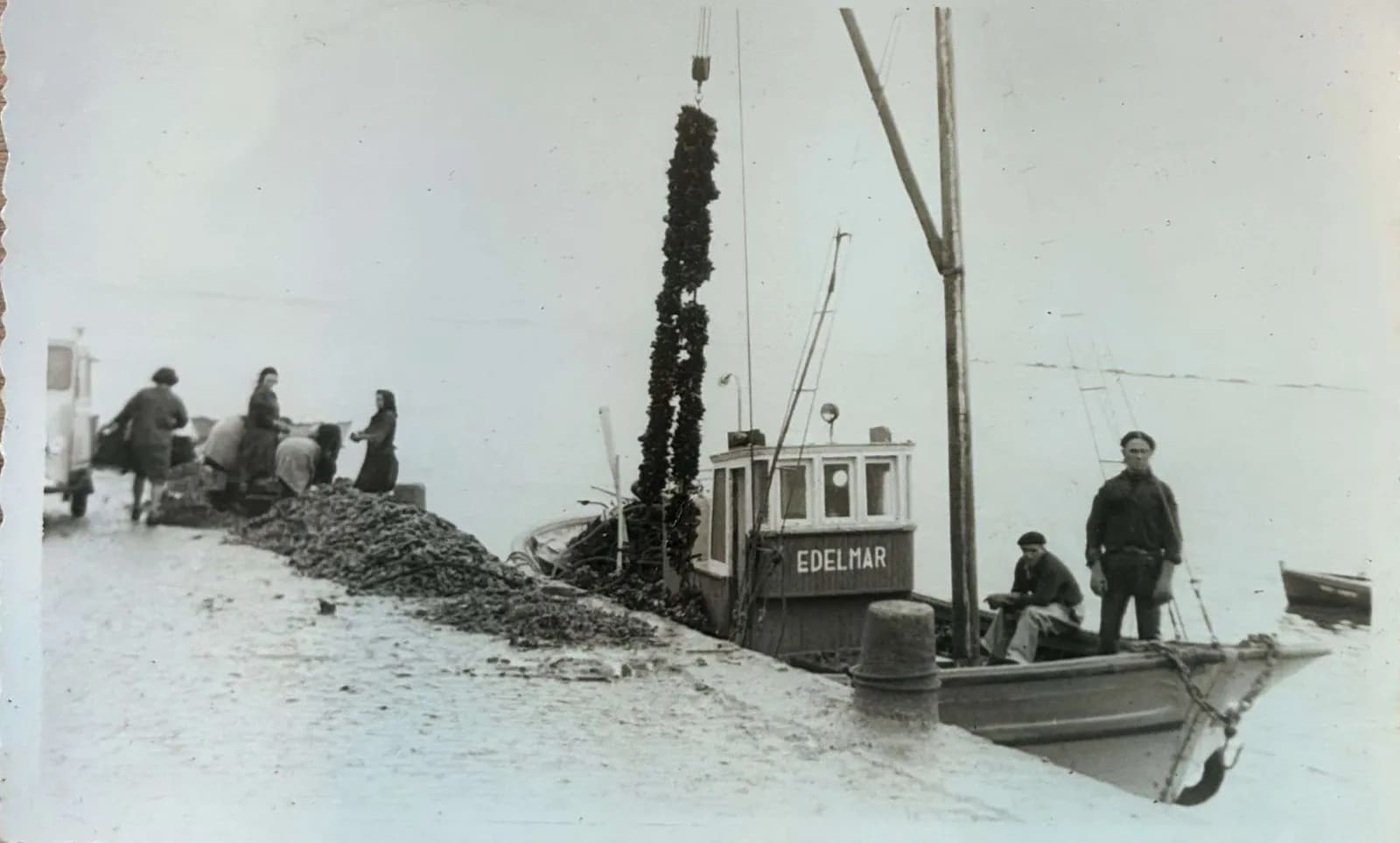
A Bateeira tells its story as one of women, and it starts with Edelmira Vicente Tubio. She was born in 1932, the daughter of an emigrant, and was brought up by her mother. She worked the land and later became a mariscadora, one of the women who gather shellfish on the Ría de Arousa. In 1959, the house tells, she and her husband, José Benito González Piñeiro, launched their first batea, a wooden raft from which ropes of mussels hang into the sea. It was one of the first family rafts in the Galician rías. Their first boat was the Edelmar Uno. A photograph from that year, at the port of A Pobra do Caramiñal, shows Edelmira in the middle of the women bagging fresh mussels.
The house calls it a pioneering bet. The first raft of the Ría de Arousa went into the water in 1945, and rafts reached A Pobra do Caramiñal in 1954, according to the regulatory council of the Mexillón de Galicia PDO. The family's single raft grew into twelve of its own, the house says. In Galician a woman who owns a mussel raft, or works on one, is a bateeira, and that is the name the brand took.
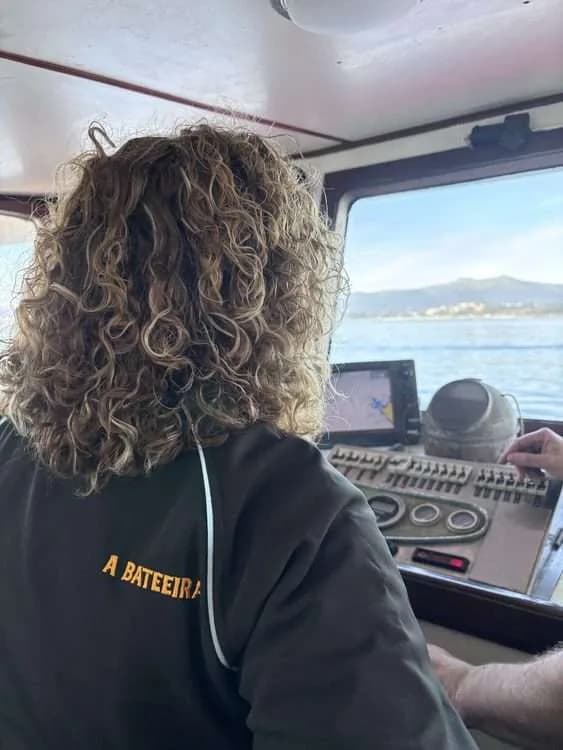
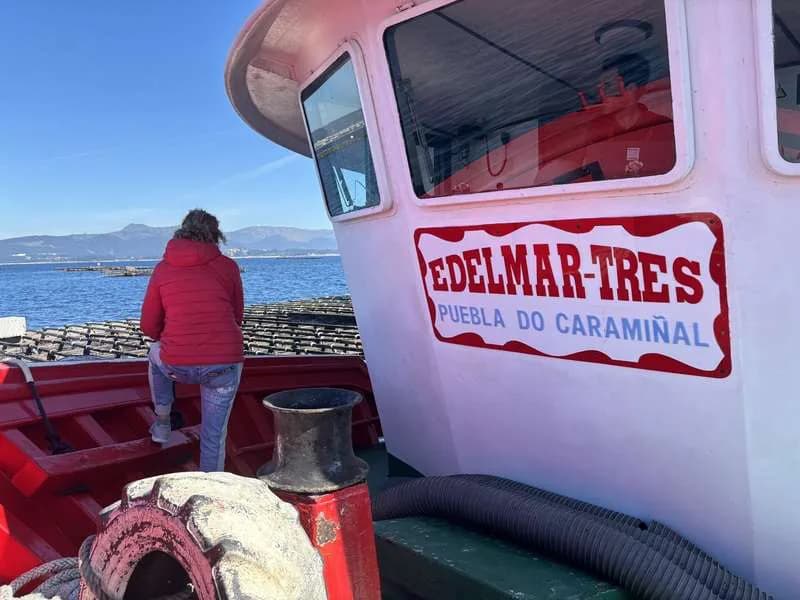
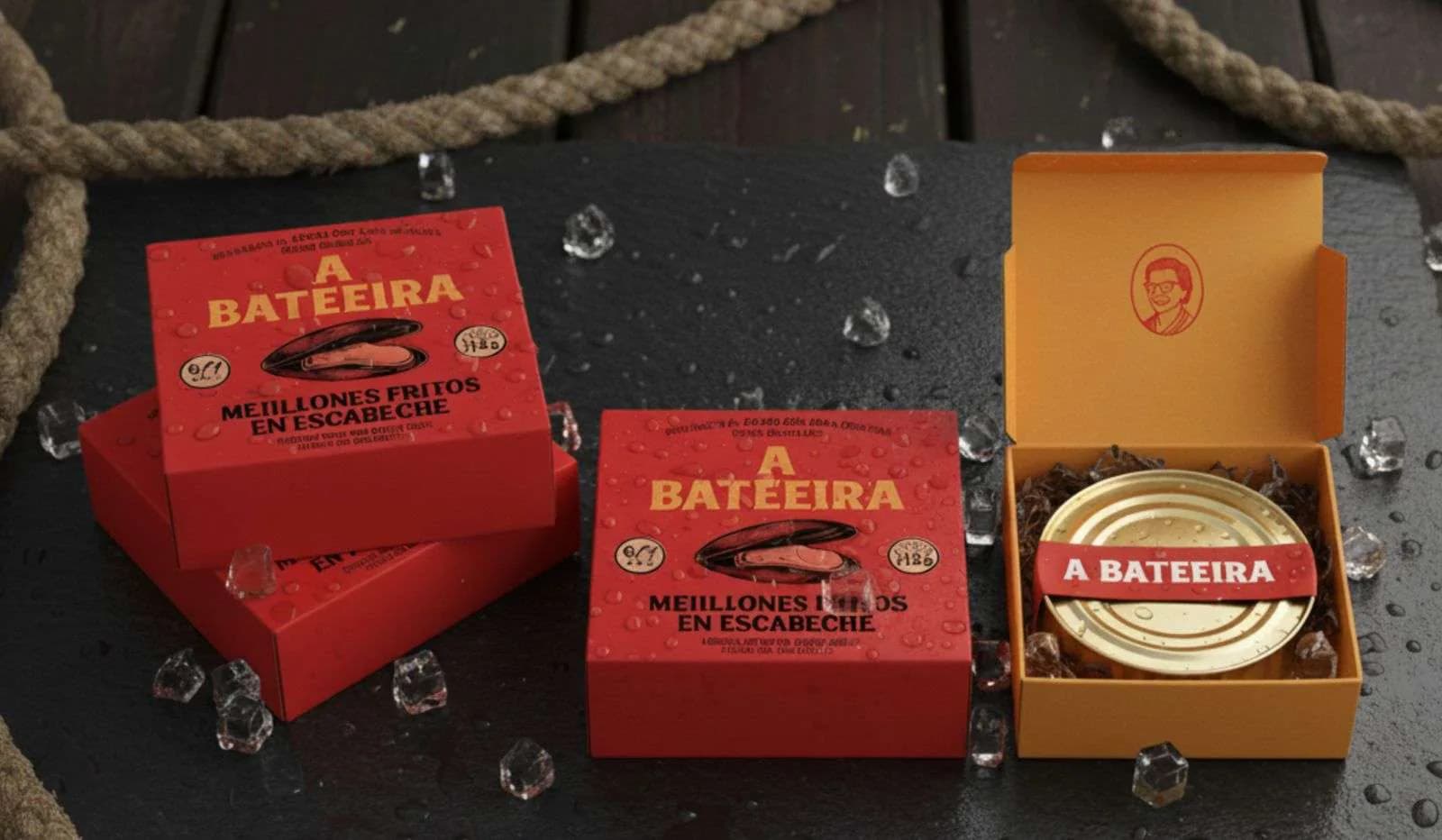
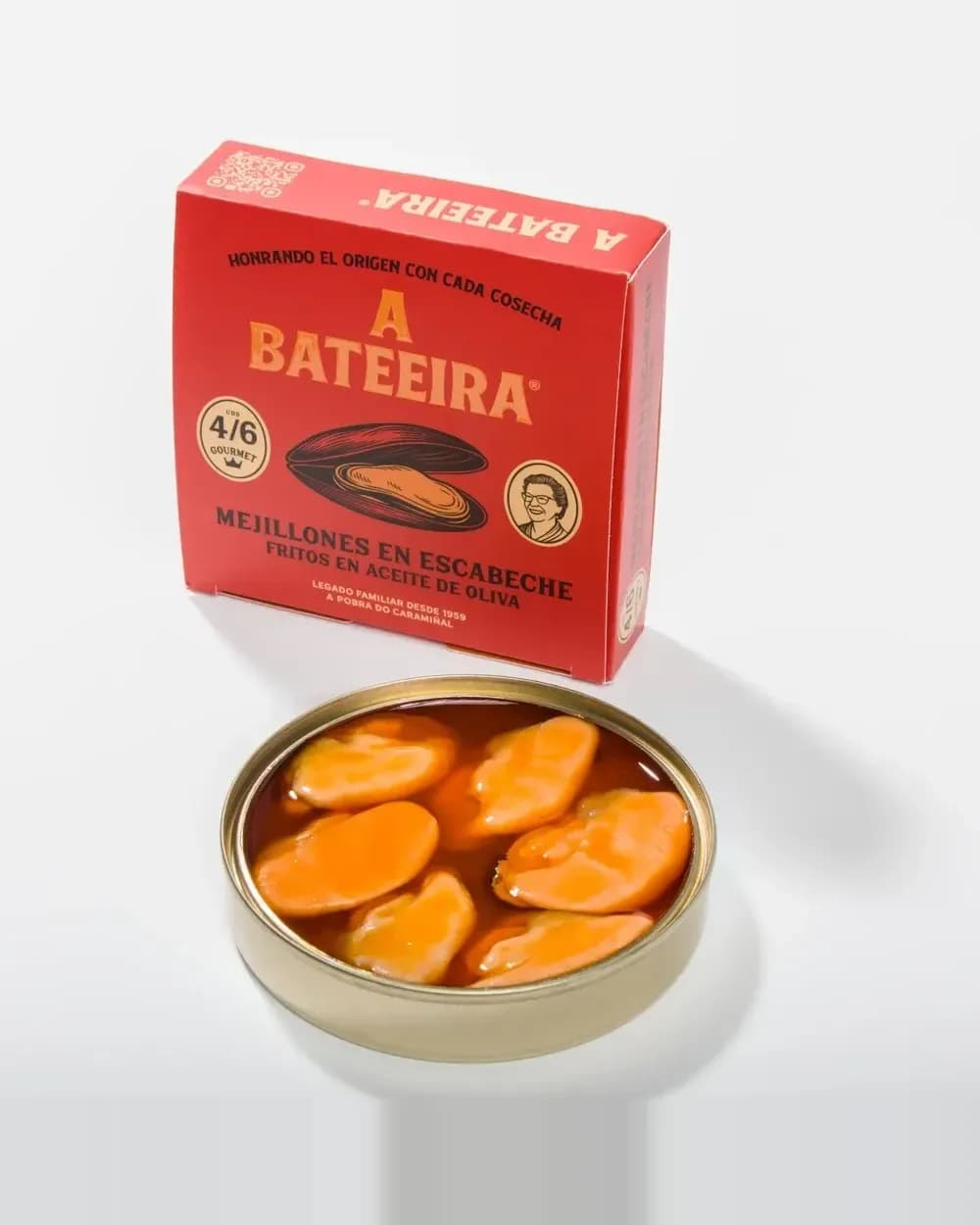
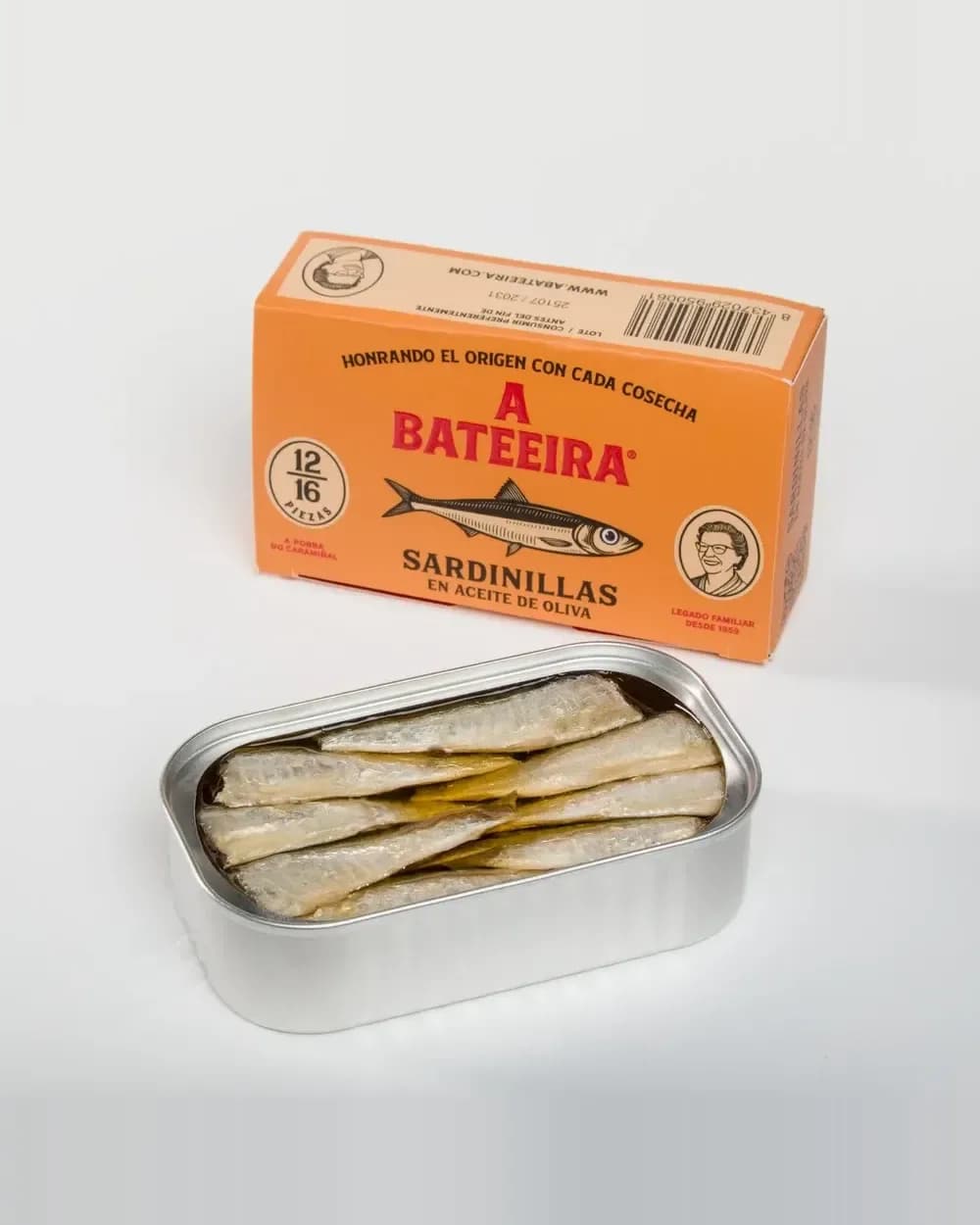
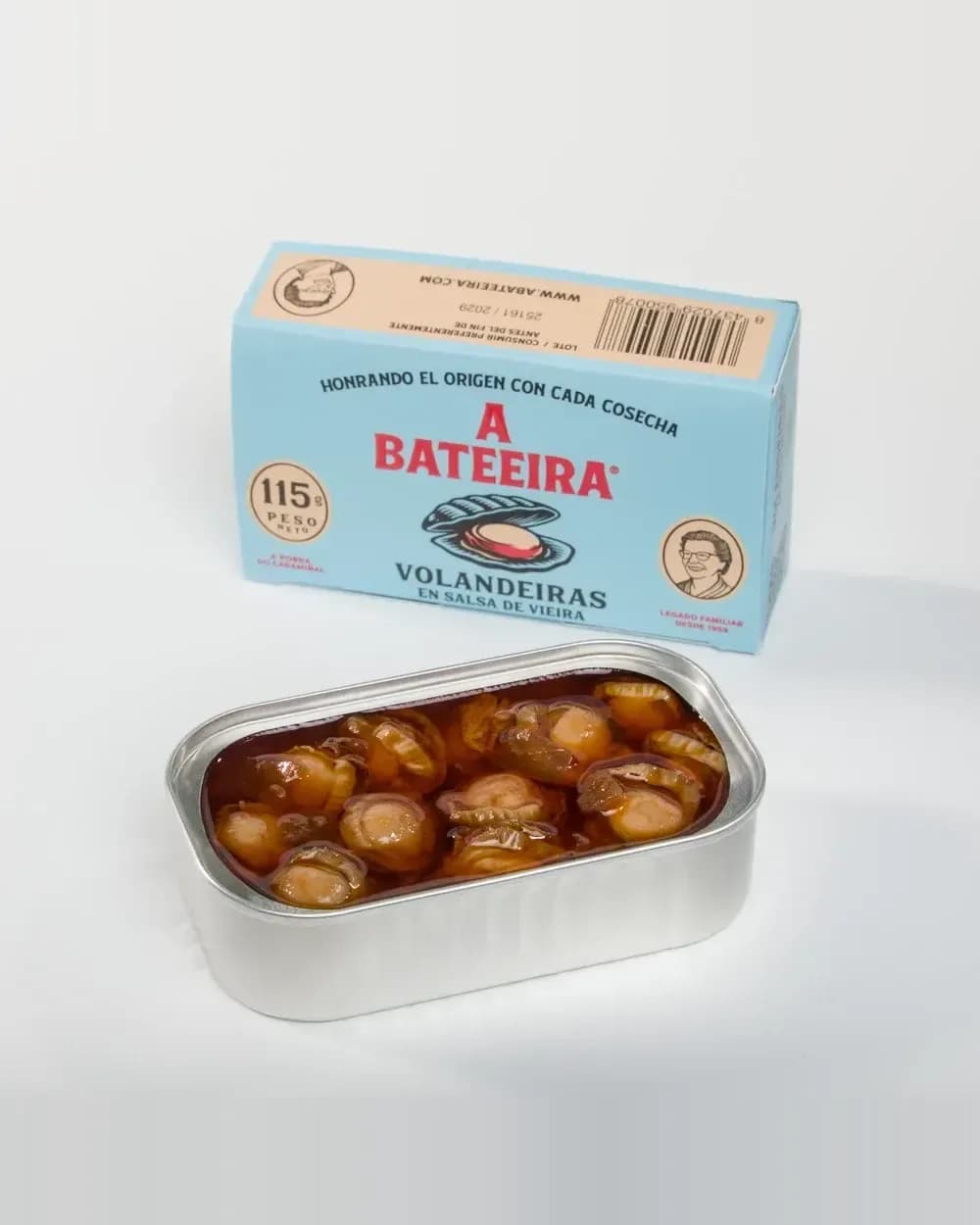
Edelmira died in 2018, and a drawing of her, in an oval above the words 'Desde 1959', is on the brand's cases. Her daughter Irene González, the second generation, is now the shipowner. The family boat is the Edelmar Tres, and Eloy, the raft skipper, runs the work on the rafts. In two videos the house has published, Irene says that carrying on her parents' work makes her very proud, that it is hard and at the same time wonderful, and that if she had to sum it up in one word, it would be oficio, craft.
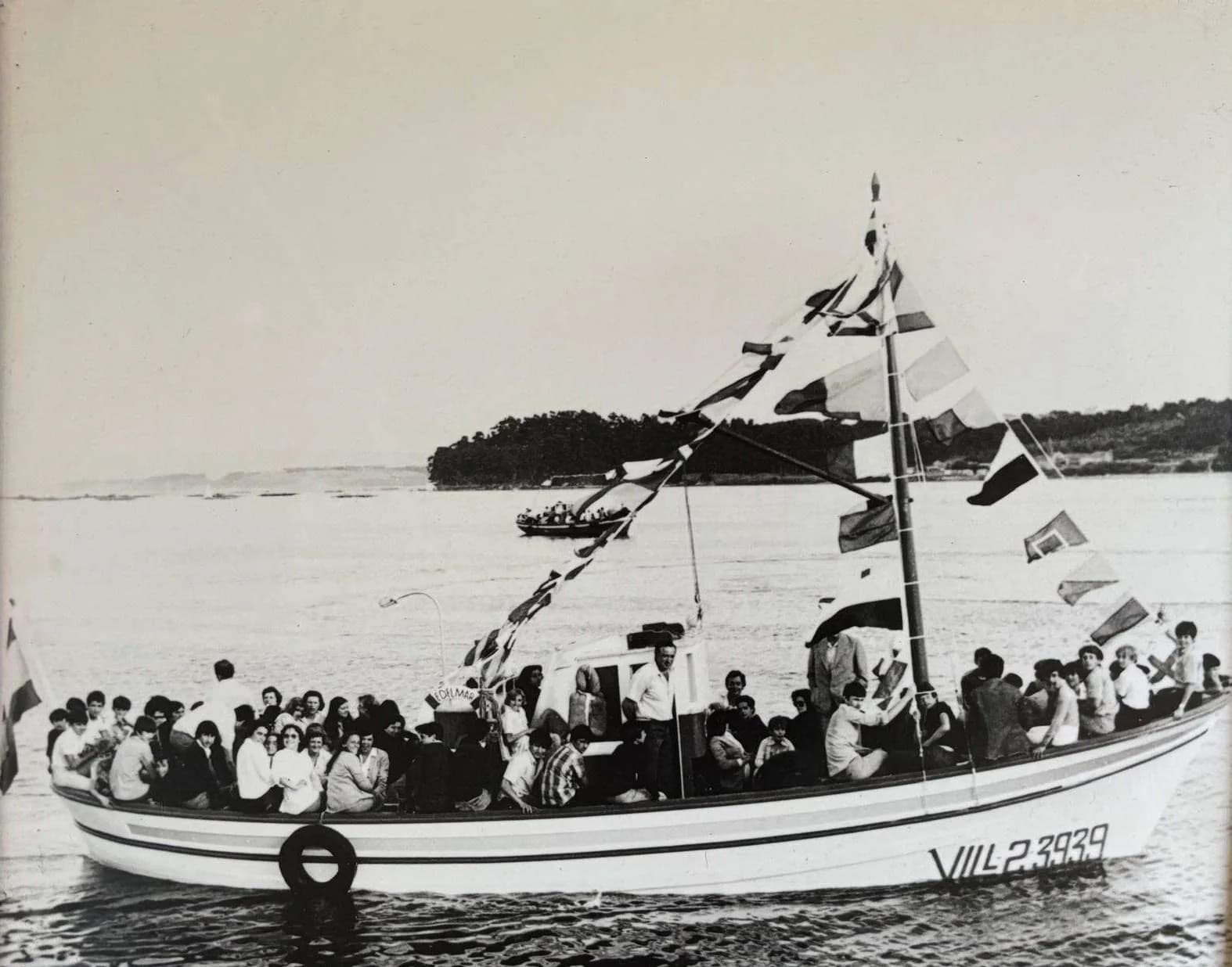
Its manifesto, Mujer y mar, pays tribute to the mariscadoras and the bateeiras, and to the women who, in the house's words, have been the backbone of the seafaring economy of Galicia for decades. The house also says it has always been devoted to the Virgen del Carmen, patron saint of seafarers. One of the family photographs shows the Edelmar Uno decked with flags and full of people for her festival in 1978.
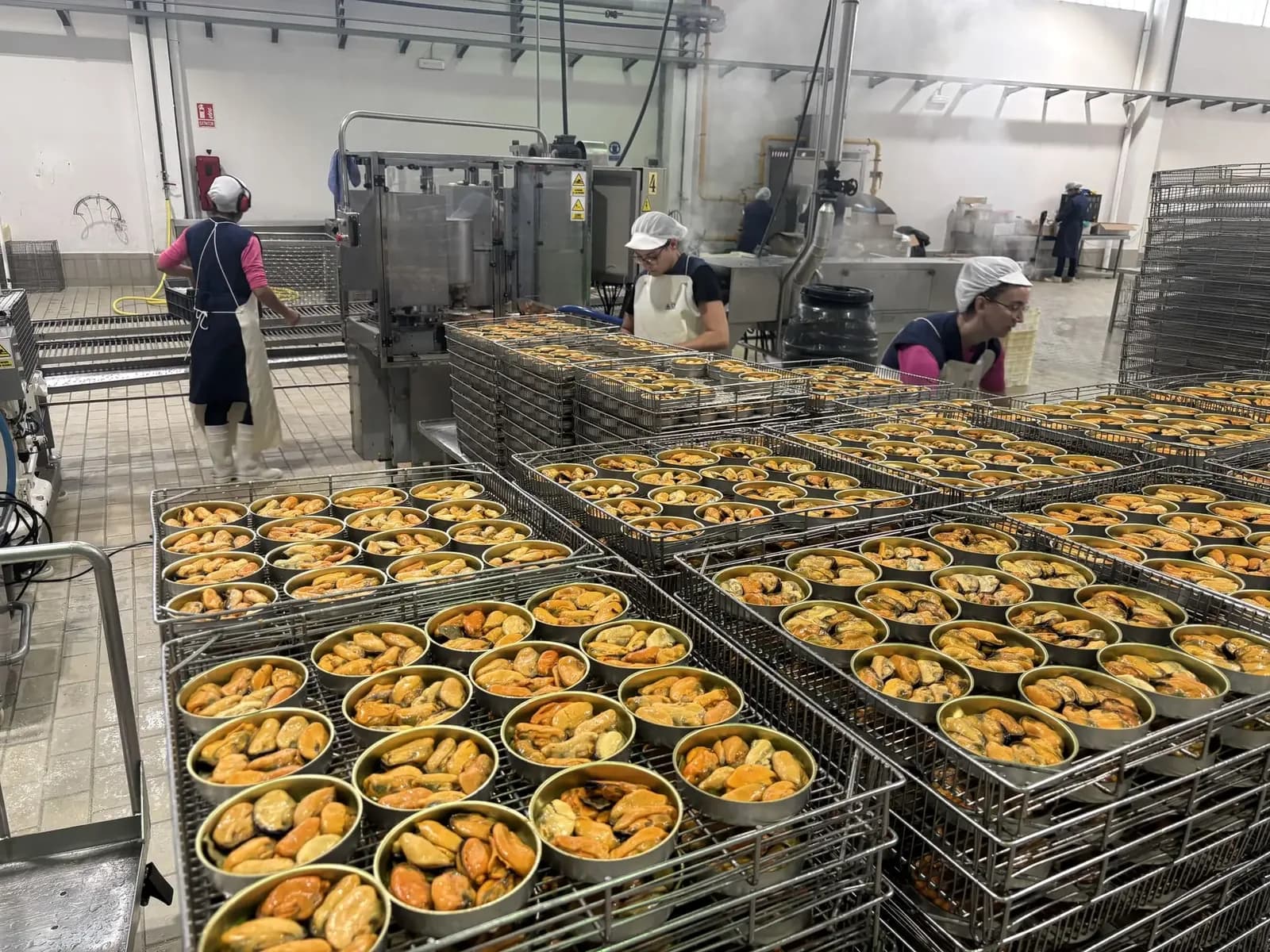
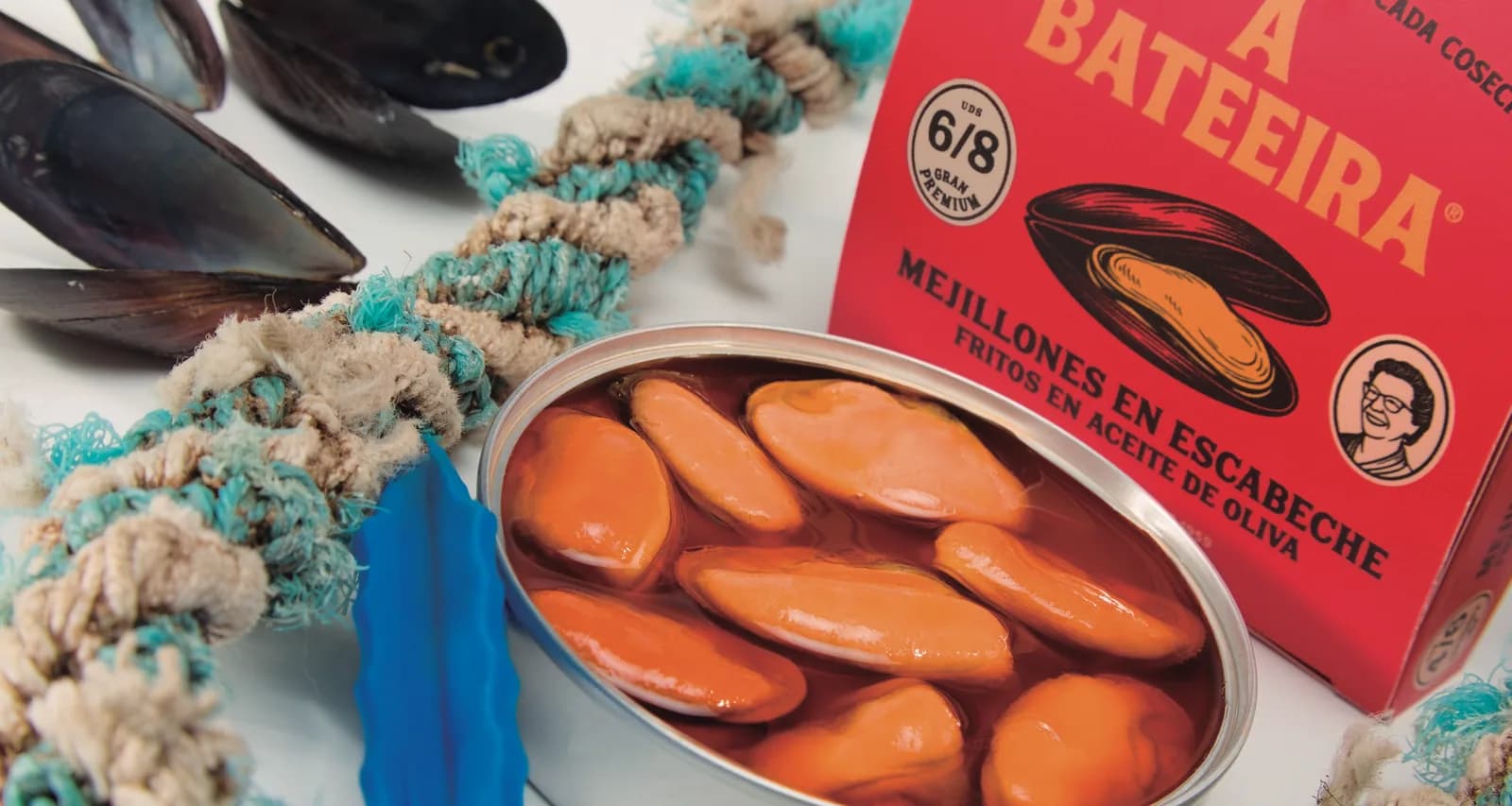
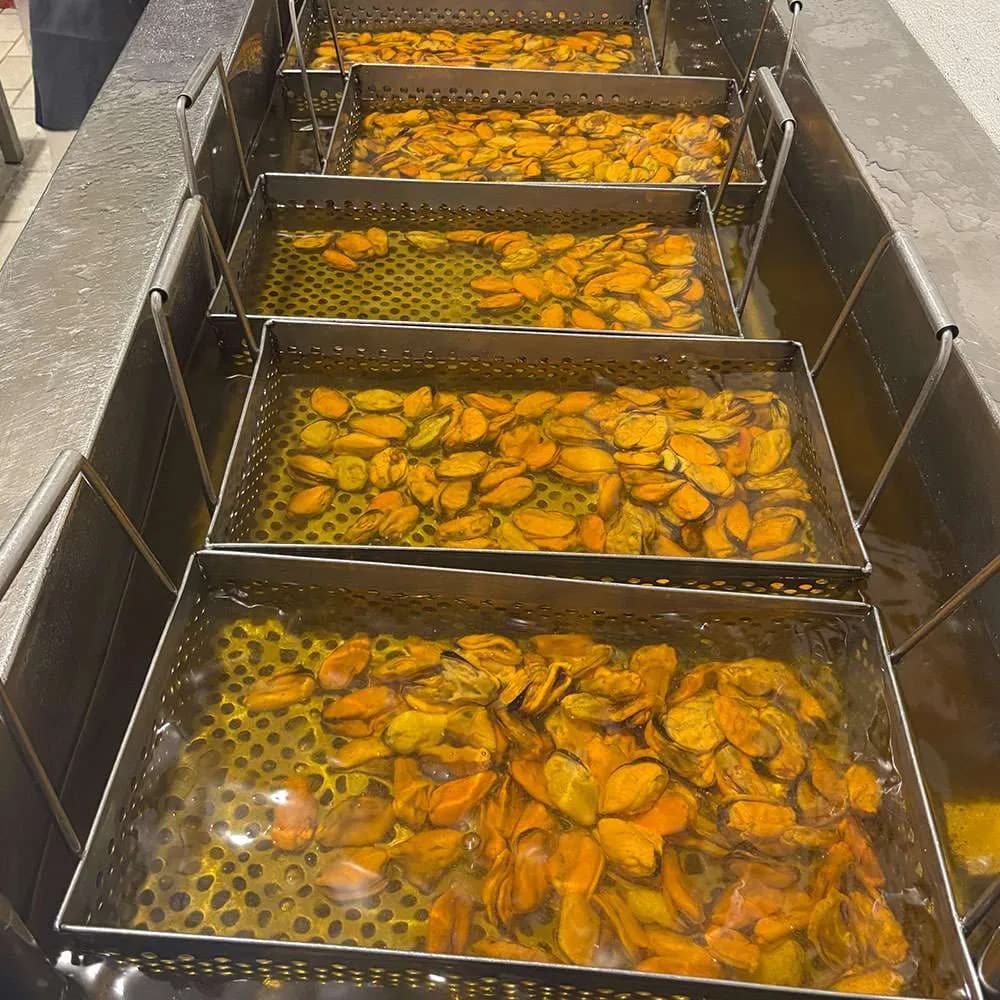
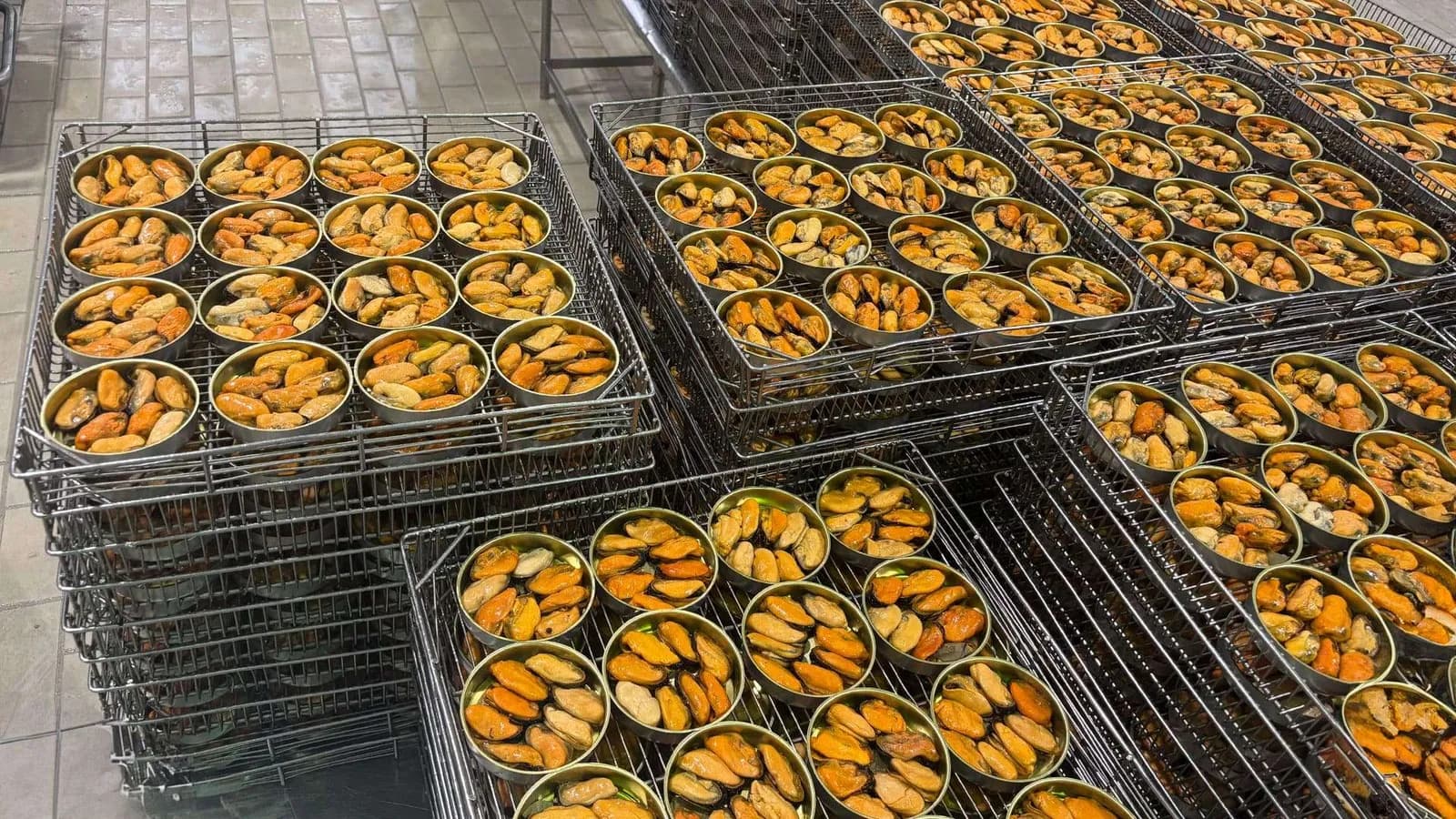
In November 2025 A Bateeira started trading to sell the family's mussels under its own name, in tins made by artisan canneries the house works with. Óscar Esteban, one of its founding partners, is the managing director. The house speaks of three generations devoted to the mussel, and its cases carry the line 'Legado familiar desde 1959', a family legacy since 1959.
In April 2026 A Bateeira showed three tins marked as new at Salón Gourmets in Madrid: the mussels, sardinillas and volandeiras. In June it was at Salimat in Silleda, and in November at Etiqueta Negra in Pontevedra, where it was down to give a talk called 'Da batea á lata', from the raft to the tin.